

Resources Categories
INDUSTRY FACT FILE · AVIATION & AEROSPACE
Main Products and Services in Aviation and Aerospace
What India's airlines, airports, handlers, MRO firms and aerospace manufacturers sell and deliver, the shared platforms, airport, aircraft and engineering systems behind each service, and where those systems create cybersecurity and compliance exposure.
|
In this document 1. How aviation and aerospace companies earn their money 2. Products and services by organisation type 3. The operations layer: shared platforms, airport OT and aircraft systems 4. The engineering and enterprise layer: MRO, manufacturing, loyalty and cloud 5. The systems behind the products and services 6. Trends that change the attack surface 7. Mapping operations to Codec Networks engagements |
1. How aviation and aerospace companies earn their money
|
Revenue stream |
How it works |
Security relevance |
|
Passenger fares and ancillaries |
Tickets, seats, baggage, meals and other extras sold through sites, apps, agents and GDS |
Booking platforms and payment flows; passenger data; pricing integrity |
|
Loyalty and co-brand programmes |
Miles sold to banks and partners, redemptions, status tiers |
Stored value, account security, partner integrations |
|
Aeronautical and non-aeronautical airport revenue |
Landing and parking charges, passenger fees, retail, F&B, car parks, advertising |
Billing systems, retail and parking platforms, passenger flow data |
|
Ground handling, cargo and fuelling services |
Per-turnaround and per-tonne services to airlines |
Shared systems at the airport; customs integrations; staff access |
|
MRO and engineering services |
Line and base maintenance, engine shops, component repair |
Records integrity; OEM data; parts provenance |
|
Aerospace manufacturing and defence |
Components, systems and aircraft for Indian and global programmes |
Design data; export controls; OEM audits; production continuity |
2. Products and services by organisation type
|
Organisation type |
Main products and services |
Key systems |
|
Airlines |
Scheduled passenger and cargo flights, ancillaries, loyalty, charters |
PSS and departure control, websites and apps, crew and flight planning, loyalty, EFBs |
|
Airport operators |
Terminal and airside infrastructure, passenger processing, retail and parking |
Common-use platforms, baggage systems, BMS, access control, CCTV, screening, Wi-Fi, DigiYatra |
|
Ground handlers |
Ramp, passenger, baggage, fuelling and catering services |
Airline and airport systems access, handheld devices, load control, staff rostering |
|
MRO and engineering firms |
Maintenance, repair and overhaul, records and certification |
Maintenance management systems, records, OEM portals, engine shop systems |
|
Aerospace manufacturers and suppliers |
Components, structures, systems and software for OEMs and defence |
PLM and CAD, ERP, production OT, quality systems, OEM EDI and portals |
|
Air cargo and express |
Cargo terminal handling, freighter operations, customs clearance |
Cargo management systems, ICEGATE, customs and security filing, truck docks |
3. The operations layer: shared platforms, airport OT and aircraft systems
Aviation runs on platforms that many organisations share. An airline's passenger service system holds reservations and tickets; departure control and common-use check-in platforms run check-in, bag drop and boarding at every counter and kiosk; global distribution systems and messaging networks connect agents, airlines and airports. When one of these fails—as the September 2025 disruption to Collins Aerospace's MUSE software showed at Heathrow, Brussels and Berlin—every airline and airport on it falls back to manual processing at once.
Airports are also operational-technology environments. Baggage handling systems run on PLCs and sorters; building management controls air handling, lighting and power; access control and CCTV protect security-restricted areas; screening equipment, aerobridges, fuel hydrants and apron systems each have their own controllers and vendors; and public Wi-Fi, kiosks and biometric entry gates sit on the same campus networks. Many of these systems were installed with flat networks and vendor remote access, and cannot be patched or scanned without planning around live operations. Aircraft bring their own connected systems—electronic flight bags, connected cabins and maintenance data links—that depend on ground infrastructure and vendors.
4. The engineering and enterprise layer: MRO, manufacturing, loyalty and cloud
Behind operations sit the engineering and enterprise systems. MRO and engineering firms keep the maintenance records that certify airworthiness, exchange data with OEMs and run engine and component shops with their own test equipment. Aerospace manufacturers hold product lifecycle management and CAD data that is both commercially valuable and often export-controlled, alongside ERP, quality and production OT that must keep delivering to OEM schedules. Airlines and airports run loyalty platforms, contact centres, CRM, finance and HR, increasingly in the cloud and through third-party providers.
Passenger data is the thread through all of it: passports, dates of birth, contact details, travel histories, payment tokens and biometrics flow between airlines, providers, airports, handlers, immigration and customs. The 2021 SITA breach that exposed about 4.5 million Air India passengers and the 2025 Qantas contact-centre breach affecting 5.7 million customers both began at providers, not at the airline—so the data map must include every processor.
|
Highest-risk moments Peak seasons when manual fallback is hardest, platform and provider migrations, new terminals and system commissioning with flat networks and default credentials, vendor remote-maintenance sessions on baggage and BMS, loyalty promotions that create stored value, outsourcing of contact centres and passenger processing, and OEM audits and certification deadlines at suppliers are where aviation incidents typically begin or escalate. |
5. The systems behind the products and services
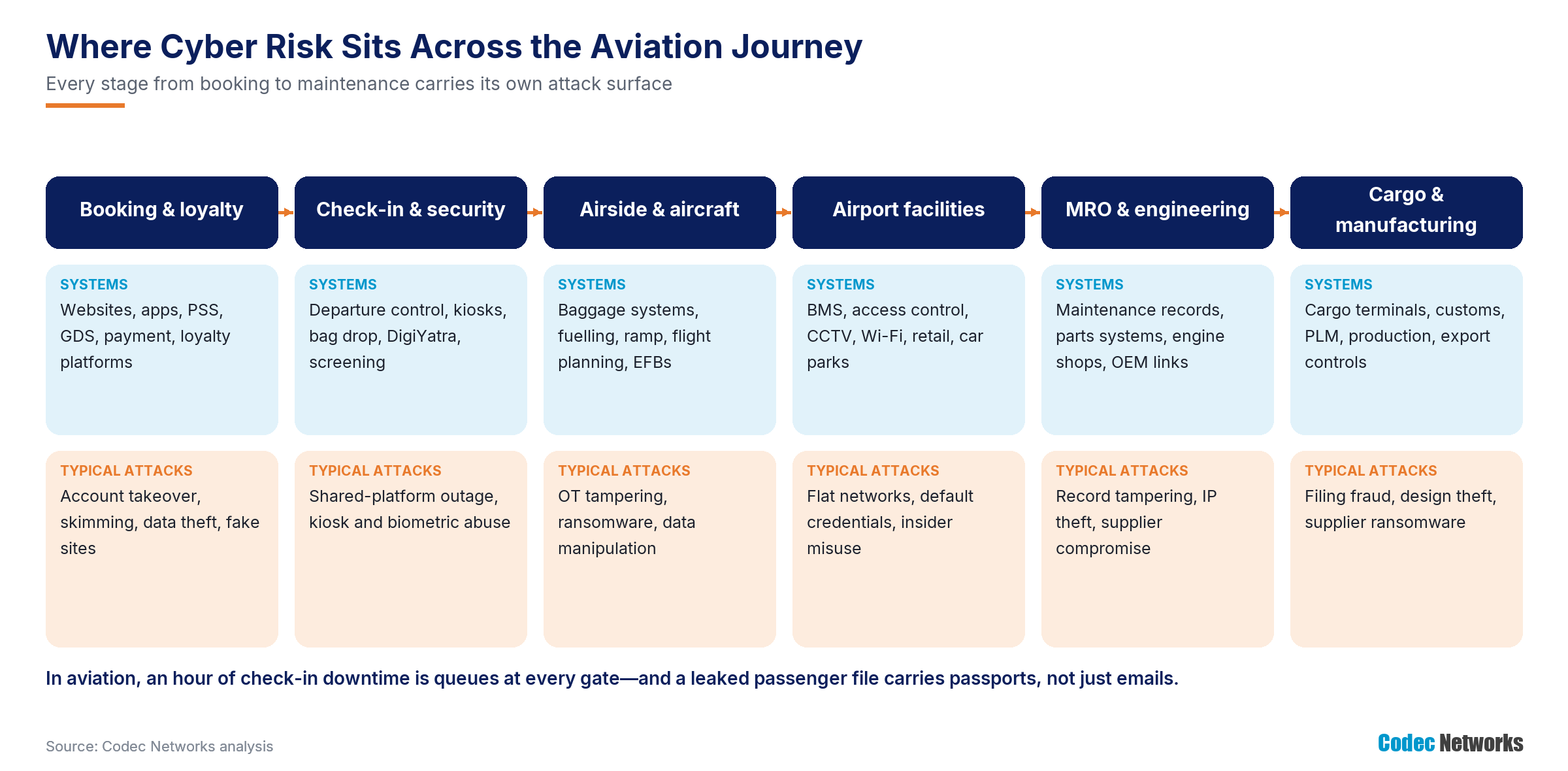
Figure 2: Where cyber risk sits across the aviation journey.
|
Product / service |
Systems that deliver it |
Key cyber and compliance touchpoints |
|
Booking and loyalty |
Websites, apps, PSS, GDS, payment integrations, loyalty platforms |
Web, app and API testing, ATO testing, PCI DSS scoping, data protection |
|
Check-in and security |
Departure control, common-use platforms, kiosks, bag drop, DigiYatra, screening |
Provider assurance, fallback rehearsal, kiosk and biometric system testing |
|
Airside and aircraft |
Baggage systems, fuelling, ramp systems, flight planning, EFBs |
OT assessment, segmentation, data integrity controls, device management |
|
Airport facilities |
BMS, access control, CCTV, Wi-Fi, retail and parking systems |
OT and physical-security system assessments, vendor access brokering, monitoring |
|
MRO and engineering |
Maintenance records, parts systems, engine shops, OEM links |
Records integrity, access reviews, backups, Part-IS readiness |
|
Cargo and manufacturing |
Cargo systems, customs filing, PLM, ERP, production OT |
Credential controls, data classification, segmentation, OEM assurance |
6. Trends that change the attack surface
|
Trend |
What is changing |
Security implication |
|
Shared platforms and cloud migration |
PSS, departure control and airport systems consumed as services |
Concentration risk; provider assurance and fallback become core |
|
Biometrics and seamless travel |
DigiYatra and biometric boarding across airports |
Biometric data protection and system integrity |
|
Airport expansion and new terminals |
Greenfield airports and terminal upgrades across the country |
Security must be designed into OT and networks, not retrofitted |
|
Connected aircraft and EFBs |
Data links, connected cabins, tablet-based flight operations |
Device, data and ground-infrastructure security |
|
Aerospace manufacturing growth |
Indian suppliers deeper in global OEM and defence supply chains |
OEM audits, export controls, design data protection |
|
Regulatory formalisation |
CERT-In audits incl. OT, Part-IS for EU approvals, DPDP |
Evidence-based assurance replaces informal practice |
7. Mapping operations to Codec Networks engagements
|
If the organisation operates… |
Recommended starting engagement |
|
An airport, terminal or airside estate |
Airport IT/OT assessment of baggage, BMS, access control, CCTV and kiosks; segmentation design |
|
Shared check-in, PSS or provider-hosted platforms |
Platform provider assurance, contracted recovery and notification, fallback rehearsal |
|
Passenger, loyalty or contact-centre data |
Data mapping across processors, DPDP programme, provider assessments |
|
Booking, check-in or loyalty apps and APIs |
App and API VAPT, ATO and business-logic testing, PCI DSS scoping |
|
MRO, engineering or aerospace production systems |
Records and design data protection, segmentation, OEM and Part-IS readiness |
|
Operations that cannot pause |
24x7 aviation SOC, backup and restore testing, crisis exercises |
Talk to Codec Networks
|
Contact Codec Networks Pvt. Ltd. New Delhi: 507, 5th Floor, New Delhi House, Barakhamba Road, Connaught Place, New Delhi – 110001 Gurugram: 707, 7th Floor, Silverton Tower, Golf Course Extension Road, Sector 50, Gurugram – 122018, Haryana Landline: 011 430 496 96 | 011 437 522 99 Mobile: +91 99716 76124 | +91 88007 88220 | +91 88003 31124 Email: mktg@codecnetworks.com Web: www.codecnetworks.com |
Note: Descriptions are general and based on public information available as of October 2026. Systems and exposures differ by organisation and site.