

Resources Categories
INDUSTRY FACT FILE · BANKING
Applicable Cybersecurity Services and Codec Networks Bundles for Banks
How Codec Networks services and bundled service models help banks resolve their threats, meet RBI's 2026 Directions and reduce business impact.
|
In this document 1. Our approach 2. Mapping threats to services 3. Codec Networks service catalogue for banks 4. Codec Networks bundles for banking 5. Banking programmes built from the bundles 6. Packages: Foundation, Assurance and Continuous Resilience 7. RBI requirement-to-bundle mapping 8. Threat-to-bundle coverage matrix 9. Delivery methodology and deliverables 10. Why Codec Networks 11. Annex: indicative commercial ranges |
1. Our approach
Banks need a clear path from their highest risks to measurable, inspection-ready assurance. Codec Networks works on four principles:
- Start from critical systems and money flows: scope work around the channels, payment interfaces, core systems and third parties that matter most.
- Align to the 2026 Directions: map every engagement to the requirements of the RBI Direction that applies to the bank's category, plus CERT-In, DPDP, PCI DSS and SWIFT CSP.
- Test the chain, not just the link: combine technical testing, process testing and monitoring validation.
- Prove closure: retest findings and organise evidence for the Audit Committee, the ITSC and RBI inspections.
2. Mapping threats to services
The table maps the 18 threats identified in Document 4 of this set to the Codec Networks services that help mitigate them.
|
Threat / challenge |
Applicable Codec Networks services |
Intended outcome |
|
Account takeover |
Mobile and web application testing, IAM & MFA bypass testing (SIM swapping, OTP attacks), SOC fraud-signal monitoring |
Stronger authentication and device binding; faster takeover detection |
|
Phishing, vishing and BEC |
Phishing simulation, awareness, deepfake testing, anti-phishing and brand monitoring, DMARC review |
Reduced impersonation success; faster takedowns |
|
Mule accounts |
Onboarding and V-CIP controls review, mule-detection use cases in the CSOC, fraud risk assessment |
Earlier identification and freezing of mule accounts |
|
Ransomware |
Ransomware simulation, backup security testing, EDR/XDR validation, IR retainer |
Tested recovery and reduced blast radius |
|
Web, mobile and API attacks |
Application and API security testing, secure code review, DevSecOps |
Flaws found before release |
|
Legacy and unpatched systems |
Infrastructure VAPT, patch audit, configuration review, segmentation assessment |
Prioritised remediation and compensating controls |
|
Privileged access and insider misuse |
Privileged-access review, insider threat simulation, data exfiltration simulation |
Accountability for sensitive actions |
|
Third-party and ATM switch compromise |
Third-party risk management, ATM switch provider assessment, contract security review |
Enforceable baseline controls at providers |
|
SWIFT and high-value payment fraud |
SWIFT CSP assessment support, payment-hub access review, maker-checker testing |
Hardened payment operations |
|
Cloud misconfiguration |
Cloud security audit, IAM and configuration review |
Continuous posture visibility |
|
DDoS |
Resilience and architecture assessment, authorised availability testing |
Validated capacity and failover |
|
Deepfakes and AI-enabled fraud |
AI-powered deepfake testing, call-back control testing, AI/LLM security testing |
Verification processes that assume impersonation |
|
Data leakage and privacy failures |
DPDPA readiness, data discovery and classification, DLP review |
Reduced data footprint and DPDP readiness |
|
Weak detection and response |
Managed CSOC, SIEM use-case tuning, playbooks, tabletop exercises |
Reliable 6-hour reporting |
|
Backup and recovery failure |
Backup and DR testing, DR drill observation |
Proven recovery within objectives |
|
Software supply-chain compromise |
Supply-chain security testing, vendor secure-SDLC review |
Trusted software updates |
|
Loan fraud with cyber elements |
LOS/LMS access and workflow testing, forensic audit, fraud risk assessment |
Detection of manipulated loan data and collusion |
|
Fake apps and brand abuse |
Brand monitoring, rogue-app detection and takedown support |
Faster removal of impersonating apps and sites |
3. Codec Networks service catalogue for banks
|
Service line |
Bank-relevant services |
|
Security Vulnerability Assessment & Penetration Testing |
Six-monthly VA and annual PT of critical and DMZ systems; web, mobile and API testing; network, wireless, database and cloud testing; configuration review and patch audit; PCI DSS network compliance testing |
|
Offensive security & people/process testing |
Red and purple teaming, APT and ransomware simulation, phishing simulation, IAM & MFA bypass testing, approval-workflow bypass testing, deepfake testing |
|
Information security consulting, audit & compliance |
Gap assessments against RBI's 2026 Directions, IS audit support, ISO/IEC 27001:2022, PCI DSS, SWIFT CSP, third-party risk management, fraud risk assessment |
|
Data privacy & protection |
DPDPA readiness, ISO 27701, DPIA, data discovery and classification, DLP strategy review, breach response |
|
24/7 Managed SOC & threat monitoring |
CSOC-as-a-Service with Level 1–3 coverage, SIEM, managed EDR/XDR, SOAR, threat intelligence, dark web, anti-phishing and rogue-app monitoring |
|
Cyber forensics & threat analysis |
System imaging, malware analysis, mobile and device forensics, cloud forensics, fraud and insider investigations |
|
Board-level advisory |
Board and ITSC briefings, cyber risk quantification (FAIR), crisis communication readiness, CISO support |
|
Emerging technology security |
AI and LLM security, ISO 42001 readiness, post-quantum cryptography readiness |
|
Centre for Professional Excellence (CoPE) |
Board and staff awareness, CISO workshops and accredited certification training |
4. Codec Networks bundles for banking
Eleven of the twelve bundles in the Codec Networks Bundled Service Models apply directly to banks; the Global Cyber Back-Office SPV Program (Bundle 12) is offered separately for international clients.
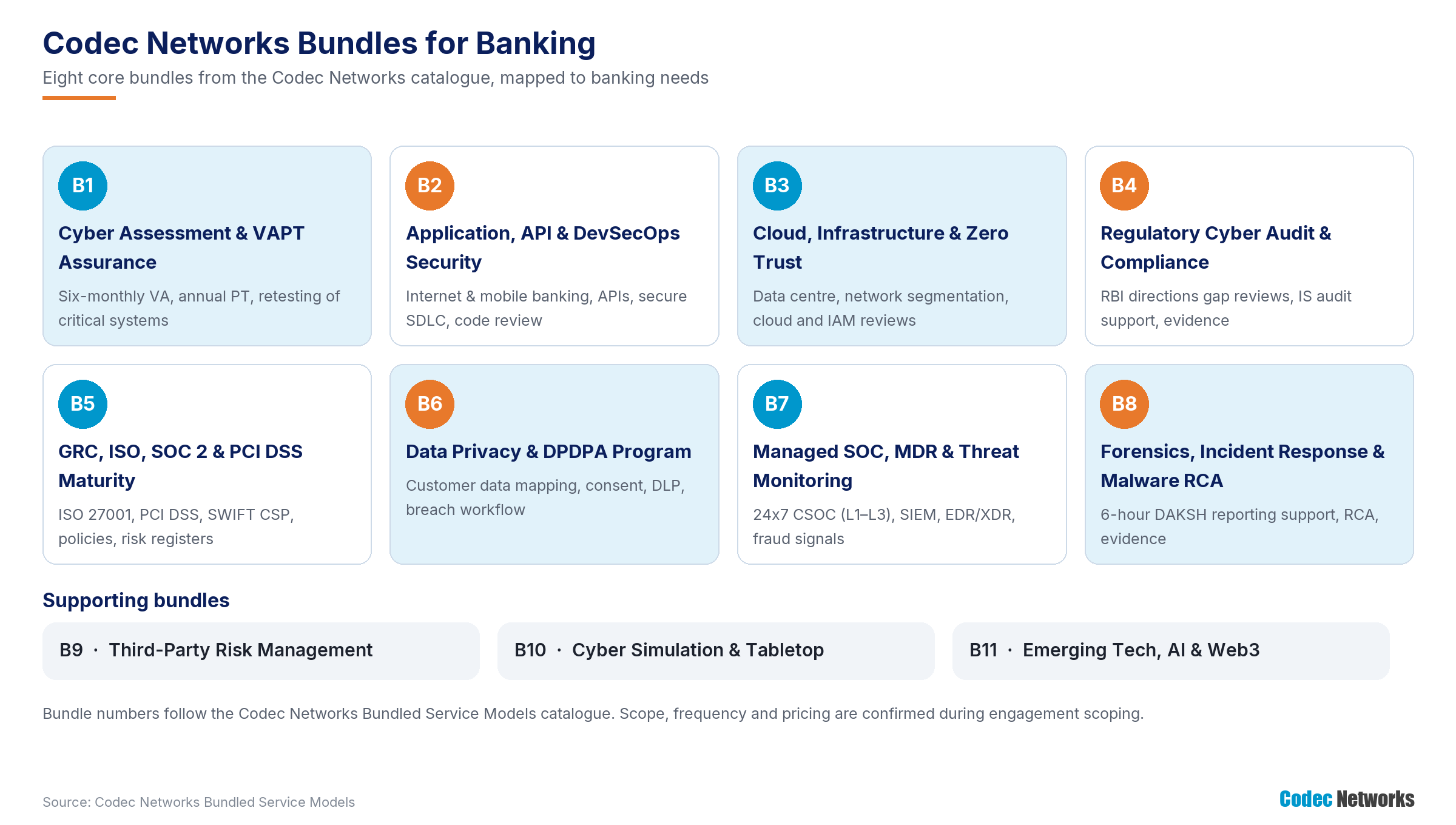
Figure 6: Codec Networks bundles applied to banking.
|
Bundle |
Name |
Bank-relevant scope |
Best suited for |
Key deliverables |
|
B1 |
Cyber Assessment & VAPT Assurance Program |
Six-monthly VA, annual PT, configuration review, patch audit, retesting |
All banks meeting the 2026 testing frequencies |
VAPT reports with CVSS, remediation tracker, retest report, compliance mapping |
|
B2 |
Application, API & DevSecOps Security Program |
Internet and mobile banking, APIs, secure code review, CI/CD and supply-chain testing |
Digital-first banks, SFBs, payments banks |
Application and API risk report, code review report, DevSecOps maturity report |
|
B3 |
Cloud, Infrastructure & Zero Trust Security Program |
Data centre and network segmentation, cloud audit, IAM, VPN and remote access |
Banks modernising infrastructure or moving to cloud |
Cloud posture report, IAM review, Zero Trust roadmap |
|
B4 |
Regulatory Cybersecurity Audit & Compliance Assurance Program |
Gap assessments against RBI's 2026 Directions, CERT-In readiness, evidence index, closure validation |
All banks preparing for inspections and audits |
Gap assessment, evidence index, regulator-ready response matrix |
|
B5 |
GRC, ISO, SOC 2 & Cyber Maturity Program |
ISO 27001, PCI DSS, SWIFT CSP readiness, NIST CSF, policies, risk register |
Banks formalising governance and certifications |
Maturity scorecard, policy framework, risk register |
|
B6 |
Data Privacy, DPDPA & Data Protection Program |
Customer data mapping, consent, DLP, DPIA, breach response |
All banks ahead of May 2027 DPDP obligations |
Privacy gap assessment, data inventory, breach response plan |
|
B7 |
Managed SOC, MDR & Continuous Threat Monitoring Program |
24x7 CSOC with L1–L3, SIEM, EDR/XDR, SOAR, threat hunting, brand monitoring |
Banks building or augmenting a CSOC |
Dashboards, incident tickets, monthly SOC reports, MTTD/MTTR metrics |
|
B8 |
Digital Forensics, Incident Response & Malware RCA Program |
Triage, imaging, malware analysis, fraud and insider investigations, reporting support |
Any bank facing a suspected compromise or fraud |
Forensic evidence index, RCA, Board incident summary |
|
B9 |
Third-Party Risk Management & Supply Chain Cyber Risk Program |
Vendor and ATM switch provider assessments, contract review, continuous monitoring |
Banks with critical outsourced services |
Vendor risk assessments, risk dashboard, remediation plan |
|
B10 |
Cyber Simulation, Awareness, Tabletop & Crisis Readiness Program |
Phishing and ransomware simulation, tabletop and crisis-communication drills, deepfake testing |
Boards, treasury, operations and branch staff |
Campaign reports, tabletop report, drill scorecard |
|
B11 |
Emerging Technology, AI, Web3 & Future Security Program |
AI/LLM testing, ISO 42001 readiness, post-quantum readiness, CBDC-related reviews |
Banks deploying AI or new digital-currency systems |
AI/LLM risk assessment, post-quantum readiness report |
5. Banking programmes built from the bundles
For banks, Codec Networks packages the catalogue bundles into six banking programmes that match common buying needs.
|
Banking programme |
Built from bundles |
Challenges addressed |
|
Banking Security Baseline |
B1, B3, B5 |
Legacy exposure, patching backlogs, misconfiguration, incomplete visibility |
|
Digital Banking and Payment Security |
B2, B1 |
Authentication weaknesses, insecure APIs, transaction-workflow abuse |
|
Managed CSOC and Threat Monitoring |
B7, B8 |
Fragmented visibility, alert overload, slow investigation, 6-hour reporting |
|
Banking GRC, Audit and Compliance Support |
B4, B5 |
Alignment to the 2026 Directions, evidence gaps, repeated audit findings |
|
Cloud, Infrastructure and Third-Party Security |
B3, B9 |
Cloud misconfiguration, ATM switch and vendor risk, shared responsibility |
|
Cyber Resilience, Forensics and Executive Advisory |
B8, B10, B6 |
Ransomware disruption, recovery assumptions, Board visibility, privacy |
6. Packages: Foundation, Assurance and Continuous Resilience
|
Package element |
Foundation |
Assurance |
Continuous Resilience |
|
Typical bank |
Co-operative banks, smaller SFBs, banks building a baseline |
Mid-sized private banks, SFBs, payments banks |
Large public and private sector banks |
|
Testing |
B1: scoped VAPT and retest |
B1 + B2: six-monthly VA, annual PT, channel and API testing |
B1 + B2 + B10: continuous testing, red teaming, simulations |
|
Regulatory and GRC |
B4: gap review against applicable directions |
B4 + B5: gap assessment, evidence pack, PCI DSS / SWIFT CSP |
B4 + B5 + B9: inspection-ready evidence, vendor assurance |
|
Cloud and privacy |
B3: infrastructure review |
B3 + B6: cloud posture and DPDPA readiness |
B3 + B6 + B11: continuous assurance, privacy and AI governance |
|
Monitoring and response |
Optional IR retainer (B8) |
B7: extended-hours SOC + B8 retainer |
B7: 24x7 CSOC with L1–L3 + B8 assured response |
|
Reporting |
Assessment report and roadmap |
Consolidated risk and remediation reporting |
Quarterly Board, RMC and ITSC reporting |
7. RBI requirement-to-bundle mapping
|
Requirement (commercial bank Direction, 31 July 2026) |
How Codec Networks helps |
Bundle |
|
VA at least six-monthly and PT at least annually for critical and customer-facing DMZ systems, by trained independent experts |
Scheduled VA/PT programme with retesting |
B1 |
|
Application security testing throughout the lifecycle; source code or escrow for critical applications |
Application, API and source code testing; vendor certification review |
B2 |
|
CSOC with 24x7 Level 1 monitoring and Level 2/3 capability |
Managed or co-managed CSOC |
B7 |
|
Anti-phishing and anti-rogue-app services; DMARC |
Brand, phishing and rogue-app monitoring; e-mail security review |
B7 |
|
Cyber incidents reported on DAKSH within six hours; CERT-In notified |
Playbooks, reporting support and forensic RCA |
B7, B8 |
|
DR drills for critical systems at least half-yearly; full working day on DR |
DR drill observation and recovery testing |
B1, B10 |
|
Cyber Crisis Management Plan; participation in cyber drills |
CCMP review, tabletop and crisis-communication drills |
B10 |
|
Baseline controls for ATM switch providers; audit rights in IT/cyber third-party contracts |
ATM switch provider and vendor assessments; contract review |
B9 |
|
DLP across endpoints, data in transit and at rest; MFA for privileged users |
DLP and privileged-access reviews |
B3, B6 |
|
Quarterly CISO review to Board/RMC/ITSC; annual policy review |
Board and ITSC reporting packs and policy review |
B5 |
|
IS audit overseen by the Audit Committee; risk-based audit planning |
IS audit support and evidence reviews |
B4 |
|
DPDP safeguards and breach intimation (from May 2027) |
DPDPA readiness programme and breach drills |
B6 |
|
Testing independence and empanelment RBI's 2026 Directions require VA/PT by trained, independent experts and say that where CERT-In empanelled auditors are engaged, the bank should follow CERT-In's audit guidelines. Codec Networks is CERT-In empanelled for information security auditing services and can confirm auditor independence in each proposal. |
8. Threat-to-bundle coverage matrix
|
Threat / challenge |
Primary bundle |
Supporting bundles |
|
Account takeover |
B2 |
B7, B10 |
|
Phishing, vishing and BEC |
B10 |
B7 |
|
Mule accounts |
B7 |
B4, B8 |
|
Ransomware |
B7 |
B8, B10 |
|
Web, mobile and API attacks |
B2 |
B1 |
|
Legacy systems |
B1 |
B3 |
|
Privileged and insider misuse |
B7 |
B8 |
|
Third-party and ATM switch |
B9 |
B7 |
|
SWIFT and payment fraud |
B5 |
B7 |
|
Cloud misconfiguration |
B3 |
B7 |
|
DDoS |
B3 |
B10 |
|
Deepfakes and AI fraud |
B10 |
B11 |
|
Data leakage |
B6 |
B3 |
|
Weak detection and response |
B7 |
B8, B10 |
|
Backup and recovery failure |
B10 |
B1 |
|
Supply-chain compromise |
B9 |
B2 |
|
Loan fraud with cyber elements |
B8 |
B4 |
|
Fake apps and brand abuse |
B7 |
B10 |
“Primary” and “supporting” indicate suggested combinations, not guaranteed mitigation or complete coverage.
9. Delivery methodology and deliverables
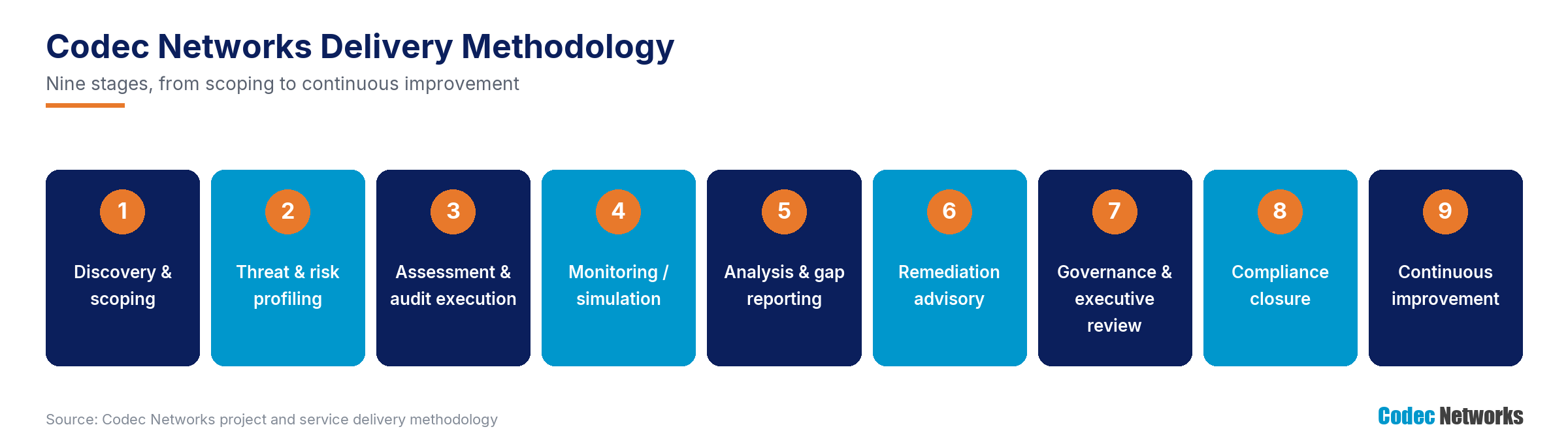
Figure 7: The Codec Networks delivery methodology.
Typical deliverables include an executive summary for the Board or ITSC, a technical findings register with evidence and CVSS ratings, a compliance gap matrix mapped to the applicable RBI Direction, a prioritised remediation roadmap, retest reports and an evidence tracker for the Audit Committee and RBI inspections.
10. Why Codec Networks
- CERT-In empanelled for information security auditing services, and empanelled with NICSI for application audit and compliance services (start-up category).
- Certified to ISO 9001:2015, ISO/IEC 27001:2022 and ISO/IEC 20000-1:2018.
- Full stack: VAPT, regulatory assurance, CSOC, forensics, privacy and Board advisory from one partner.
- Banking depth: digital channel, API, ATM switch, SWIFT and payment security testing aligned to RBI's 2026 Directions.
- Recognised frameworks and tools: OWASP ASVS/MASVS and API Top 10, MITRE ATT&CK, NIST CSF, ISO 27001, PCI DSS; tools such as Burp Suite, Nessus, Metasploit and leading SIEM/EDR platforms.
- Certified people: CEH, OSCP, CPENT, CISA, ISO 27001 LA/LI, CHFI, CTIA and ECIH professionals.
Annex: Indicative commercial ranges
For sales reference only. The ranges are taken from the Codec Networks Bundled Service Models and are subject to scoping, asset counts, frequency and service levels.
|
Bundle |
Package examples and indicative ranges |
|
B1 VAPT Assurance |
Essential ₹1.5–5 lakh; Professional ₹5–15 lakh; Enterprise ₹15–40 lakh; Annual retainer ₹25 lakh–₹1.5 crore |
|
B2 AppSec & DevSecOps |
API Quick Check ₹2–6 lakh; AppSec Professional ₹8–20 lakh; DevSecOps Maturity ₹12–35 lakh; Secure SDLC retainer ₹3–15 lakh/month |
|
B3 Cloud & Zero Trust |
Cloud Essential ₹3–8 lakh; Professional ₹8–25 lakh; Enterprise ₹25–75 lakh; Continuous assurance ₹2–10 lakh/month |
|
B4 Regulatory Audit |
Gap review ₹5–15 lakh; Full regulatory audit ₹15–50 lakh; Multi-framework audit ₹30 lakh–₹1.25 crore; Annual retainer ₹3–20 lakh/month |
|
B5 GRC, ISO, SOC 2 |
ISO readiness ₹5–15 lakh; ISO implementation ₹15–45 lakh; SOC 2 readiness ₹15–60 lakh; GRC retainer ₹2–12 lakh/month |
|
B6 Privacy & DPDPA |
Quick assessment ₹3–10 lakh; Implementation ₹10–40 lakh; DPO-as-a-Service ₹2–8 lakh/month; Privacy retainer ₹3–15 lakh/month |
|
B7 Managed SOC |
Starter ₹2–5 lakh/month; Professional ₹5–15 lakh/month; Enterprise ₹15–50 lakh/month; co-managed per FTE/shift |
|
B8 Forensics & IR |
Triage ₹3–15 lakh; Full investigation ₹15–75 lakh; Ransomware response ₹25 lakh–₹1.5 crore; IR retainer ₹5–50 lakh/year |
|
B9 TPRM |
₹25,000–₹2 lakh per vendor; batch pricing for 50–500 vendors; retainer ₹3–25 lakh/month |
|
B10 Simulation & Tabletop |
Awareness ₹1–5 lakh; Phishing simulation ₹2–10 lakh; Tabletop ₹5–20 lakh; Cyber war-game ₹15–75 lakh; Annual retainer ₹10 lakh–₹1 crore/year |
|
B11 Emerging Tech |
AI/LLM risk review ₹5–25 lakh; Smart contract audit ₹5–50 lakh; Emerging tech retainer ₹5–25 lakh/month |
Talk to Codec Networks
|
Contact Codec Networks Pvt. Ltd. New Delhi: 507, 5th Floor, New Delhi House, Barakhamba Road, Connaught Place, New Delhi – 110001 Gurugram: 707, 7th Floor, Silverton Tower, Golf Course Extension Road, Sector 50, Gurugram – 122018, Haryana Landline: 011 430 496 96 | 011 437 522 99 Mobile: +91 99716 76124 | +91 88007 88220 | +91 88003 31124 Email: mktg@codecnetworks.com Web: www.codecnetworks.com |
Note: Service scope, deliverables, monitoring coverage and service levels are confirmed during engagement scoping. Services support risk reduction and assurance but do not guarantee prevention of all cyber incidents or regulatory compliance. Regulatory references are summaries; confirm against the official Directions applicable to the bank's category.