

Resources Categories
INDUSTRY FACT FILE · CLOUD, DATA CENTRES & HOSTING
Main Products and Services in Cloud, Data Centres and Hosting
What infrastructure providers offer, the systems behind each service and where they create cybersecurity and compliance exposure.
|
In this document 1. How infrastructure providers earn their money 2. Services by provider type 3. Facilities and physical infrastructure 4. Virtualisation, control planes and customer access 5. The systems behind the products and services 6. Trends that change the attack surface 7. Mapping services to Codec Networks engagements |
1. How infrastructure providers earn their money
|
Revenue stream |
How it works |
Security relevance |
|
Compute and storage |
Usage-based IaaS and PaaS fees |
Control-plane and isolation security |
|
Colocation |
Rack space, power and cross-connects |
Physical and facility OT security |
|
Managed services |
Hosting, backup, DR and managed platforms |
Privileged provider access to customers |
|
VPS and bare metal |
Monthly server rentals |
Abuse prevention and subscriber records |
|
GPU and AI infrastructure |
High-value compute rentals |
Firmware and resource-abuse risks |
2. Services by provider type
|
Provider type |
Main services |
Shared systems involved |
|
Cloud service providers |
Compute, storage, networking, databases, AI services |
Hypervisors, control plane, IAM, APIs |
|
Colocation operators |
Racks, cages, power, cooling, interconnection |
BMS, power systems, access control, CCTV |
|
Managed hosting providers |
Dedicated and virtual servers, private cloud, backups |
Hypervisors, management networks, backup systems |
|
VPS providers |
Virtual servers, bare metal, IP addresses |
Provisioning portals, hypervisors, abuse desks |
|
Backup and DR providers |
Backup storage, replication, recovery sites |
Backup platforms and replication links |
3. Facilities and physical infrastructure
Data centres depend on power, cooling, building management systems (BMS), fire suppression, physical access control and CCTV. Many of these systems are networked and remotely supported by vendors—turning facility operations into a cyber attack surface that can cause multi-customer outages.
4. Virtualisation, control planes and customer access
Customers consume infrastructure through self-service consoles and APIs, while providers run hypervisors, management planes and out-of-band hardware management (BMC/IPMI). Support teams and remote-hands engineers handle tickets with privileged access. Each layer must keep customers separated and attackers out.
|
Highest-risk moments Management-plane exposure, console logins, out-of-band access, backup systems and vendor remote access to facility systems are where infrastructure incidents typically begin. |
5. The systems behind the products and services
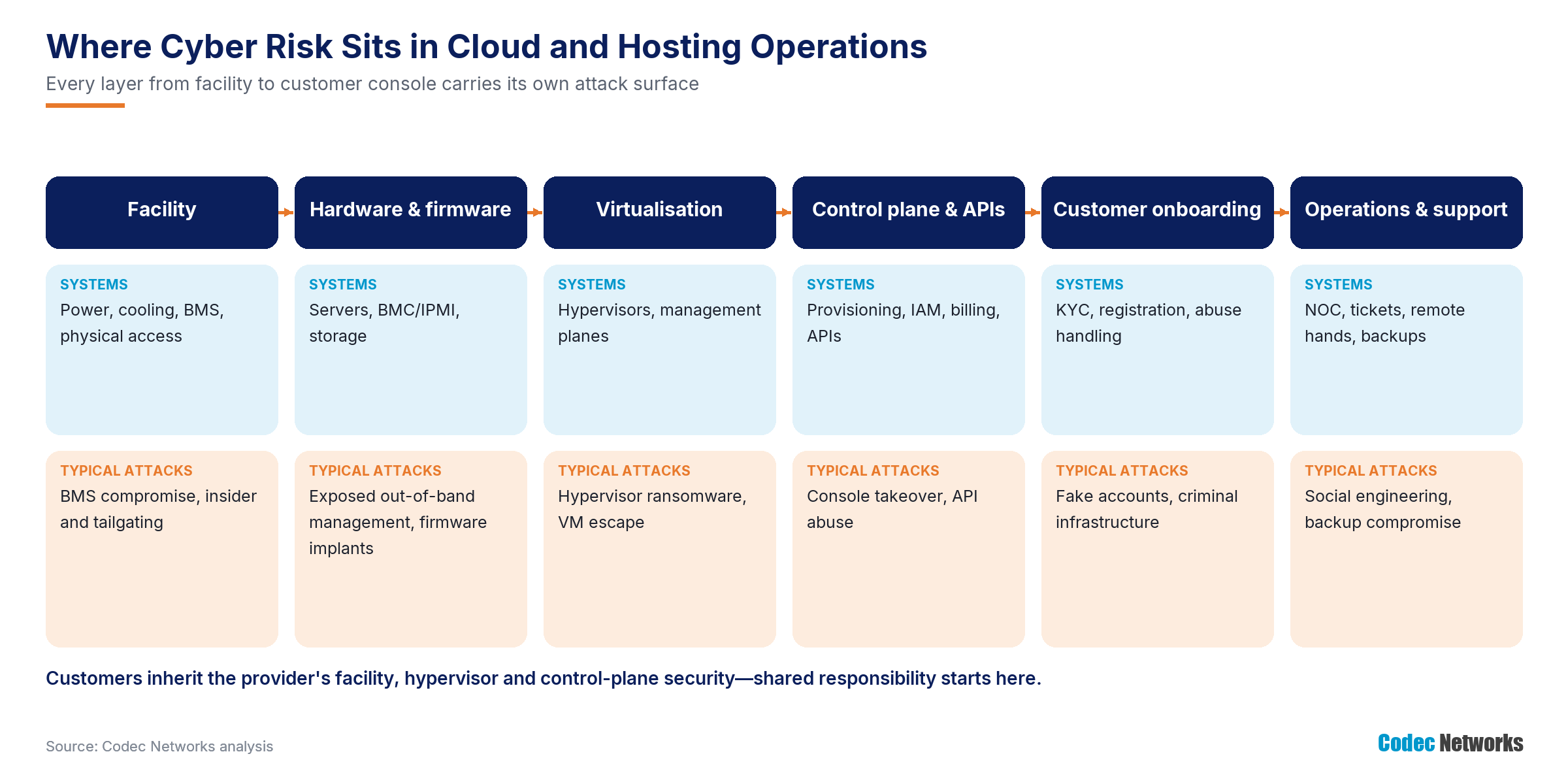
Figure 2: Where cyber risk sits in cloud and hosting operations.
|
Product / service |
Systems that deliver it |
Key cyber and compliance touchpoints |
|
Facility operations |
BMS, power, cooling, access control |
OT segmentation, vendor access, physical security |
|
Hardware management |
BMC/IPMI, firmware, out-of-band networks |
Isolation, credentials, firmware updates |
|
Virtualisation |
Hypervisors and management servers |
Hardening, patching, monitoring |
|
Control plane |
Provisioning, IAM, billing, APIs |
Console and API testing, MFA |
|
Customer onboarding |
Registration, KYC, abuse desk |
CERT-In records, abuse handling |
|
Backup and DR |
Backup platforms, replication |
Immutability, isolation, restore tests |
6. Trends that change the attack surface
|
Trend |
What is changing |
Security implication |
|
AI and GPU demand |
Rapid build-out of high-density compute |
Firmware, supply-chain and abuse risks |
|
Sovereign and government cloud |
Empanelled services for public sector |
Higher assurance expectations |
|
Hybrid and multi-cloud |
Customers spread workloads across providers |
Shared-responsibility confusion |
|
Hypervisor-targeting ransomware |
Attackers encrypt at the virtualisation layer |
Management-plane isolation critical |
|
Edge sites |
Smaller facilities closer to users |
Physical and remote-management exposure |
7. Mapping services to Codec Networks engagements
|
If the provider offers… |
Recommended starting engagement |
|
Public or private cloud |
Control-plane, IAM and tenant isolation testing |
|
Colocation |
Facility OT and physical security assessment |
|
Managed hosting |
Virtualisation hardening, backup and DR testing |
|
VPS services |
Onboarding and CERT-In record-keeping review, abuse process |
|
Services to regulated customers |
Empanelment and customer assurance support |
Talk to Codec Networks
|
Contact Codec Networks Pvt. Ltd. New Delhi: 507, 5th Floor, New Delhi House, Barakhamba Road, Connaught Place, New Delhi – 110001 Gurugram: 707, 7th Floor, Silverton Tower, Golf Course Extension Road, Sector 50, Gurugram – 122018, Haryana Landline: 011 430 496 96 | 011 437 522 99 Mobile: +91 99716 76124 | +91 88007 88220 | +91 88003 31124 Email: mktg@codecnetworks.com Web: www.codecnetworks.com |
Note: Descriptions are general and based on public information available as of October 2026.