

Resources Categories

INDUSTRY FACT FILE · DRONES, ROBOTICS & AUTONOMOUS SYSTEMS
Industry Overview: Drones, Robotics and Autonomous Systems in India
Who builds, flies and runs India's drones, robots and autonomous systems, the rules that apply, who buys cybersecurity in the sector and why each segment needs its own approach.
|
In this document 1. Why drone and robotics security matters now 2. The ecosystem at a glance 3. Categories of drone, robotics and autonomous systems organisations 4. The aviation, industrial, cyber and data framework at a glance 5. Authorities, infrastructure and ecosystem participants 6. Who buys cybersecurity inside a drone or robotics business 7. Why each segment needs a different approach 8. How Codec Networks works with drone, robotics and autonomy businesses |
|
Sector scope Sector: drone and component makers, drone operators and service providers, robotics and warehouse automation firms, autonomous inspection and delivery, fleet and traffic software. Primary service proposition: firmware, communications, control platform and cloud security; authorised navigation resilience testing. Defence and aviation have separate fact files. |
1. Why drone and robotics security matters now
India has set out to become a global drone hub by 2030 and has rebuilt its rules to get there. The Ministry of Civil Aviation notified the Drone Rules 2021 on 25 August 2021, replacing a heavier regime with one based, in its own words, on trust, self-certification and non-intrusive monitoring: the number of forms fell from 25 to 5, the types of fee from 72 to 4, coverage rose from drones of 300 kg to 500 kg, and registration, unique identification numbers (UINs), remote pilot certificates and permissions moved onto DGCA's Digital Sky platform with an interactive green, yellow and red zone airspace map. The Certification Scheme for Unmanned Aircraft Systems followed on 26 January 2022, under which certification bodies approved through the Quality Council of India test drone models and DGCA issues type certificates. On 9 February 2022 the Directorate General of Foreign Trade prohibited the import of drones in built, semi-knocked-down and completely knocked-down form, with exceptions for research and development, defence and security, while leaving components free to import, and a production-linked incentive scheme of ₹120 crore over three financial years, approved in September 2021, rewards domestic manufacture of drones and drone components. The rules now sit under the Bharatiya Vayuyan Adhiniyam 2024, which replaced the Aircraft Act 1934 from 1 January 2025, and in September 2025 the Ministry released a draft Civil Drone (Promotion and Regulation) Bill for public consultation that would give drones their own primary legislation.
|
30,450 Drones registered with UINs on Digital Sky (Feb 2025) |
9,120 Industrial robots installed in India in 2024 (IFR) |
₹120 crore PLI for drones and drone components (2021) |
6 hours To report cyber incidents to CERT-In |
Adoption has followed. The government told the Rajya Sabha that 30,450 drones had been registered with UINs and 23,410 remote pilot certificates issued by DGCA-authorised training organisations as of 28 February 2025. Drone surveys under the SVAMITVA scheme had covered about 3.20 lakh villages and 68,122 square kilometres by April 2025, the Union Cabinet approved the ₹1,261 crore Namo Drone Didi scheme in November 2023 to provide drones to 15,000 women's self-help groups for spraying services, and survey, inspection and delivery operators fly for utilities, infrastructure owners, mines, farms and hospitals. Robotics is growing alongside: the International Federation of Robotics reports that a record 9,120 industrial robots were installed in India in 2024, making it the sixth-largest market in the world, with an operational stock of 52,570 units, while warehouse automation firms deploy autonomous mobile robots, sorters and goods-to-person systems for e-commerce and logistics, and service robots appear in hospitals, hotels and offices.
Every one of these machines is a computer that moves. A drone combines a flight controller and its firmware, radio links for command, telemetry and video, satellite navigation and other sensors, a ground control app on a phone, tablet or laptop, and increasingly a fleet cloud that plans missions, pushes updates and stores imagery. A robot cell or mobile robot fleet adds controllers, middleware such as the Robot Operating System (ROS), fleet management servers, warehouse management integrations and vendor support tunnels. Weaknesses in these layers have been demonstrated publicly. In September 2025 researchers disclosed a flaw in the Bluetooth setup interface of several commercial quadruped and humanoid robot models, built on hard-coded keys, that allowed nearby attackers to run code with full privileges and could in principle spread from robot to robot; the maker acknowledged the vulnerabilities and promised fixes. Security research on ROS has long noted that its first generation had no built-in authentication or encryption, and that the security extensions of ROS 2 depend on careful configuration. Satellite navigation is also under pressure: DGCA issued an advisory circular on GNSS interference in November 2023, and on 1 December 2025 the Civil Aviation Minister told the Rajya Sabha that flights had reported GPS spoofing near Delhi's airport and that GNSS interference reports were also being received from Kolkata, Amritsar, Mumbai, Hyderabad, Bengaluru and Chennai.
Trust in the supply chain has become a commercial and security question in its own right. Reuters reported in August 2023 that India had barred makers of military drones from using components made in China, citing concerns about vulnerabilities in communications, cameras, radio transmission and software. In January 2024 CISA and the FBI issued guidance to US critical infrastructure operators on the data risks of Chinese-manufactured drones, and on 22 December 2025 the US Federal Communications Commission added foreign-produced drones and critical drone components to its Covered List, which blocks new equipment authorisations while leaving previously authorised models in use. For Indian makers, these moves are both an export opportunity and a demand for evidence: buyers increasingly ask where components and software come from, where data flows and how updates are secured. Indian cyber obligations apply as well. CERT-In's Directions require incidents to be reported within six hours and ICT logs to be kept for 180 days, CERT-In's audit guidelines of July 2025 cover risk-based audits including OT, the DPDP Act applies to the people captured in imagery and to pilot and customer data, and exporters to Europe face the Cyber Resilience Act and the cybersecurity requirements of the Radio Equipment Directive, which have applied to internet-connected radio equipment since 1 August 2025.
|
Key takeaway In drones and robotics, a cyber failure can become a safety incident, a grounded fleet, a halted warehouse or a leak of sensitive imagery. Signing and protecting firmware updates, securing links, ground apps and fleet clouds, testing navigation fail-safes under authorised conditions, controlling vendor access and reporting incidents within six hours are now customer, certification and contract expectations, not optional extras. |
2. The ecosystem at a glance
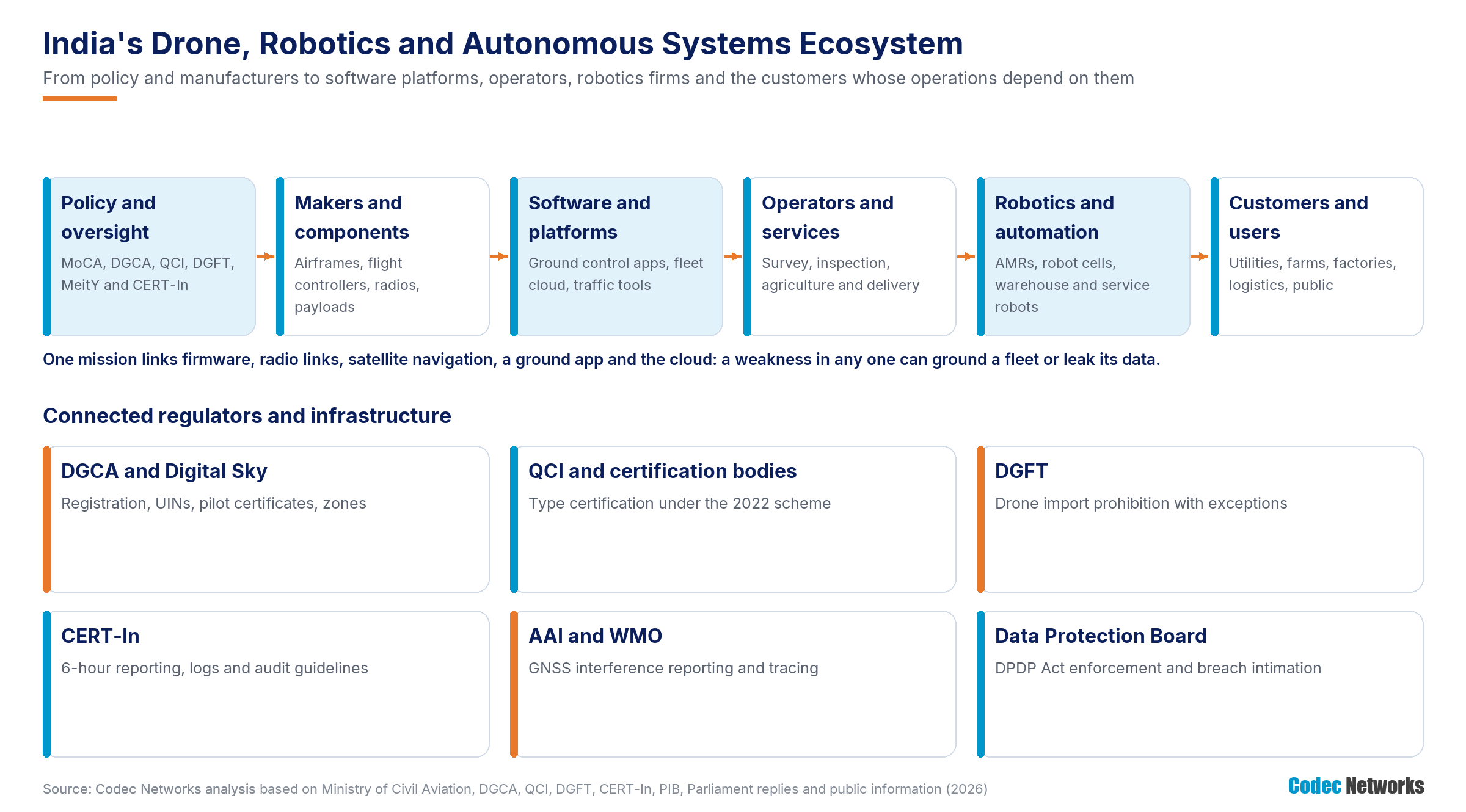
Figure 1: India's drone, robotics and autonomous systems ecosystem.
3. Categories of drone, robotics and autonomous systems organisations
|
Category |
Who they are |
Typical ownership |
Key regulatory basis |
|
Drone manufacturers |
Makers of multirotor, fixed-wing and hybrid drones for agriculture, survey, logistics, security and government buyers |
Private; start-ups, listed firms and joint ventures |
Drone Rules 2021; CSUAS type certification; PLI; DGFT import policy; CERT-In |
|
Component and payload makers |
Flight controllers, radios, motors, batteries, cameras, LiDAR and sensor payloads |
Private, often MSMEs |
PLI for components; buyer and tender terms; CERT-In; EU CRA for exports |
|
Survey, mapping and inspection operators |
Drone service firms that map land, inspect power lines, pipelines, plants and structures |
Private; some PSU arms |
Drone Rules permissions and zones; client contracts; DPDP; CERT-In |
|
Agricultural drone service providers |
Spraying and crop services run by operators, entrepreneurs, FPOs and self-help groups |
Private, cooperative and SHG-run |
Drone Rules; agricultural SOPs; Namo Drone Didi terms; DPDP |
|
Drone delivery and autonomous logistics |
Medical, parcel and remote-area delivery services and autonomous inspection fleets |
Private start-ups and logistics groups |
Drone Rules permissions and corridors; client and health-sector contracts; CERT-In |
|
Robotics and warehouse automation firms |
Makers and integrators of industrial robot cells, AMRs, sorters and goods-to-person systems |
Private; Indian and global firms |
Machinery safety and ISO 10218; IEC 62443; client contracts; CERT-In |
|
Service and inspection robot providers |
Robots for hospitals, hotels, cleaning, security patrols and hazardous inspection |
Private |
IT Act; DPDP for cameras and sensors; client contracts |
|
Fleet, ground control and traffic software providers |
Mission planning, fleet management, drone traffic and data analytics platforms |
Private, often SaaS |
Client contracts and outsourcing terms; CERT-In; DPDP; Digital Sky integration terms |
4. The aviation, industrial, cyber and data framework at a glance
|
Instrument or expectation |
What it means for drone, robotics and autonomy businesses |
|
Bharatiya Vayuyan Adhiniyam 2024 and Drone Rules 2021 |
Primary aviation law from 1 January 2025; Drone Rules cover registration and UINs, type certificates, remote pilot certificates, airspace zones, permissions and penalties through the Digital Sky platform; safety features such as No Permission No Takeoff, tracking beacons and geo-fencing to be notified with a six-month lead time |
|
Drone (Amendment) Rules 2022 and later amendments |
Remote pilot certificates issued through DGCA-authorised remote pilot training organisations on Digital Sky; 2023 and 2024 amendments eased identity document requirements for certificates and registration |
|
Certification Scheme for Unmanned Aircraft Systems (26 January 2022) |
Drone models tested by certification bodies approved under the QCI-owned scheme; DGCA issues type certificates; nano and model drones exempt |
|
DGFT import policy (9 February 2022) and PLI scheme (2021) |
Import of drones prohibited with exceptions for R&D, defence and security under authorisation; components free; ₹120 crore incentive for domestic value addition in drones and components |
|
Draft Civil Drone (Promotion and Regulation) Bill 2025 |
Released for consultation on 16 September 2025; would provide standalone primary legislation for civil drones; confirm its status and any rules made under it before relying on it |
|
DGCA GNSS interference circular (24 November 2023) and SOP (10 November 2025) |
Mitigation, contingency procedures and threat monitoring for GNSS jamming and spoofing; standard procedure for real-time reporting of interference around Delhi's airport |
|
CERT-In Directions (28 April 2022) and audit guidelines (25 July 2025) |
Incidents reported within six hours; ICT logs kept for 180 days in India; clocks synchronised; risk-based independent audits, including OT and ICS environments |
|
IEC 62443 and ISO 10218-1/-2:2025 |
Zones, conduits and security levels for robot cells and automation systems; the 2025 edition of the industrial robot safety standard adds cybersecurity requirements where they affect safety |
|
DPDP Act 2023 and Rules 2025 |
Personal data in imagery and video, pilot and customer records; reasonable security safeguards and breach intimation; most obligations from May 2027 |
|
Export markets: EU CRA and RED; US FCC Covered List |
Secure design and vulnerability handling for connected products sold in the EU (reporting from 11 September 2026, full application 11 December 2027); RED cybersecurity requirements for internet-connected radio equipment since 1 August 2025; no new US authorisations for foreign-produced drones and critical components since December 2025, subject to exemptions |
|
How these apply Aviation duties follow the drone, its category and how and where it is flown; type certification applies to drones operated in India other than nano and model drones; CERT-In's Directions apply to body corporates; DPDP applies to personal data; export rules follow the market. Confirm against the official instruments and your agreements. |
5. Authorities, infrastructure and ecosystem participants
- The Ministry of Civil Aviation sets drone policy, the Drone Rules and incentive schemes, and DGCA runs Digital Sky, registration, remote pilot training approvals, type certificates and safety oversight, including the GNSS interference circular.
- The Quality Council of India owns the certification scheme for drones, and approved certification bodies test models before DGCA issues type certificates; DGFT administers the import policy for drones.
- The Airports Authority of India manages airspace and air traffic control, and the Wireless Monitoring Organisation has been tasked with tracing sources of GNSS interference; state police and security agencies act on unauthorised or hostile drone use.
- CERT-In receives incident reports and issues advisories and audit guidelines; MeitY frames IT and data policy, and the Data Protection Board enforces the DPDP Act.
- Drone and component makers, operators, remote pilot training organisations, robotics and warehouse automation firms and fleet software providers design, fly and run the systems; utilities, farms, factories, logistics firms and government departments depend on them.
- Cloud and connectivity providers, chipset and radio suppliers, mapping and analytics vendors and system integrators sit inside almost every deployment, and their weaknesses become the operator's incidents.
6. Who buys cybersecurity inside a drone or robotics business
|
Stakeholder |
What they care about |
What they buy |
|
Board, founders and CEO |
Certification, tenders and enterprise contracts, safety reputation, export growth |
Board briefings, maturity assessments, crisis exercises |
|
CTO and head of engineering |
Secure firmware, updates, links and autonomy software |
Firmware and product security testing, secure SDLC, threat modelling |
|
Head of product security or CISO |
Fleet cloud exposure, vulnerability handling, CERT-In and buyer audits |
CERT-In empanelled audits, VAPT, SOC, incident response retainers |
|
Head of flight operations or accountable manager |
Safe missions, GNSS resilience, ground station and pilot device security |
Ground control testing, authorised navigation resilience testing, playbooks |
|
Robotics delivery and site operations leads |
Uptime of robot cells and AMR fleets, vendor access, safety |
OT and robot cell assessments, IEC 62443 reviews, remote access reviews |
|
Supply chain and procurement |
Component provenance, trusted-source clauses, supplier evidence |
Supplier assessments, SBOM and provenance reviews |
|
Data protection officer and legal |
Imagery of people and sites, client data terms, DPDP readiness |
Privacy programmes, data mapping, retention and blurring reviews |
7. Why each segment needs a different approach
|
Organisation type |
Highest-consequence risk |
Starting point for assurance |
|
Drone and component makers |
Tampered firmware or a compromised update pipeline reaching every unit |
Firmware review, update signing and secure boot testing, build pipeline review |
|
Survey and inspection operators |
Exposure of sensitive site imagery and client data |
Cloud storage and data handling review, ground control testing, DPDP |
|
Agricultural drone services |
Shared pilot accounts and unmanaged phones running ground apps |
Pilot device and app review, account hygiene, awareness |
|
Delivery and autonomous inspection fleets |
Link, navigation or fleet console compromise during routine operations |
Fleet cloud and API testing, authorised navigation resilience testing, SOC |
|
Robotics and warehouse automation |
Ransomware or vendor access halting robot fleets and sorters |
Robot cell and AMR fleet assessment, segmentation, vendor access review |
|
Fleet and traffic software providers |
Broken tenant isolation exposing many customers at once |
API and multi-tenant testing, cloud review, managed SOC |
8. How Codec Networks works with drone, robotics and autonomy businesses
Codec Networks is a CERT-In empanelled information security auditing organisation, empanelled with NICSI for application audit and compliance services (start-up category), and certified to ISO 9001:2015, ISO/IEC 27001:2022 and ISO/IEC 20000-1:2018. For drone, robotics and autonomous systems businesses we deliver firmware and device security reviews of flight and robot controllers, including secure boot, update signing and hardware interface testing; security testing of command, control, telemetry and video links, Bluetooth and Wi-Fi pairing and LTE or satellite connectivity; VAPT of ground control apps and pilot devices, fleet management clouds, mission and partner APIs and over-the-air update pipelines; authorised navigation resilience testing in controlled environments, coordinated with the customer and any required regulatory permissions, focused on how systems detect and respond to interference; OT and robot cell assessments aligned with IEC 62443, including AMR fleets, ROS exposure and vendor remote access; supply chain and component provenance reviews; CERT-In empanelled audits; ISO 27001 readiness; DPDP programmes for imagery and pilot data; 24x7 managed SOC for fleet clouds and telemetry; and incident response and forensics for drone, robot and fleet incidents. Each proposal confirms auditor eligibility and independence against CERT-In's and the client's requirements. Codec Networks does not develop or supply interference equipment, and it does not provide aviation safety, airworthiness or type certification services.
Talk to Codec Networks
|
Contact Codec Networks Pvt. Ltd. New Delhi: 507, 5th Floor, New Delhi House, Barakhamba Road, Connaught Place, New Delhi – 110001 Gurugram: 707, 7th Floor, Silverton Tower, Golf Course Extension Road, Sector 50, Gurugram – 122018, Haryana Landline: 011 430 496 96 | 011 437 522 99 Mobile: +91 99716 76124 | +91 88007 88220 | +91 88003 31124 Email: mktg@codecnetworks.com Web: www.codecnetworks.com |
Note: This document is general industry guidance based on public information available as of October 2026. It is not legal, regulatory, aviation safety or export control advice. Obligations differ by activity (manufacturing, import, operation, training, software or robotics integration), drone category and type certificate, airspace and permissions, the customers and countries served, listing status, contracts and the data each organisation handles; confirm them against the official Ministry of Civil Aviation, DGCA, QCI, DGFT, CERT-In, MeitY and Data Protection Board instruments, any rules made under the draft Civil Drone (Promotion and Regulation) Bill if enacted, and your agreements. Navigation resilience testing is described only as authorised testing in controlled environments, coordinated with the customer and any required regulatory permissions. Incident references are summarised from official statements and widely reported events.