

Resources Categories

INDUSTRY FACT FILE · DRONES, ROBOTICS & AUTONOMOUS SYSTEMS
Five New Case Studies in Drone, Robotics and Autonomy Security
Original 2026 case studies, each written as a blog post, showing how current threats play out at drone makers, survey operators, delivery fleets, warehouse robotics firms and fleet software providers, and how Codec Networks services break the attack chain.
|
In this document 1. About these case studies 2. Case Study 1: The Update That Flew Itself 3. Case Study 2: The Bucket Full of Rooftops 4. Case Study 3: The Delivery Route That Drifted 5. Case Study 4: The Warehouse That Stopped Picking 6. Case Study 5: The Fleet Console Anyone Could Open |
About these case studies
These five case studies were written for this document set and have not been published elsewhere. Each is a composite scenario combining control failures widely observed in drone, robotics and autonomous systems organisations with the obligations that apply in India as of October 2026—in particular the Drone Rules 2021, the Certification Scheme for Unmanned Aircraft Systems, DGCA's GNSS interference guidance, CERT-In's Directions and audit guidelines, the IT Act and the DPDP Act. Attack techniques are described only at the level needed to explain the controls; no operational detail is given, and navigation resilience testing is described only as authorised testing in controlled environments, coordinated with the customer and any required regulatory permissions.
|
Important disclosure The organisations described are fictional and the scenarios are illustrative. They are not accounts of real incidents, and they are not Codec Networks client engagements or claims of achieved outcomes. Their value lies in showing how connected weaknesses form an attack chain, which controls break it, and which services test those controls. |
|
Case study |
Organisation type |
Core threat |
Regulatory lens |
Primary bundles |
|
1. The Update That Flew Itself |
Agricultural drone maker |
Tampered over-the-air firmware update |
CERT-In; Drone Rules; IT Act; DPDP |
B2, B3, B8 |
|
2. The Bucket Full of Rooftops |
Survey and inspection operator |
Exposed imagery in public cloud storage |
DPDP; CERT-In; client contracts |
B3, B6, B9 |
|
3. The Delivery Route That Drifted |
Drone delivery operator |
GNSS interference and untested fail-safes |
Drone Rules; DGCA GNSS guidance; CERT-In |
B1, B11, B10 |
|
4. The Warehouse That Stopped Picking |
Warehouse robotics firm |
Phished vendor access and ransomware |
CERT-In; IEC 62443; client contracts |
B3, B7, B9 |
|
5. The Fleet Console Anyone Could Open |
Fleet management software provider |
Broken API authorisation across tenants |
CERT-In; DPDP; client contracts |
B2, B1, B7 |
Case Study 1: The Update That Flew Itself
Every drone checked the signature. The attacker had the key.
|
At a glance |
|
|
Organisation |
An Indian maker of agricultural spraying drones (“Droneco A”) with type-certified models, a PLI-supported plant and several hundred drones in service with operators and self-help groups |
|
Threat |
Attackers reached a build server through exposed remote desktop access, found the firmware signing key in a file and released a signed, tampered update |
|
Why it is new |
Over-the-air updates turn one server breach into a fleet-wide incident |
|
Codec Networks services |
Firmware and update pipeline review, key management, incident response (Bundles B2, B3, B8) |
The scenario
Droneco A pushed firmware updates to its fleet over the air from a build server in its engineering office. The drones verified a signature before installing updates, but the private signing key sat in a file on the same server so that releases could be automated. Remote desktop access to the server was open to the internet for engineers working from the field.
Attackers guessed a weak password on the remote desktop service, explored the server for a week and found the signing key. They modified a release candidate so that drones under-reported spray volumes to the cloud and ignored some remote commands, then signed and published it through the normal channel.
Within two days operators complained that drones were behaving oddly and spray records did not match tank levels; two drones would not respond to a land command and had to be recovered manually. Droneco A halted updates, told operators to ground affected drones, engaged forensic investigators, reported to CERT-In and informed customers, scheme partners and its certification contacts. It took weeks to rebuild the pipeline, rotate keys and reflash the fleet.
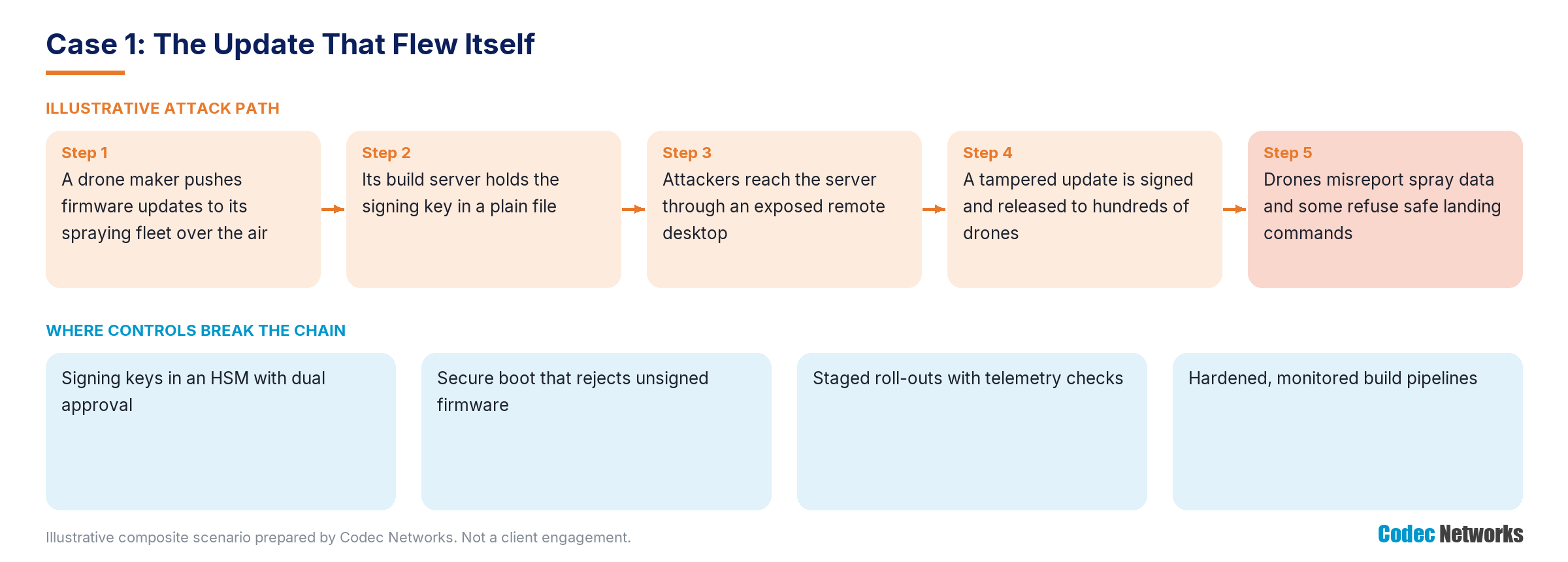
Figure 8: Illustrative attack path for Case Study 1 and the controls that break it.
What went wrong
- A signing key stored in a file on an internet-reachable build server.
- Remote desktop exposed with weak passwords and no MFA.
- No staged roll-out or telemetry checks before full release.
- No monitoring of build and signing activity.
The impact
Operators lost spraying days in peak season, two drones needed manual recovery, Droneco A faced customer claims and questions from scheme partners, and the company rebuilt its release process around hardware-held keys, dual approval and staged roll-outs.
The regulatory lens
- CERT-In Directions: the compromise reported within six hours of noticing it; logs preserved for the investigation.
- Drone Rules and type certification: changes to certified behaviour and safety occurrences raised questions with certification contacts and DGCA processes.
- IT Act and DPDP Act: the intrusion is an offence; operator and farmer personal data in the cloud handled with reasonable safeguards.
How Codec Networks would help
|
Need |
Codec Networks response |
Bundle |
|
Secure the pipeline |
Firmware, secure boot and OTA pipeline review with staged roll-out design |
B2 |
|
Protect the keys |
HSM-backed signing with dual approval, remote access and identity review |
B3 |
|
Contain and recover |
Forensic investigation, firmware comparison, reporting support and recovery plan |
B8 |
|
Key lessons Keep signing keys in hardware. Never expose build servers to the internet. Release to a few before releasing to all. Watch who signs what, and when. |
Case Study 2: The Bucket Full of Rooftops
The flights were flawless. The file sharing was not.
|
At a glance |
|
|
Organisation |
A drone survey and inspection firm (“Surveyco B”) that maps substations and transmission corridors for a power utility and residential areas for a municipal body |
|
Threat |
A contractor made a shared cloud folder public to send large files quickly, exposing substation layouts and imagery of residents |
|
Why it is new |
Imagery is often protected less carefully than the drones that capture it |
|
Codec Networks services |
Cloud storage review, DPDP programme, contractor assurance (Bundles B3, B6, B9) |
The scenario
Surveyco B processed imagery in a cloud workspace and shared deliverables with clients and freelance analysts through folders. Data was not classified, sharing links never expired, and the contract with the utility said little about handling beyond confidentiality.
Under deadline pressure, a freelance analyst changed a project folder to public access so that a colleague could download it without an account. The folder held high-resolution orthomosaics of substations, equipment labels and access roads, and drone imagery of residential streets in which faces and vehicle number plates were visible.
Weeks later a security researcher found the folder and wrote to the utility. The utility suspended Surveyco B's contract, asked for a full review and informed its own security team; the municipal body asked how residents' imagery had been handled. Surveyco B closed the folder, reported to CERT-In and engaged advisers on its DPDP position.
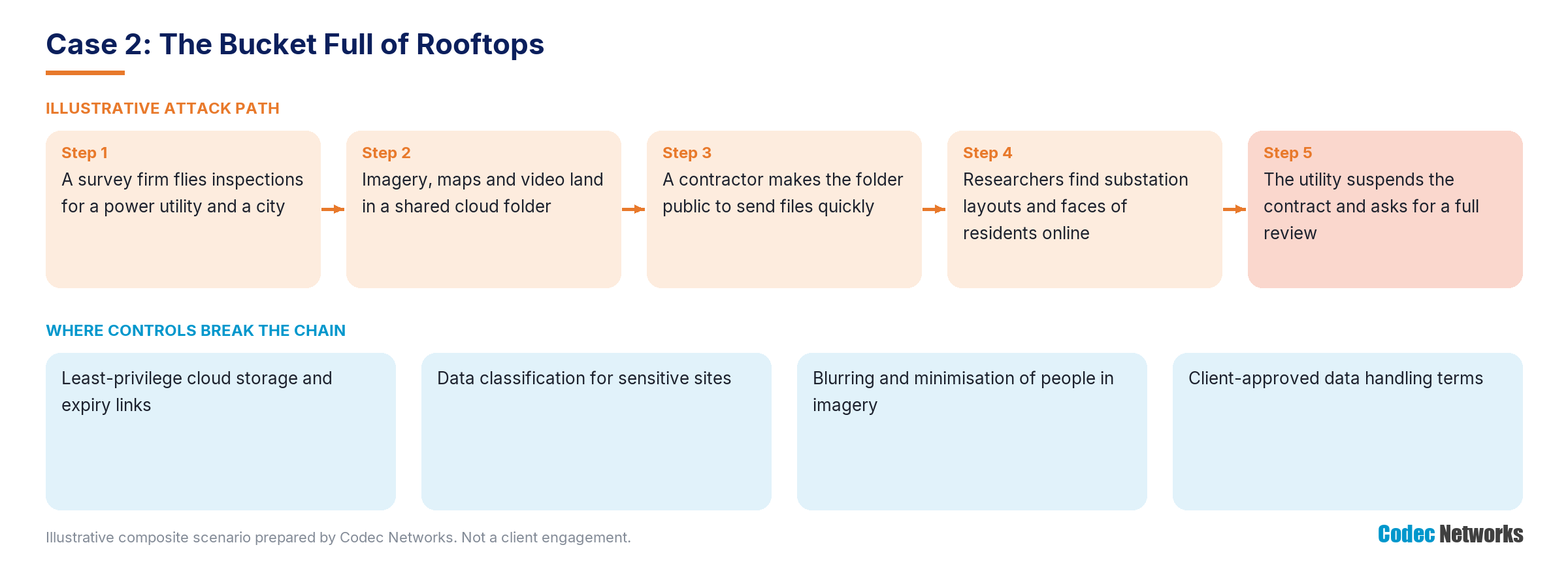
Figure 9: Illustrative attack path for Case Study 2 and the controls that break it.
What went wrong
- No data classification for sensitive sites or people.
- Sharing links that never expired and could be made public.
- Freelancers with broad access and no security terms.
- No blurring or minimisation of people in imagery.
The impact
Surveyco B lost its largest contract for six months, faced reputational damage with public-sector clients and rebuilt its data handling with classification, expiring links, contractor terms and automated blurring.
The regulatory lens
- DPDP Act: imagery of identifiable residents is personal data, requiring reasonable safeguards and, once provisions commence, breach intimation.
- CERT-In Directions: the data exposure assessed and reported within six hours of noticing it where it met the reporting criteria.
- Client contracts: the utility's confidentiality and security terms, and its own critical infrastructure concerns, decided the commercial consequences.
How Codec Networks would help
|
Need |
Codec Networks response |
Bundle |
|
Lock down storage |
Cloud storage and sharing configuration review, access control and expiry |
B3 |
|
Protect people in the data |
DPDP programme with classification, blurring and retention rules |
B6 |
|
Hold contractors to account |
Freelancer and subcontractor security terms and assessments |
B9 |
|
Key lessons Classify imagery before you share it. Make every link expire. Blur what you do not need. Contractors need rules too. |
Case Study 3: The Delivery Route That Drifted
The drones knew where they were. Until they did not.
|
At a glance |
|
|
Organisation |
A drone delivery operator (“Deliveryco C”) running scheduled medical sample and parcel flights between clinics and hubs on the edge of an industrial area |
|
Threat |
Drones on one route reported position jumps from interference whose source was unknown; fail-safes had never been tested and behaved inconsistently |
|
Why it is new |
GNSS interference is now reported around Indian airports, and delivery drones depend on accurate position |
|
Codec Networks services |
Link and ground station testing, authorised navigation resilience testing, exercises (Bundles B1, B11, B10) |
The scenario
Deliveryco C's drones relied mainly on satellite positioning, with inertial sensors used only for short gaps. Its fail-safe settings had been inherited from the manufacturer and never verified for the routes it flew, and pilots had no procedure for reporting suspected interference.
On several days, drones on one route began reporting sudden position jumps. The source was never confirmed and may have been unintentional. Two drones triggered fail-safes inconsistently: one returned to an earlier waypoint, and the other landed in an open plot away from its pad, where staff recovered it without injury.
Deliveryco C paused the route, preserved flight logs, informed its client hospitals and reported the interference through the appropriate channels. A review found that the drones had no integrity alerts, the remote operations team could not see when position quality degraded, and no one had tested how the fleet behaved when navigation became unreliable.
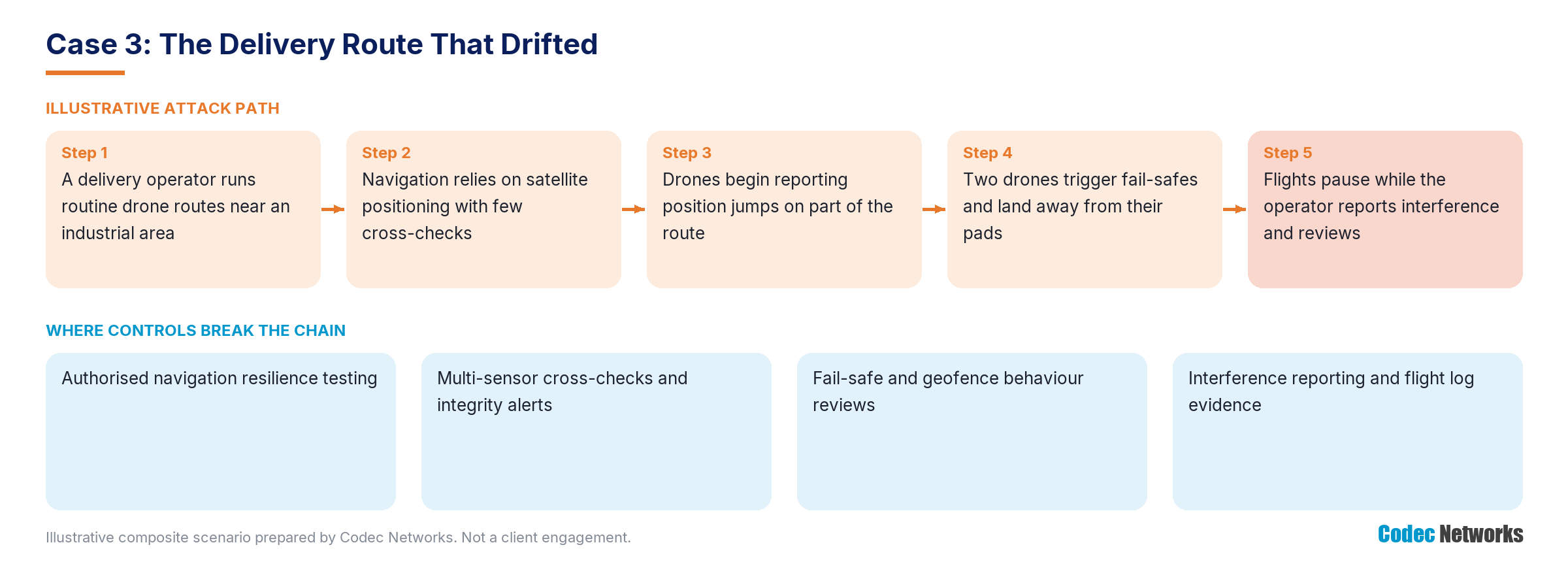
Figure 10: Illustrative attack path for Case Study 3 and the controls that break it.
What went wrong
- Heavy dependence on a single navigation source.
- Fail-safes never verified for the routes flown.
- No integrity alerts for the remote operations team.
- No interference reporting procedure or playbook.
The impact
Deliveryco C suspended a revenue route for weeks, faced questions from hospital clients and its insurer, and introduced sensor cross-checks, integrity alerts, verified fail-safes and an interference reporting playbook before resuming flights.
The regulatory lens
- Drone Rules and permissions: operations, safety occurrences and records handled under the operator's permissions and DGCA procedures.
- DGCA GNSS guidance: the 2023 circular's expectations on mitigation, contingency procedures and reporting informed the review and playbook.
- CERT-In Directions: the team assessed whether any cyber compromise of systems was involved; none was found, and logs were preserved.
How Codec Networks would help
|
Need |
Codec Networks response |
Bundle |
|
Test the control path |
Link, ground station and remote operations centre security testing |
B1 |
|
Verify the fail-safes |
Authorised navigation resilience testing in a controlled environment, coordinated with the customer and any required regulatory permissions |
B11 |
|
Rehearse the response |
Interference and lost-navigation tabletop with operations, clients and leadership |
B10 |
|
Key lessons Never trust one navigation source alone. Test fail-safes before you need them. Show operators when position degrades. Test only with authorisation and control. |
Case Study 4: The Warehouse That Stopped Picking
The robots were fine. The server that told them what to do was not.
|
At a glance |
|
|
Organisation |
A warehouse automation firm (“Robotco D”) that runs a fleet of autonomous mobile robots and sorters for a large third-party logistics customer under a robots-as-a-service contract |
|
Threat |
A support engineer was phished and the team's shared, always-on remote access account was used to deploy ransomware on the fleet management server |
|
Why it is new |
Robots-as-a-service puts vendor access at the heart of customer operations |
|
Codec Networks services |
Vendor access and segmentation review, managed SOC, supplier assurance (Bundles B3, B7, B9) |
The scenario
Robotco D's support team maintained the robot fleet through a single shared remote access account with a permanent tunnel into the customer's warehouse network. The fleet management server, which assigned tasks to robots and exchanged orders with the warehouse management system, sat on the same flat network as warehouse PCs, and its backups were stored on a share reachable from it.
An engineer entered credentials on a fake login page during the peak season. Attackers used the shared account at night, moved to the fleet management server and encrypted it and the backup share.
At the start of the morning shift the robots stopped receiving tasks. The customer switched to manual picking, but orders backed up for four days while Robotco D rebuilt the server from older images. The customer invoked SLA penalties and demanded a security review; Robotco D and the customer reported the incident to CERT-In.
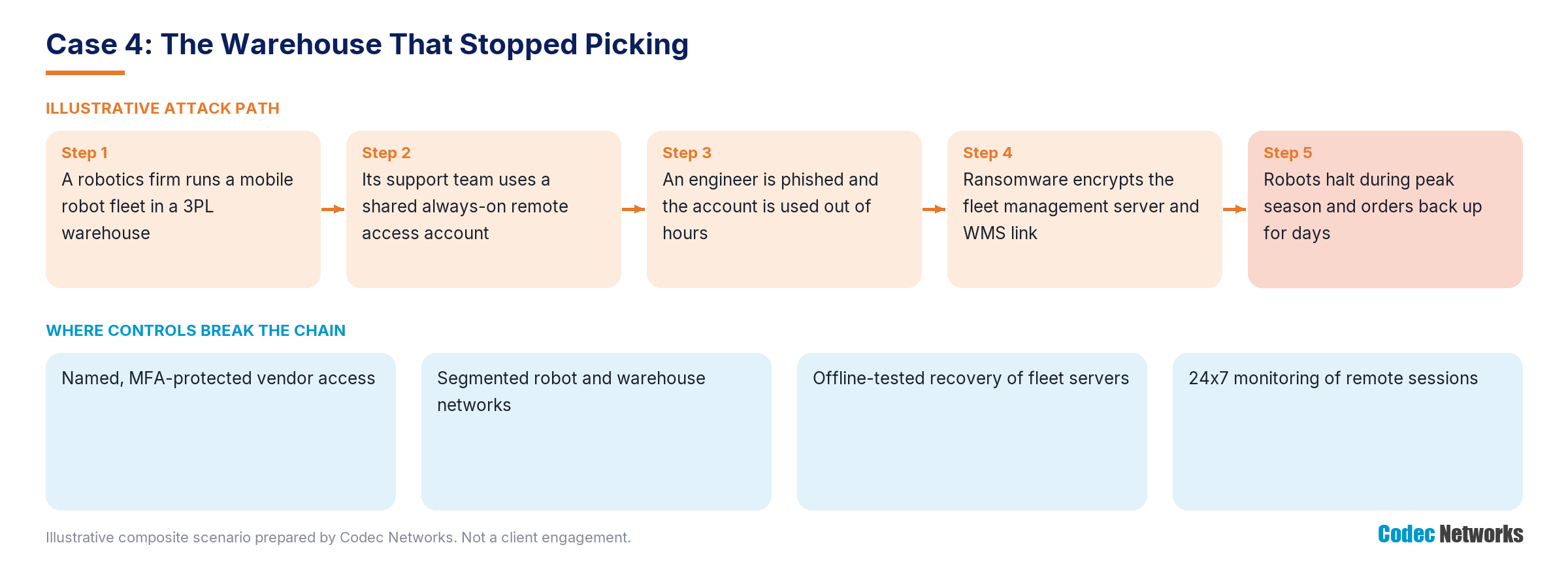
Figure 11: Illustrative attack path for Case Study 4 and the controls that break it.
What went wrong
- A shared, always-on remote access account without MFA.
- A flat network joining robots, fleet servers and warehouse PCs.
- Backups reachable from the server they protected.
- No monitoring of remote sessions at night.
The impact
The customer lost four days of automated throughput in peak season and claimed SLA penalties, and Robotco D rebuilt its support model around named, MFA-protected, time-bound access, segmentation and offline backups.
The regulatory lens
- CERT-In Directions: ransomware reported within six hours of noticing it; logs preserved.
- IEC 62443 and CERT-In audits: zones, conduits and remote access controls for automation systems became part of the customer's OT audit scope.
- Client contracts: SLA, security and notification clauses decided penalties and remediation duties.
How Codec Networks would help
|
Need |
Codec Networks response |
Bundle |
|
Fix the access path |
Vendor remote access review, PAM, MFA and network segmentation design |
B3 |
|
Watch the sessions |
24x7 monitoring of remote sessions, fleet servers and OT alerts |
B7 |
|
Assure the vendor |
Supplier assessment of the robotics provider against the customer's requirements |
B9 |
|
Key lessons Name every support account. Separate robots from the office network. Keep backups out of reach. Watch remote sessions around the clock. |
Case Study 5: The Fleet Console Anyone Could Open
Every customer had a login. Not every request checked whose data it asked for.
|
At a glance |
|
|
Organisation |
A fleet management software firm (“Fleetco E”) whose cloud platform plans missions, stores imagery links and manages pilots for dozens of drone operators |
|
Threat |
The mission API trusted an organisation ID sent by the client app, so one customer could view and edit another customer's missions |
|
Why it is new |
Multi-tenant platforms concentrate risk: one flaw affects every customer |
|
Codec Networks services |
API and multi-tenant testing, platform VAPT, SOC monitoring (Bundles B2, B1, B7) |
The scenario
Fleetco E's web and mobile apps sent an organisation ID with each request to its mission API. The server checked that the user was logged in but not that the user belonged to that organisation. Penetration tests had focused on the login page and had not tested tenant isolation in depth.
An engineer at a customer noticed that changing the ID in a request returned another operator's missions, including flight plans over industrial sites, links to imagery and pilot names and phone numbers. Edits to mission waypoints were also accepted.
The customer's partner reported the flaw to Fleetco E, which fixed it within a day, reviewed logs to see whether it had been abused, reported to CERT-In and notified affected customers. Several enterprise clients asked for independent evidence of the platform's security before renewing.
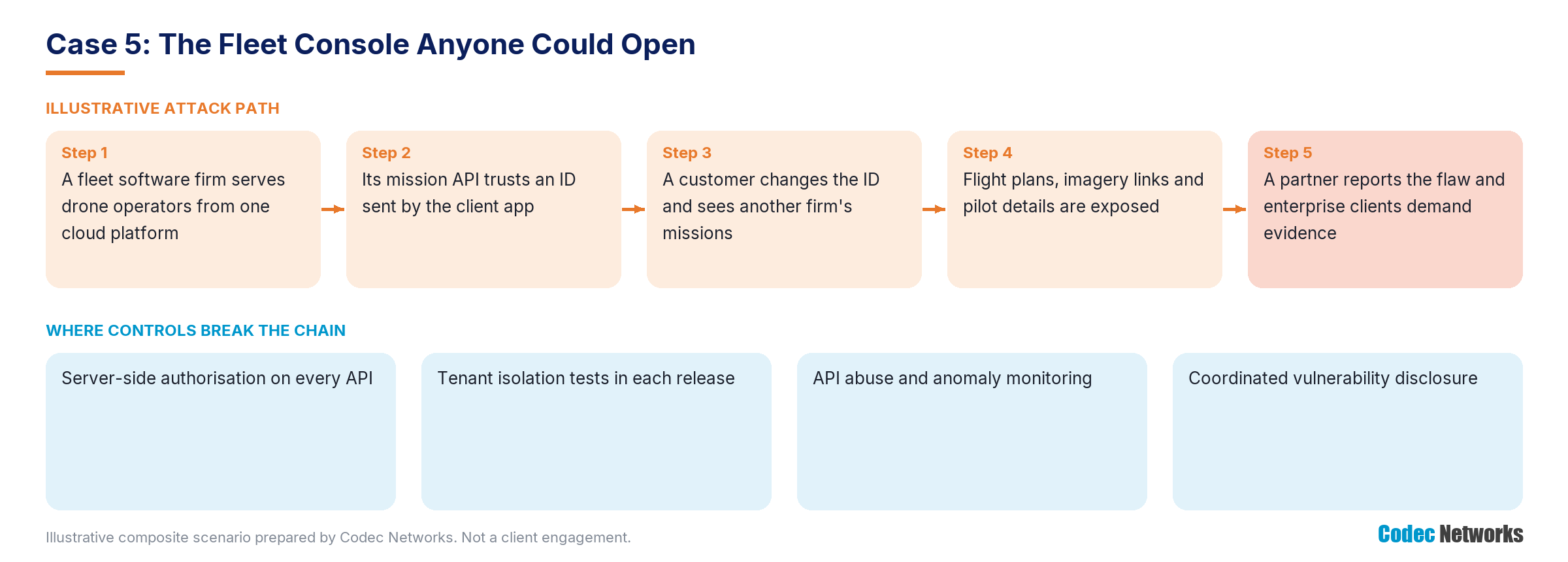
Figure 12: Illustrative attack path for Case Study 5 and the controls that break it.
What went wrong
- Authorisation based on an ID supplied by the client.
- Testing that did not cover tenant isolation.
- No monitoring for cross-tenant requests.
- No published vulnerability disclosure process.
The impact
Fleetco E avoided known abuse but faced customer audits, delayed renewals and DPDP questions about pilot data, and introduced server-side authorisation checks, tenant isolation tests in every release, API monitoring and a disclosure policy.
The regulatory lens
- CERT-In Directions: the vulnerability and any unauthorised access assessed and reported within six hours of noticing a reportable incident.
- DPDP Act: pilot names and contact details are personal data requiring reasonable safeguards and, once provisions commence, breach intimation.
- Client contracts: security, audit and notification clauses shaped customer demands for evidence.
How Codec Networks would help
|
Need |
Codec Networks response |
Bundle |
|
Fix the logic |
API and multi-tenant security testing with fix verification in each release |
B2 |
|
Test the platform |
Full platform VAPT of web, mobile, cloud and mission control paths |
B1 |
|
Watch the API |
Monitoring for cross-tenant requests and unusual mission edits |
B7 |
|
Key lessons Check authorisation on the server, every time. Test tenant isolation in every release. Monitor for requests that cross tenants. Make it easy to report flaws. |
Talk to Codec Networks
|
Contact Codec Networks Pvt. Ltd. New Delhi: 507, 5th Floor, New Delhi House, Barakhamba Road, Connaught Place, New Delhi – 110001 Gurugram: 707, 7th Floor, Silverton Tower, Golf Course Extension Road, Sector 50, Gurugram – 122018, Haryana Landline: 011 430 496 96 | 011 437 522 99 Mobile: +91 99716 76124 | +91 88007 88220 | +91 88003 31124 Email: mktg@codecnetworks.com Web: www.codecnetworks.com |