

Resources Categories

INDUSTRY FACT FILE · HEALTHCARE & HEALTHTECH
Market Landscape and the Drivers of Cybersecurity Demand in Healthcare
The business, technology, regulatory, legal and statutory forces that create cybersecurity, audit and assurance work for hospitals, diagnostics and healthtech.
|
In this document 1. Market landscape 2. Business drivers 3. Technology drivers 4. Regulatory drivers: DPDP, CERT-In, ABDM and health rules 5. Legal and statutory drivers 6. How the drivers differ by organisation type 7. What this means for buyers and for Codec Networks |
1. Market landscape
India's healthcare market spans large private hospital chains, public hospitals, standalone clinics, diagnostic networks and a fast-growing healthtech sector. Digital public infrastructure such as ABDM, the growth of telemedicine and insurance-led care are digitising patient journeys—while ransomware and data leakage incidents show the cost of weak security.
|
Nov 2022 AIIMS New Delhi ransomware disruption |
6 hours Incident reporting to CERT-In |
180 days ICT log retention in India |
May 2027 Most DPDP obligations take effect |
|
Market segment |
Landscape and buying behaviour |
Cybersecurity opportunity |
|
Hospital chains |
Many sites, complex clinical estates |
SOC, ransomware readiness, medical IoT programmes |
|
Standalone hospitals and clinics |
Lean IT, legacy systems |
VAPT, backups, managed services |
|
Diagnostic networks |
Digital reports at scale |
Portal and API testing, availability |
|
Healthtech platforms |
Cloud-native, app-centric |
App, API, consent and cloud reviews |
2. Business drivers
|
Business driver |
Buying trigger |
Relevant services |
|
Patient safety |
Outages disrupt care |
Ransomware readiness and DR |
|
Accreditation |
Quality standards include information management |
Policies, audits, evidence |
|
Insurer and TPA partners |
Partners require secure data exchange |
Interface and partner assessments |
|
Reputation and trust |
Leaks erode patient confidence |
Data protection programmes |
|
Growth through acquisition |
Inherited legacy estates |
Post-acquisition security reviews |
3. Technology drivers
|
Technology driver |
Exposure created |
Codec Networks opportunity |
|
HIS and EMR |
Ransomware and access misuse |
Application VAPT and access reviews |
|
Medical devices |
Unpatchable, networked equipment |
Medical IoT security |
|
Report portals and APIs |
Bulk leakage |
Authorisation testing |
|
Telemedicine apps |
SDK and session leakage |
Mobile and privacy testing |
|
Cloud platforms |
Misconfiguration |
Cloud reviews |
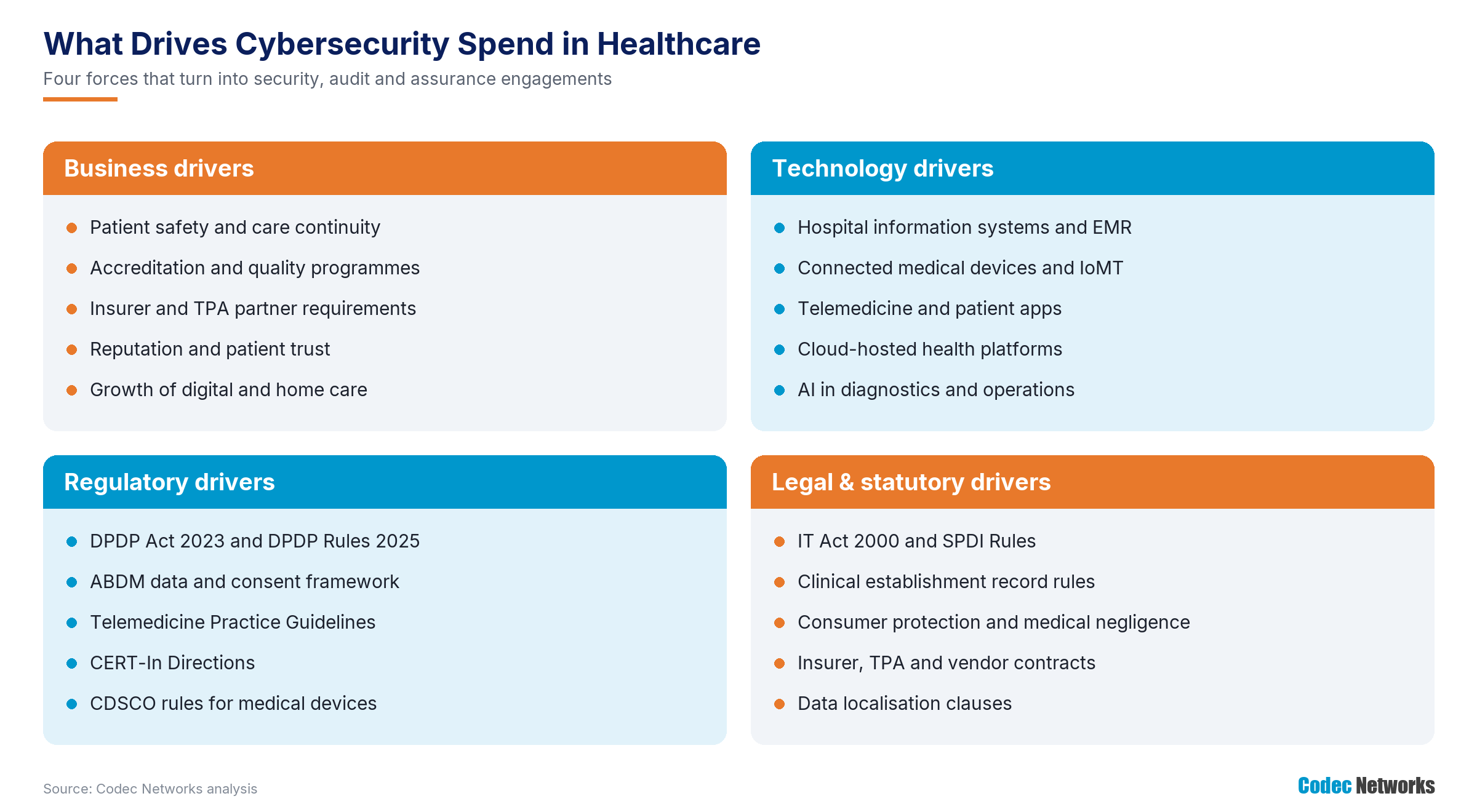
Figure 3: The four groups of drivers behind cybersecurity spending in healthcare.
4. Regulatory drivers: DPDP, CERT-In, ABDM and health rules
|
Instrument |
Key requirements |
|
DPDP Act 2023 and Rules 2025 |
Safeguards, consent and breach intimation for patient personal data; most obligations from May 2027 |
|
CERT-In Directions (2022) |
Six-hour incident reporting; 180-day ICT logs in India |
|
ABDM framework |
Consent-based health record exchange and data management policies for participants |
|
Telemedicine Practice Guidelines (2020) |
Teleconsultation standards including records and privacy |
|
Medical Devices Rules 2017 |
Regulation of medical devices and software by CDSCO |
|
Confirm applicability Obligations vary by organisation type, state rules and ABDM participation. Confirm against the official instruments. |
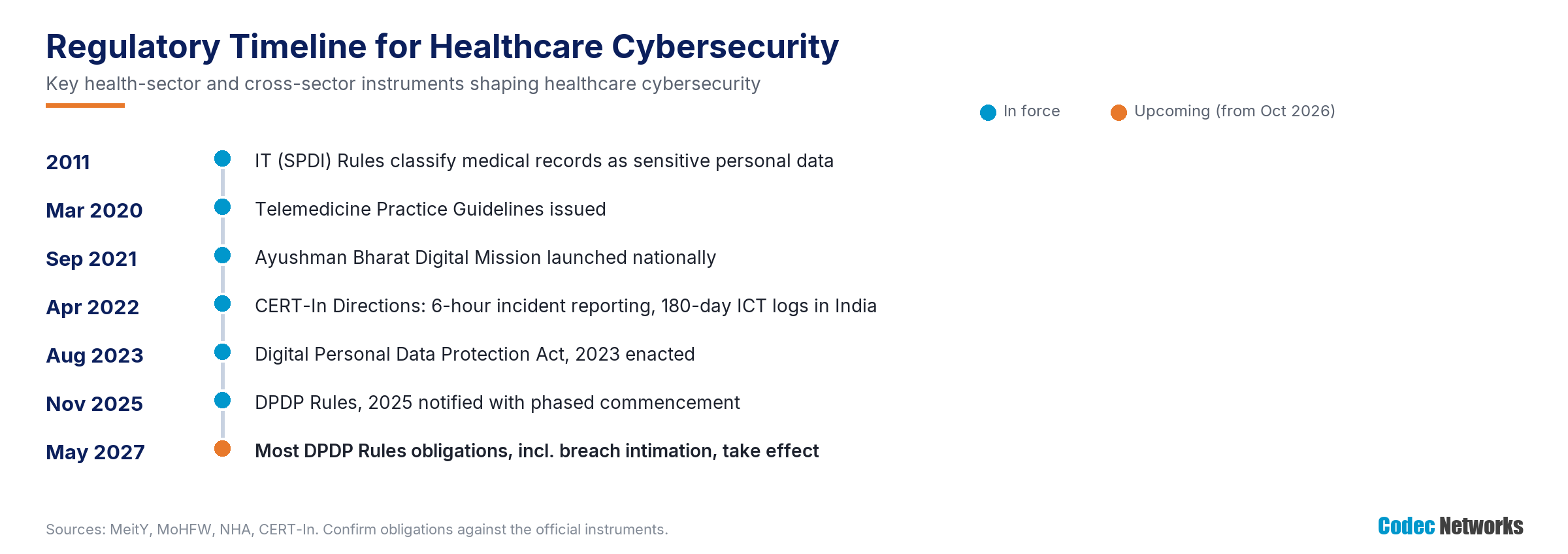
Figure 4: Regulatory timeline for healthcare cybersecurity, as of October 2026.
5. Legal and statutory drivers
|
Law or obligation |
Relevance |
Demand created |
|
DPDP Act, 2023 and Rules, 2025 |
Patient personal data |
Privacy programmes and safeguards |
|
IT Act, 2000 and SPDI Rules, 2011 |
Sensitive personal data until replaced by DPDP |
Reasonable security practices |
|
Clinical Establishments Act, 2010 and state laws |
Registration and records |
Record-keeping controls |
|
Consumer protection and negligence law |
Harm from service failures |
Continuity and data protection |
|
Contracts |
Insurer, TPA, vendor and cloud agreements |
Assurance evidence |
6. How the drivers differ by organisation type
|
Organisation type |
Dominant business drivers |
Dominant technology drivers |
Principal regulatory drivers |
|
Hospital chains |
Patient safety, accreditation |
HIS, devices, PACS |
DPDP, CERT-In, accreditation |
|
Standalone hospitals |
Continuity, cost |
Legacy HIS |
DPDP, CERT-In |
|
Diagnostics |
Report trust, scale |
LIS, portals |
DPDP, lab accreditation |
|
Healthtech |
Growth, user trust |
Apps, APIs, cloud |
DPDP, ABDM, telemedicine guidelines |
7. What this means for buyers and for Codec Networks
|
Customer buying need |
Recommended offering |
Natural recurring engagement |
|
“Could ransomware stop our hospital?” |
Ransomware readiness assessment |
Annual drills and SOC |
|
“Are our devices exposed?” |
Medical IoT assessment |
Continuous IoMT monitoring |
|
“Can anyone download reports?” |
Portal and API testing |
Release-linked testing |
|
“Are we ready for DPDP?” |
DPDPA programme for health data |
Periodic privacy reviews |
|
“We need 24x7 monitoring.” |
Managed SOC |
Continuous monitoring |
Talk to Codec Networks
|
Contact Codec Networks Pvt. Ltd. New Delhi: 507, 5th Floor, New Delhi House, Barakhamba Road, Connaught Place, New Delhi – 110001 Gurugram: 707, 7th Floor, Silverton Tower, Golf Course Extension Road, Sector 50, Gurugram – 122018, Haryana Landline: 011 430 496 96 | 011 437 522 99 Mobile: +91 99716 76124 | +91 88007 88220 | +91 88003 31124 Email: mktg@codecnetworks.com Web: www.codecnetworks.com |
Note: This document is general industry guidance based on public information available as of October 2026. It is not legal or clinical advice. Confirm obligations against the official MeitY, MoHFW, NHA, CDSCO and CERT-In instruments and applicable state rules.