

Resources Categories

INDUSTRY FACT FILE · HOSPITALITY, TRAVEL & TOURISM
Main Products and Services in Hospitality, Travel and Tourism
What India's hotels, travel platforms, tour operators, restaurants and venues sell, the booking, payment, property, loyalty and partner systems behind each service, and where those systems create cybersecurity, privacy and compliance exposure.
|
In this document 1. How hospitality and travel companies earn their money 2. Products and services by business type 3. The distribution and payment layer: booking engines, OTAs, channel managers and gateways 4. The property layer: PMS, PoS, Wi-Fi, keys and loyalty 5. The systems behind the products and services 6. Trends that change the attack surface 7. Mapping operations to Codec Networks engagements |
1. How hospitality and travel companies earn their money
|
Revenue stream |
How it works |
Security relevance |
|
Room revenue |
Direct bookings, OTAs, corporate and group contracts, walk-ins |
Booking engine and OTA security, rate integrity, guest data |
|
Food and beverage |
Restaurants, bars, banquets, room service, delivery |
PoS security, PCI DSS scope, delivery platform integrations |
|
Events and MICE |
Conferences, exhibitions, weddings, incentives |
Conference networks, deposit flows, attendee data |
|
Travel commissions and fees |
OTA and agent commissions, convenience fees, packages |
Platform availability, API security, payment flows |
|
Loyalty and partnerships |
Co-branded cards, points sales, partner redemptions |
Loyalty fraud, partner API security, member data |
|
Management and franchise fees |
Brand fees from owners, technology fees |
Brand standards, shared systems, owner data |
2. Products and services by business type
|
Business type |
Main products and services |
Key systems |
|
Hotel chains and owners |
Rooms, F&B, spa, events, loyalty |
PMS, central reservations, booking engine, channel manager, PoS, key systems, Wi-Fi, CRM |
|
OTAs and booking platforms |
Air, hotel, bus, rail, holiday and activity bookings |
Web and mobile apps, supplier APIs, GDS links, payment gateways, wallets, CRM |
|
Tour operators and DMCs |
Packages, MICE, ground handling, visas |
Booking and itinerary systems, partner portals, payment links, document stores |
|
Restaurants and QSR |
Dine-in, takeaway, delivery, franchising |
PoS, kitchen display, delivery aggregator integrations, loyalty apps |
|
Event venues |
Halls, exhibitions, ticketing, catering |
Venue booking, ticketing platforms, access control, conference Wi-Fi, AV networks |
|
Loyalty and travel tech |
Programmes, platforms and services to operators |
Multi-tenant SaaS, APIs, data warehouses, payment integrations |
3. The distribution and payment layer: booking engines, OTAs, channel managers and gateways
Distribution is a mesh. A hotel's booking engine, OTAs, metasearch, global distribution systems and corporate booking tools all feed reservations into the property management system through a channel manager and central reservations system; rates and availability flow back the other way. OTA extranets give hotel staff accounts to manage listings and guest messages—accounts that phishing campaigns now target so that criminals can message guests for 'payment verification' in the hotel's name. Payment gateways, tokenisation services and acquirers handle cards at booking, check-in and check-out, and since October 2022 merchants must hold tokens rather than card numbers.
OTAs and booking platforms run the same picture at scale: consumer apps and APIs, hundreds of supplier integrations, wallets and instant refunds, and large customer databases. Sabre's 2017 SynXis breach and the 2024-25 Otelier breach showed that a single platform can expose reservations and card data across thousands of properties.
4. The property layer: PMS, PoS, Wi-Fi, keys and loyalty
At the property, the PMS holds guest profiles, identity documents scanned at check-in, folios and stay histories; it feeds Form C reports to the Bureau of Immigration, PoS systems in restaurants and bars, key-card and door-lock systems, in-room entertainment, guest Wi-Fi and building management. Loyalty platforms and CRM hold member profiles, points balances and preferences shared across brands and partners. Many of these systems are cloud services run by vendors, with staff and vendor access spread across properties.
When they fail, the hotel stops: MGM's 2023 attack disabled room keys, reservations and slot machines; Omni Hotels' 2024 outage left properties working around systems for days. When they leak, guests' passports, cards and movements travel with the data—as Marriott's 339 million-record breach and the Otelier exposure showed.
|
Highest-risk moments OTA extranet logins without MFA, booking engine and app releases before peak season, card capture at front desks and in restaurants, identity document scanning and Form C handling, conference and VIP events on guest networks, loyalty redemptions through partner APIs, vendor support access to the PMS and deposit or settlement bank-detail changes are where hospitality and travel incidents typically begin or escalate. |
5. The systems behind the products and services
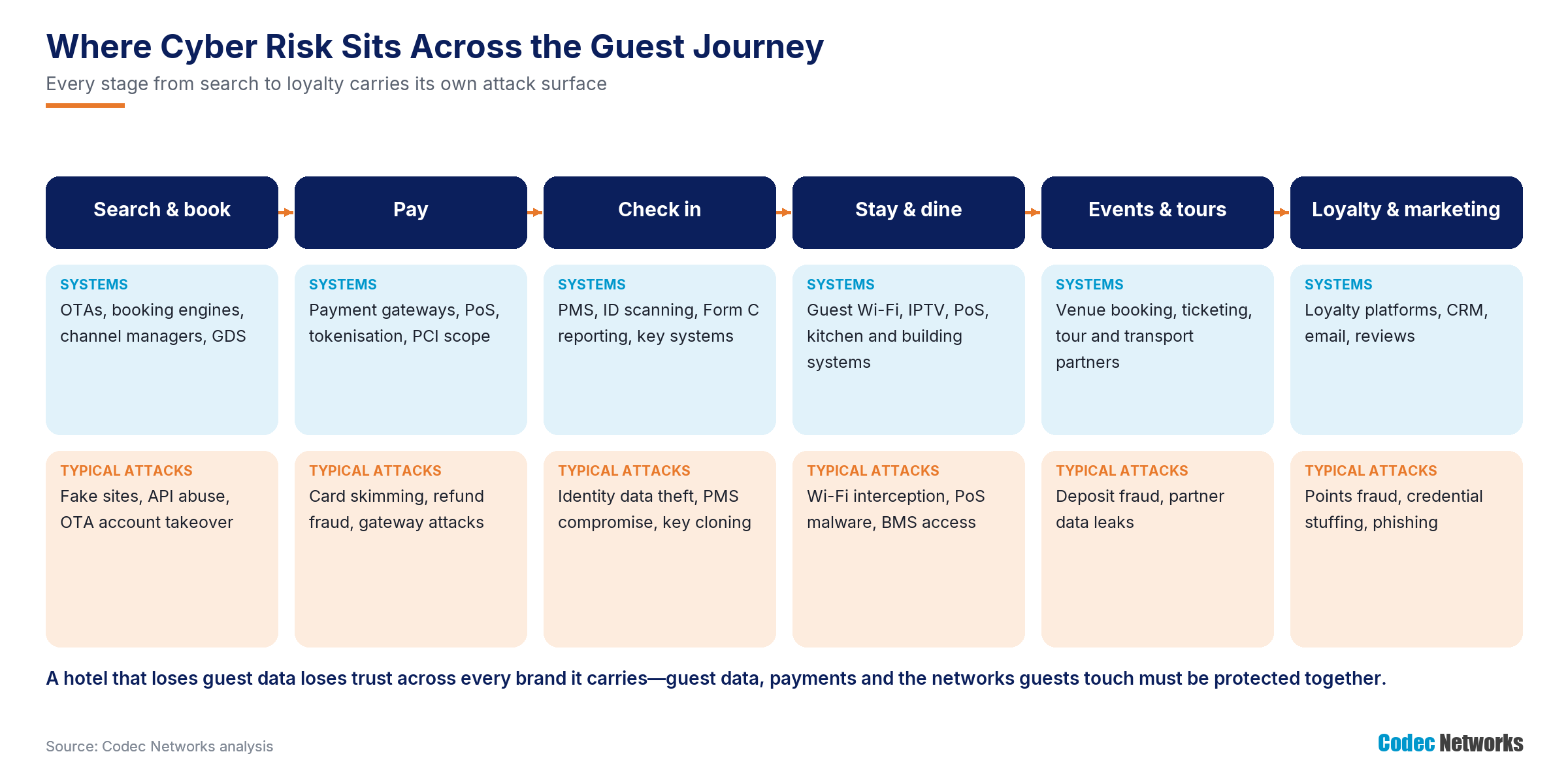
Figure 2: Where cyber risk sits across the guest journey.
|
Product / service |
Systems that deliver it |
Key cyber and compliance touchpoints |
|
Search and book |
Booking engines, OTAs, channel managers, GDS, apps |
Application and API testing, bot defence, extranet MFA |
|
Pay |
Payment gateways, tokenisation, PoS, acquirers |
PCI DSS scoping, payment flow testing, fraud controls |
|
Check in |
PMS, identity scanning, Form C reporting, key systems |
Identity data protection, PMS and vendor access, key system review |
|
Stay and dine |
Guest Wi-Fi, IPTV, PoS, kitchen systems, building management |
Wi-Fi testing, segmentation, PoS malware controls |
|
Events and tours |
Venue booking, ticketing, partner portals, transport |
Deposit verification, partner access, attendee data |
|
Loyalty and marketing |
Loyalty platforms, CRM, email, review and social platforms |
Loyalty fraud controls, DPDP, brand monitoring |
6. Trends that change the attack surface
|
Trend |
What is changing |
Security implication |
|
Direct and mobile booking |
Brands pushing apps, mobile check-in and digital keys |
More consumer-facing code and APIs to secure |
|
OTA extranet phishing |
Campaigns targeting hotel accounts to defraud guests |
MFA and monitoring on distribution accounts |
|
Cloud PMS and vendor platforms |
Multi-property data in a few SaaS providers |
Vendor breaches become brand breaches |
|
Payments modernisation |
Tokenisation, UPI, wallets and contactless |
PCI scope reduction with new integration risks |
|
Loyalty as currency |
Points redeemable across partners and airlines |
Credential stuffing and redemption fraud |
|
Regulatory formalisation |
DPDP, CERT-In audits, immigration and GST changes |
Privacy and audit programmes across properties |
7. Mapping operations to Codec Networks engagements
|
If the business operates… |
Recommended starting engagement |
|
A booking engine, app or OTA integrations |
Application and API security testing, extranet account review |
|
Card payments at front desk, PoS or online |
PCI DSS v4.0.1 scoping and readiness, payment flow testing |
|
Properties with guest and conference Wi-Fi |
Wireless penetration testing and segmentation review |
|
Guest identity, loyalty and CRM data across vendors |
DPDP programme, data mapping, vendor assurance |
|
A brand presence targeted by fake sites and impersonation |
Brand monitoring and takedown service |
|
Many properties with thin IT teams |
24x7 SOC, playbooks and crisis exercises |
Talk to Codec Networks
|
Contact Codec Networks Pvt. Ltd. New Delhi: 507, 5th Floor, New Delhi House, Barakhamba Road, Connaught Place, New Delhi – 110001 Gurugram: 707, 7th Floor, Silverton Tower, Golf Course Extension Road, Sector 50, Gurugram – 122018, Haryana Landline: 011 430 496 96 | 011 437 522 99 Mobile: +91 99716 76124 | +91 88007 88220 | +91 88003 31124 Email: mktg@codecnetworks.com Web: www.codecnetworks.com |
Note: Descriptions are general and based on public information available as of October 2026. Systems and exposures differ by brand, property and platform.