

Resources Categories

INDUSTRY FACT FILE · IT SERVICES & SYSTEMS INTEGRATION
Market Landscape and the Drivers of Cybersecurity Demand in IT Services
The business, technology, regulatory, legal and statutory forces that create cybersecurity, audit and assurance work for IT service firms and system integrators.
|
In this document 1. Market landscape 2. Business drivers 3. Technology drivers 4. Regulatory drivers: CERT-In and client flow-down 5. Legal and statutory drivers 6. How the drivers differ by provider type 7. What this means for buyers and for Codec Networks |
1. Market landscape
India is one of the world's largest IT services hubs, ranging from global IT majors to specialist integrators, MSPs and engineering start-ups. Clients increasingly treat providers as part of their own attack surface, asking for audit evidence, certifications and incident commitments before—and throughout—a contract.
|
6 hours Incident reporting to CERT-In |
180 days ICT log retention in India |
Sep 2026 EU CRA reporting obligations apply |
May 2027 Most DPDP obligations take effect |
|
Market segment |
Landscape and buying behaviour |
Cybersecurity opportunity |
|
IT majors |
Large, global, many regulated clients |
Red teaming, SOC, supply-chain assurance, multi-framework audits |
|
Mid-sized SIs and MSPs |
Growing managed-service portfolios |
RMM and PAM testing, ISO 27001/SOC 2, managed SOC |
|
Specialist developers |
Product and custom builds |
Secure code review, DevSecOps, SBOM |
|
Staffing and subcontractors |
People on client projects |
Access lifecycle reviews, awareness |
2. Business drivers
|
Business driver |
Buying trigger |
Relevant services |
|
Client due diligence |
Security questionnaires and audits before award |
ISO 27001, SOC 2, VAPT reports |
|
Contractual liability |
Indemnities for breaches caused by the provider |
Testing, SOC and IR readiness |
|
Regulated-client requirements |
RBI, SEBI and IRDAI vendor controls |
Flow-down assessments and audits |
|
Cyber insurance |
Insurers ask for MFA, EDR and backups |
Control validation |
|
Reputation |
Supply-chain incidents make headlines |
Build integrity and incident readiness |
3. Technology drivers
|
Technology driver |
Exposure created |
Codec Networks opportunity |
|
CI/CD pipelines |
Tampered builds and leaked secrets |
DevSecOps and pipeline review |
|
RMM and privileged tools |
Mass client compromise |
RMM and PAM testing, SOC |
|
Open-source dependencies |
Malicious or vulnerable packages |
SCA and SBOM governance |
|
Multi-cloud estates |
Misconfiguration across tenants |
Cloud reviews |
|
AI coding assistants |
Code and secret leakage |
AI usage governance, DLP |
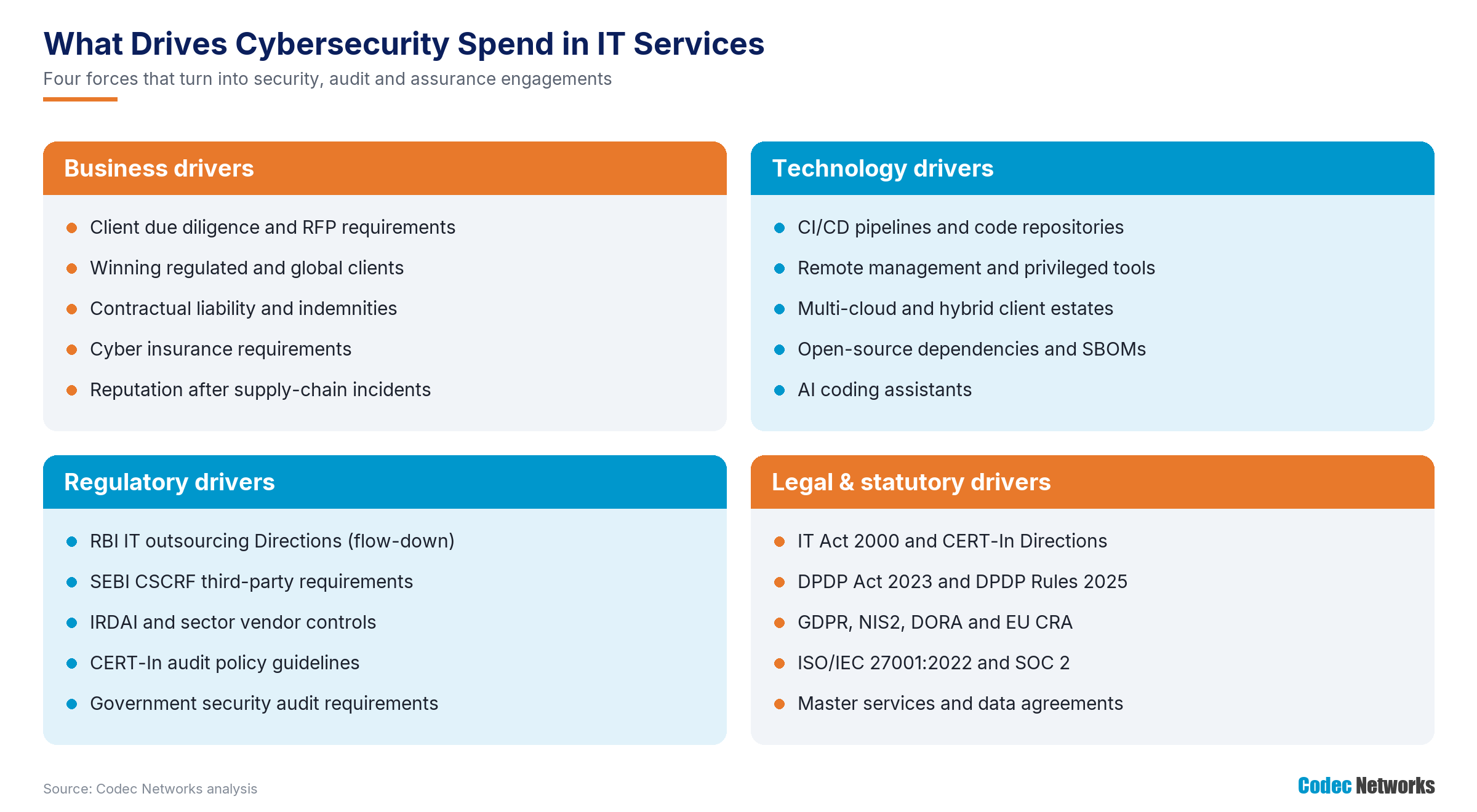
Figure 3: The four groups of drivers behind cybersecurity spending in IT services.
4. Regulatory drivers: CERT-In and client flow-down
|
Instrument |
Key requirements |
|
CERT-In Directions (2022) |
Six-hour incident reporting; 180-day ICT logs in India; applies to service providers and body corporates |
|
CERT-In audit policy guidelines (July 2025) |
Risk-based, independent cyber audits, reported as at least annual, with event-triggered audits |
|
RBI IT outsourcing Directions (2023) |
Bank and NBFC clients must oversee providers, with audit rights and incident clauses |
|
SEBI CSCRF (2024) and IRDAI guidelines (2026) |
Market and insurance clients must manage third-party providers |
|
EU NIS2, DORA and Cyber Resilience Act |
Supply-chain security, ICT third-party risk and secure products for European clients |
|
Flow-down, not always direct Many requirements reach providers through client contracts. Confirm the clauses in your agreements and the official instruments. |
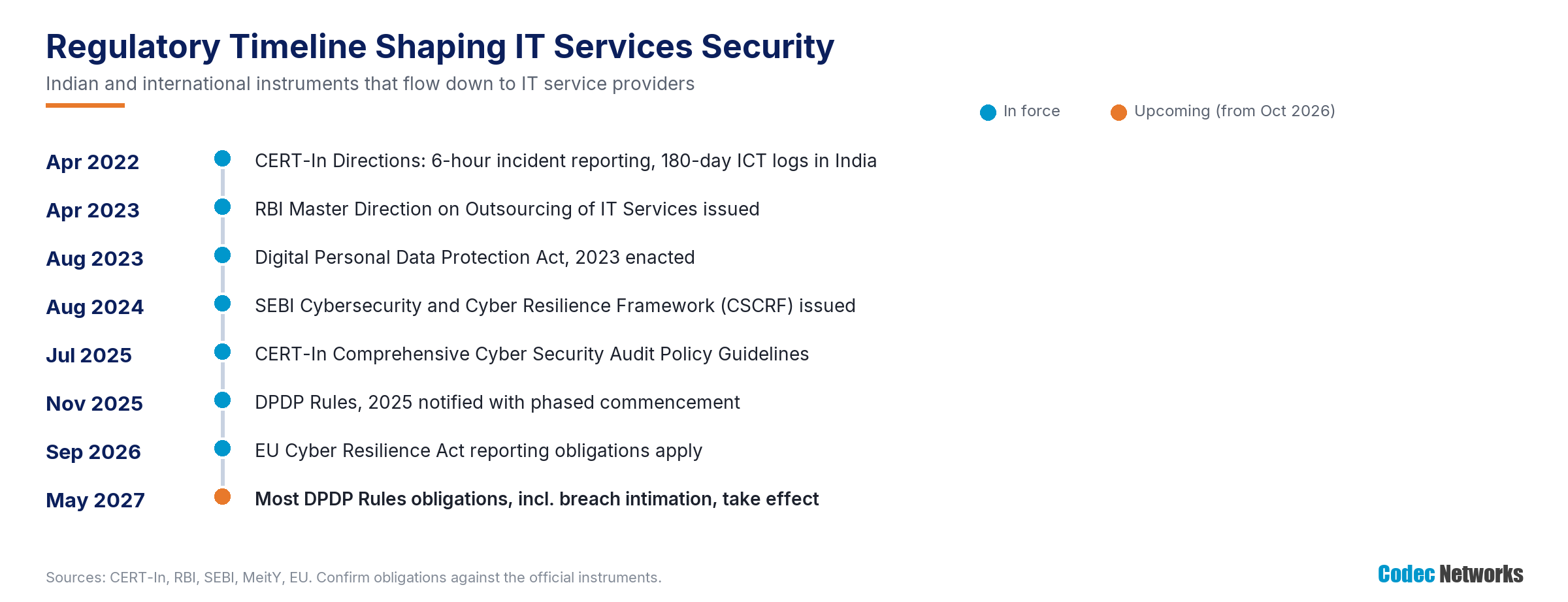
Figure 4: Regulatory timeline shaping IT services security, as of October 2026.
5. Legal and statutory drivers
|
Law or obligation |
Relevance |
Demand created |
|
IT Act, 2000 and CERT-In Directions |
Incident reporting and logging |
SOC, logging and IR readiness |
|
DPDP Act, 2023 and Rules, 2025 |
Processing client personal data with safeguards |
Processor privacy programmes |
|
EU GDPR |
Processor obligations for EU personal data |
Data processing agreements and controls |
|
Contract law and indemnities |
Liability for client breaches |
Assurance evidence and testing |
|
Intellectual property |
Protection of client and own code |
DLP and access controls |
6. How the drivers differ by provider type
|
Provider type |
Dominant business drivers |
Dominant technology drivers |
Principal regulatory drivers |
|
Software developers |
Client trust, IP protection |
Pipelines, dependencies, AI tools |
Client contracts, EU CRA |
|
System integrators |
Project delivery, liability |
Privileged access, jump hosts |
Client flow-down, government audits |
|
MSPs |
Recurring contracts, SLAs |
RMM, PAM, monitoring |
CERT-In, RBI and SEBI flow-down |
|
Consultancies |
Confidentiality, reputation |
Collaboration and email |
Client contracts, DPDP |
7. What this means for buyers and for Codec Networks
|
Customer buying need |
Recommended offering |
Natural recurring engagement |
|
“Clients want proof our code is secure.” |
Secure code review and SCA |
Release-linked reviews |
|
“Could our pipeline be tampered with?” |
DevSecOps and build-integrity review |
Annual pipeline assessments |
|
“Our RMM tools reach every client.” |
RMM and PAM testing, managed SOC |
Continuous monitoring |
|
“We need ISO 27001 or SOC 2.” |
Readiness and implementation |
Annual surveillance support |
|
“Our subcontractors have client access.” |
Third-party and access lifecycle review |
Quarterly recertification |
Talk to Codec Networks
|
Contact Codec Networks Pvt. Ltd. New Delhi: 507, 5th Floor, New Delhi House, Barakhamba Road, Connaught Place, New Delhi – 110001 Gurugram: 707, 7th Floor, Silverton Tower, Golf Course Extension Road, Sector 50, Gurugram – 122018, Haryana Landline: 011 430 496 96 | 011 437 522 99 Mobile: +91 99716 76124 | +91 88007 88220 | +91 88003 31124 Email: mktg@codecnetworks.com Web: www.codecnetworks.com |
Note: This document is general industry guidance based on public information available as of October 2026. Client regulator requirements apply through contracts. Confirm obligations against the official CERT-In, MeitY, RBI, SEBI, IRDAI and EU instruments and your agreements before making compliance decisions.