

Resources Categories
INDUSTRY FACT FILE · IT SERVICES & SYSTEMS INTEGRATION
Main Products and Services in IT Services and Systems Integration
What IT service firms offer, the systems and tools behind each service and where they create cybersecurity and compliance exposure.
|
In this document 1. How IT service firms earn their money 2. Services by provider type 3. Build and integration 4. Managed operations and support 5. The systems behind the products and services 6. Trends that change the attack surface 7. Mapping services to Codec Networks engagements |
1. How IT service firms earn their money
|
Revenue stream |
How it works |
Security relevance |
|
Application development |
Fixed-price or time-and-materials projects |
Code quality and integrity reach every client |
|
Systems integration |
Implementation of multi-vendor platforms |
Privileged access during implementation |
|
Managed services |
Recurring fees to run infrastructure and applications |
Persistent privileged and remote access |
|
Consulting |
Advisory and transformation fees |
Access to sensitive strategy and data |
|
Staff augmentation |
Engineers billed to client projects |
Access lifecycle across many people |
2. Services by provider type
|
Provider type |
Main services |
Tools and access involved |
|
Software developers |
Custom applications, APIs, mobile apps, maintenance |
Repositories, CI/CD, test environments |
|
IT consultancies |
Architecture, roadmaps, programme management |
Client data rooms, collaboration tools |
|
System integrators |
ERP, network, data centre and security integration |
Admin consoles, jump hosts, vendor tools |
|
Managed service providers |
Infrastructure, cloud, end-user, NOC and SOC services |
RMM, PAM, ticketing, monitoring tools |
|
Product engineering firms |
Product development, testing and releases |
Build systems, signing keys, release channels |
3. Build and integration
Developers and integrators work in code repositories, CI/CD pipelines and client test environments. Secrets, client data and build artefacts pass through many hands. A single compromised laptop or pipeline credential can let an attacker insert code into software that clients trust.
4. Managed operations and support
Managed service providers run client estates through remote-monitoring-and-management (RMM) tools, privileged accounts and jump hosts. These tools can push scripts to thousands of endpoints at once—exactly what ransomware operators want.
|
Highest-risk moments Build and release, mass actions in RMM tools, privileged access to client systems and joiner-mover-leaver events are where provider compromises become client breaches. |
5. The systems behind the products and services
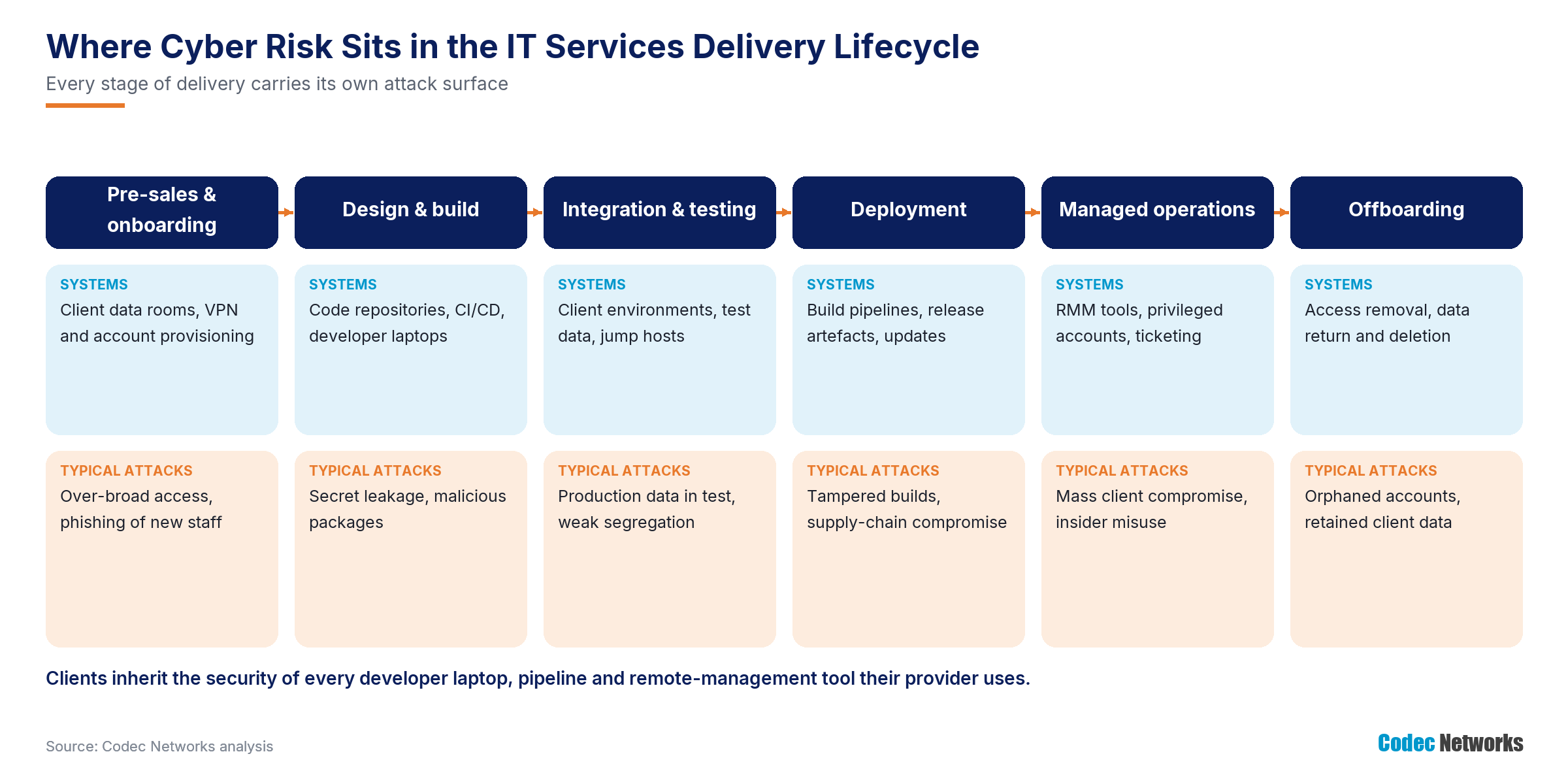
Figure 2: Where cyber risk sits in the IT services delivery lifecycle.
|
Product / service |
Systems that deliver it |
Key cyber and compliance touchpoints |
|
Development |
Repositories, IDEs, developer laptops |
Secret scanning, endpoint security, code review |
|
Build and release |
CI/CD, artefact stores, signing keys |
Pipeline hardening, signing, SBOM |
|
Integration and testing |
Client test environments, jump hosts |
Test-data masking, segmentation |
|
Managed operations |
RMM, PAM, monitoring and ticketing |
MFA, approvals, SOC monitoring |
|
Collaboration |
Email, chat, file-sharing with clients |
BEC controls, DLP, access reviews |
|
Resource management |
Identity, VPN and client accounts for staff |
Access lifecycle and recertification |
6. Trends that change the attack surface
|
Trend |
What is changing |
Security implication |
|
AI coding assistants |
Code written and reviewed with AI tools |
Code and secret leakage to third parties |
|
Software bills of materials |
Clients and regulators ask for SBOMs |
Dependency transparency becomes a requirement |
|
Remote and hybrid delivery |
Engineers work from many locations |
Endpoint and identity security become critical |
|
Multi-cloud estates |
Providers run workloads across clouds |
Shared-responsibility and IAM gaps |
|
Regulatory flow-down |
Clients pass on RBI, SEBI, IRDAI and EU rules |
Providers must evidence controls |
7. Mapping services to Codec Networks engagements
|
If the firm provides… |
Recommended starting engagement |
|
Custom software and APIs |
Secure code review, SAST/DAST/SCA, application testing |
|
CI/CD and product releases |
DevSecOps and build-integrity review, SBOM |
|
Managed infrastructure or cloud |
RMM and PAM testing, infrastructure VAPT, managed SOC |
|
Services to regulated clients |
Regulatory flow-down assessment, ISO 27001 or SOC 2 readiness |
|
Subcontracted staff on client sites |
Access lifecycle review, third-party assurance |
Talk to Codec Networks
|
Contact Codec Networks Pvt. Ltd. New Delhi: 507, 5th Floor, New Delhi House, Barakhamba Road, Connaught Place, New Delhi – 110001 Gurugram: 707, 7th Floor, Silverton Tower, Golf Course Extension Road, Sector 50, Gurugram – 122018, Haryana Landline: 011 430 496 96 | 011 437 522 99 Mobile: +91 99716 76124 | +91 88007 88220 | +91 88003 31124 Email: mktg@codecnetworks.com Web: www.codecnetworks.com |
Note: Descriptions are general and based on public information available as of October 2026.