

Resources Categories
INDUSTRY FACT FILE · MARITIME, PORTS & SHIPPING
Five New Case Studies in Port and Shipping Security
Original 2026 case studies, each written as a blog post, showing how current threats play out in ports, terminals, shipping companies and shipyards and how Codec Networks services break the attack chain.
|
In this document 1. About these case studies 2. Case Study 1: The Terminal That Lost Its Yard 3. Case Study 2: The Crane That Took Remote Commands 4. Case Study 3: The Container Released to the Wrong Truck 5. Case Study 4: The Ship That Sailed on a Spoofed Position 6. Case Study 5: The Shipyard Design Files on a Foreign Server |
About these case studies
These five case studies were written for this document set and have not been published elsewhere. Each is a composite scenario combining attack techniques and control failures widely observed in maritime and port operations with the obligations that apply in India as of October 2026—in particular CERT-In's Directions and audit guidelines, NCIIPC's critical-sector expectations, IMO and IACS requirements for ships, the ISPS Code, SEBI disclosure for listed groups and DPDP.
|
Important disclosure The organisations described are fictional and the scenarios are illustrative. They are not accounts of real incidents, and they are not Codec Networks client engagements or claims of achieved outcomes. Their value lies in showing how connected weaknesses form an attack chain, which controls break it, and which services test those controls. |
|
Case study |
Organisation type |
Core threat |
Regulatory lens |
Primary bundles |
|
1. The Terminal That Lost Its Yard |
Container terminal operator |
Ransomware on TOS, gates and backups |
CERT-In; concession; SEBI LODR |
B3, B7, B10 |
|
2. The Crane That Took Remote Commands |
Bulk and container port |
OEM remote access reaching crane PLCs |
ISPS; CERT-In; safety |
B9, B1, B7 |
|
3. The Container Released to the Wrong Truck |
Port community and terminal portals |
Cargo release fraud through stolen credentials |
Customs; CERT-In; DPDP |
B2, B7, B9 |
|
4. The Ship That Sailed on a Spoofed Position |
Bulk shipping company |
GNSS spoofing and navigation compromise |
IMO MSC.428(98); DGS; class |
B5, B1, B10 |
|
5. The Shipyard Design Files on a Foreign Server |
Shipyard |
State-backed theft through a subcontractor |
Contracts; export controls; CERT-In |
B3, B9, B7 |
Case Study 1: The Terminal That Lost Its Yard
Every crane worked. Nobody knew where a single box was.
|
At a glance |
|
|
Organisation |
A listed group's container terminal (“Termco A”) handling two million TEU a year |
|
Threat |
Ransomware encrypting the terminal operating system, gate servers and the backup server after weeks of undetected lateral movement |
|
Why it is new |
Cargo systems, not cranes, decide whether a terminal runs |
|
Codec Networks services |
Segmentation and recovery, SOC, crisis exercises (Bundles B3, B7, B10) |
The scenario
Attackers phished a yard planner and, over three weeks, took domain control unnoticed. On a Friday night they encrypted the TOS, gate servers and the backup server, all on the same network.
Cranes and RTGs were intact, but without the TOS nobody knew where containers were. Gates closed, trucks queued for kilometres and two vessels diverted to a neighbouring port.
Rebuilding from a vendor image took nine days. Customers invoked service credits, customs asked questions and the group disclosed the incident in its quarterly report.
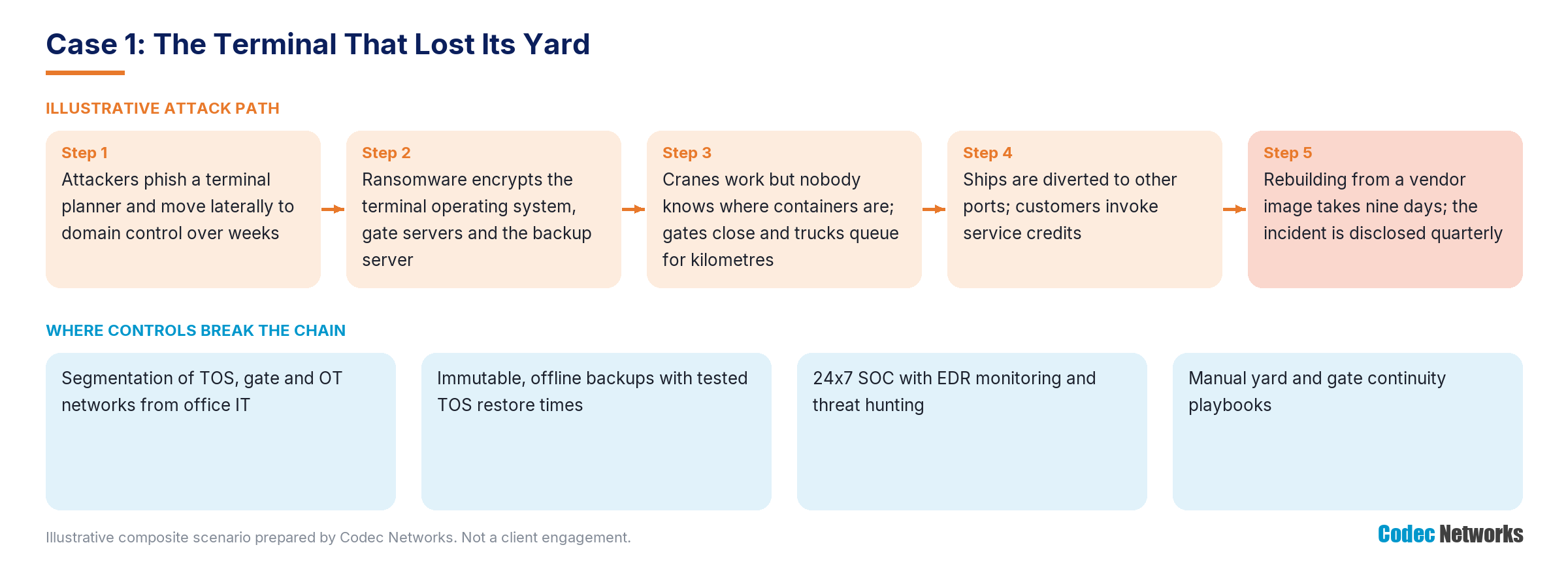
Figure 8: Illustrative attack path for Case Study 1 and the controls that break it.
What went wrong
- TOS, gate and backup servers shared one network and one set of credentials.
- No immutable or offline backup of the TOS.
- EDR alerts were not monitored 24x7.
- No manual yard and gate playbook.
The impact
Termco A lost nine days of operations, paid service credits, faced customs and customer scrutiny and disclosed the incident quarterly.
The regulatory lens
- CERT-In Directions: incident reported within six hours.
- Concession agreement: performance and continuity obligations to the port authority.
- SEBI LODR: cyber incident disclosed in the quarterly corporate governance report.
How Codec Networks would help
|
Need |
Codec Networks response |
Bundle |
|
Separate and recover |
Segmentation of TOS, gate and OT networks; immutable backups; tested restores |
B3 |
|
Detect early |
24x7 SOC with EDR monitoring and threat hunting |
B7 |
|
Rehearse the outage |
Manual yard and gate playbooks and crisis exercises with customers and customs |
B10 |
|
Key lessons Treat the TOS as the terminal's heart. Keep backups off the domain and test restores. Monitor endpoints around the clock. Plan to run the yard on paper. |
Case Study 2: The Crane That Took Remote Commands
The spreader fault came from a laptop three time zones away.
|
At a glance |
|
|
Organisation |
A port (“Portco B”) operating quay cranes under an OEM maintenance contract |
|
Threat |
A crane OEM's shared diagnostic account compromised by credential stuffing and used to alter PLC parameters over a permanent remote link |
|
Why it is new |
OEM links are the most common unmonitored path into terminal OT |
|
Codec Networks services |
Vendor access programme, OT assessment, OT monitoring (Bundles B9, B1, B7) |
The scenario
Portco B's crane OEM kept a permanent remote link for diagnostics, using an account shared by several engineers and reused on other sites.
The account was compromised in a credential-stuffing attack. The intruder reached the crane control network and changed PLC parameters, causing spreader faults and an emergency stop on three berths.
A near-miss investigation found no session recording, no MFA and a control network reachable directly from the OEM link.
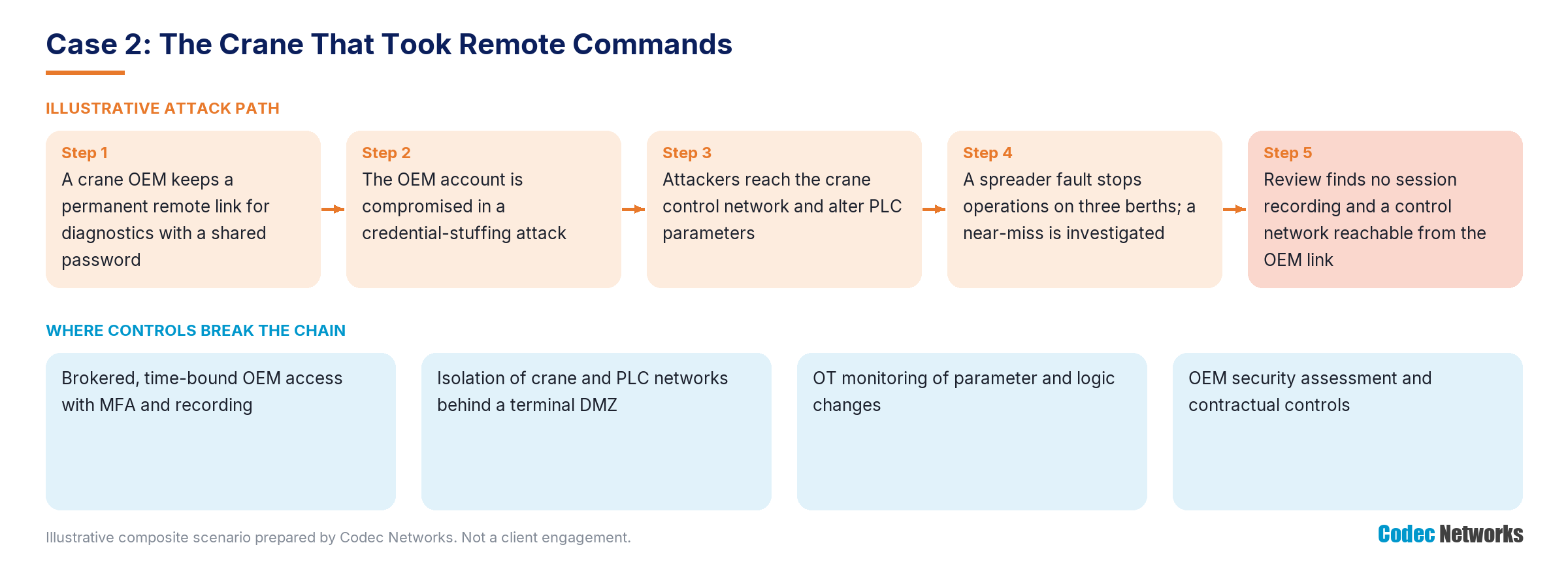
Figure 9: Illustrative attack path for Case Study 2 and the controls that break it.
What went wrong
- Permanent OEM link with a shared, reused password and no MFA.
- Crane control network reachable from the vendor connection.
- No monitoring of parameter or logic changes.
- No record of remote sessions.
The impact
Portco B lost two days on three berths, conducted a safety investigation, reported the incident and renegotiated OEM support with security requirements.
The regulatory lens
- ISPS Code: port facility security plan review after the incident.
- CERT-In Directions: incident reported within six hours.
- Safety obligations: near-miss investigation under port and labour safety rules.
How Codec Networks would help
|
Need |
Codec Networks response |
Bundle |
|
Control vendors |
Brokered, time-bound access with MFA and recording; OEM assessment |
B9 |
|
Protect the cranes |
OT assessment and isolation of crane and PLC networks behind a terminal DMZ |
B1 |
|
Watch the OT |
Monitoring of OEM sessions and parameter changes |
B7 |
|
Key lessons Replace permanent OEM links with brokered access. Isolate crane and PLC networks. Monitor parameter and logic changes. Record every vendor session. |
Case Study 3: The Container Released to the Wrong Truck
The paperwork was perfect. The truck was not.
|
At a glance |
|
|
Organisation |
A terminal (“Gateco C”) releasing containers through PCS and its own portal |
|
Threat |
A forwarder's portal credentials phished and used to alter delivery orders and nominate the criminals' own trucks for high-value containers |
|
Why it is new |
Release fraud exploits trust between terminals, forwarders and platforms |
|
Codec Networks services |
Portal and API testing, fraud analytics, partner access programme (Bundles B2, B7, B9) |
The scenario
Criminals phished a freight forwarder's staff and obtained their portal credentials, which had no MFA.
They altered delivery orders for electronics containers and nominated their own trucks. Gate automation released the boxes on valid-looking documents.
The theft surfaced when the real consignee's trucks arrived. Customs, police and insurers opened inquiries and Gateco C hardened the portal under pressure.
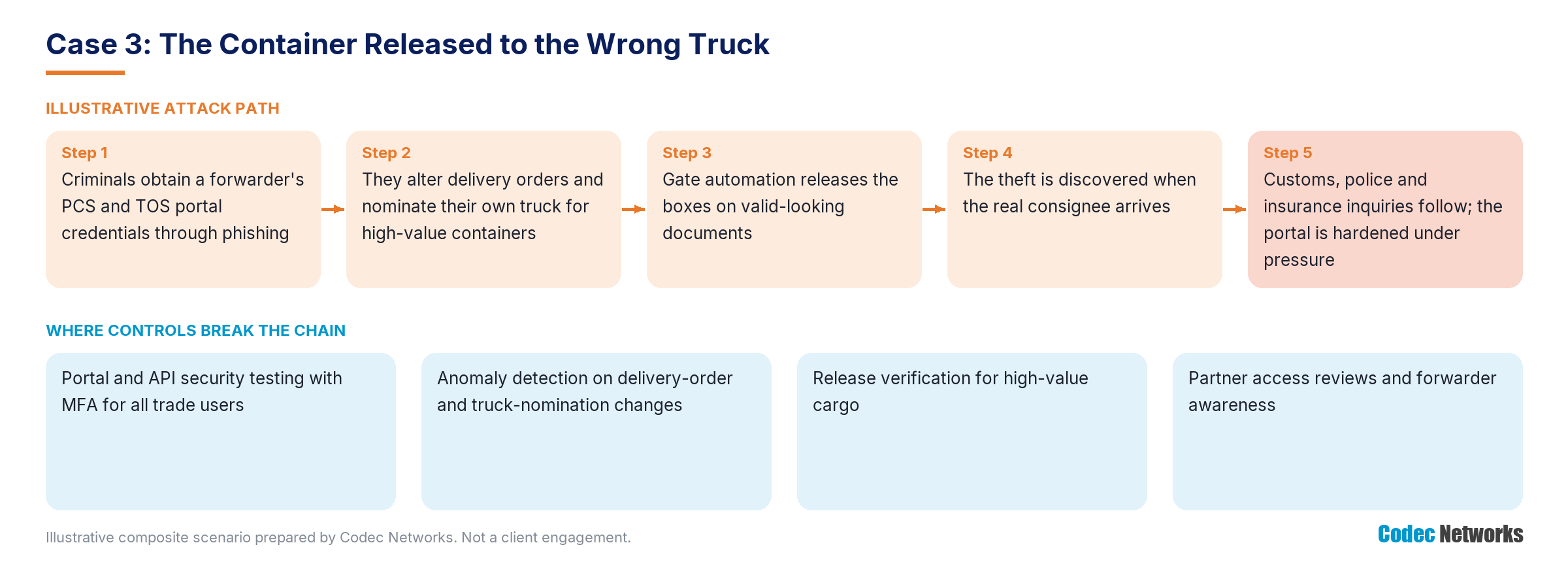
Figure 10: Illustrative attack path for Case Study 3 and the controls that break it.
What went wrong
- No MFA for forwarder and agent accounts.
- No anomaly detection on delivery-order and nomination changes.
- No release verification for high-value cargo.
- Partner access never reviewed.
The impact
Gateco C faced cargo theft claims, customs and police inquiries, customer distrust and an emergency portal programme.
The regulatory lens
- Customs Act and documentation rules: release and manifest integrity.
- CERT-In Directions: incident reported within six hours.
- DPDP: consignee and driver data accessed through the portal.
How Codec Networks would help
|
Need |
Codec Networks response |
Bundle |
|
Test the portal |
Portal and API security testing, MFA for all trade users |
B2 |
|
Watch the releases |
Fraud analytics on delivery orders, nominations and gate events |
B7 |
|
Govern partners |
Forwarder and agent access reviews and awareness |
B9 |
|
Key lessons Enforce MFA for every trade user. Monitor delivery-order and nomination changes. Verify high-value releases. Review partner access regularly. |
Case Study 4: The Ship That Sailed on a Spoofed Position
The chart said deep water. The keel said otherwise.
|
At a glance |
|
|
Organisation |
A bulk shipping company (“Shipco D”) operating twelve Indian-flag vessels |
|
Threat |
Spoofed GNSS signals near a congested anchorage drifting the ECDIS position towards shallow water, followed by a night grounding |
|
Why it is new |
Navigation inputs can be manipulated without touching the ship |
|
Codec Networks services |
Ship cyber programme, bridge system review, drills (Bundles B5, B1, B10) |
The scenario
Approaching a congested anchorage at night, one of Shipco D's bulk carriers received spoofed GNSS signals. The ECDIS position drifted steadily and AIS broadcast the wrong location.
The bridge team followed the display without cross-checking radar and visual fixes, and the vessel grounded on a shoal.
The fleet review found no spoofing detection, no procedure for degraded navigation and a safety management system that mentioned cyber only in passing.
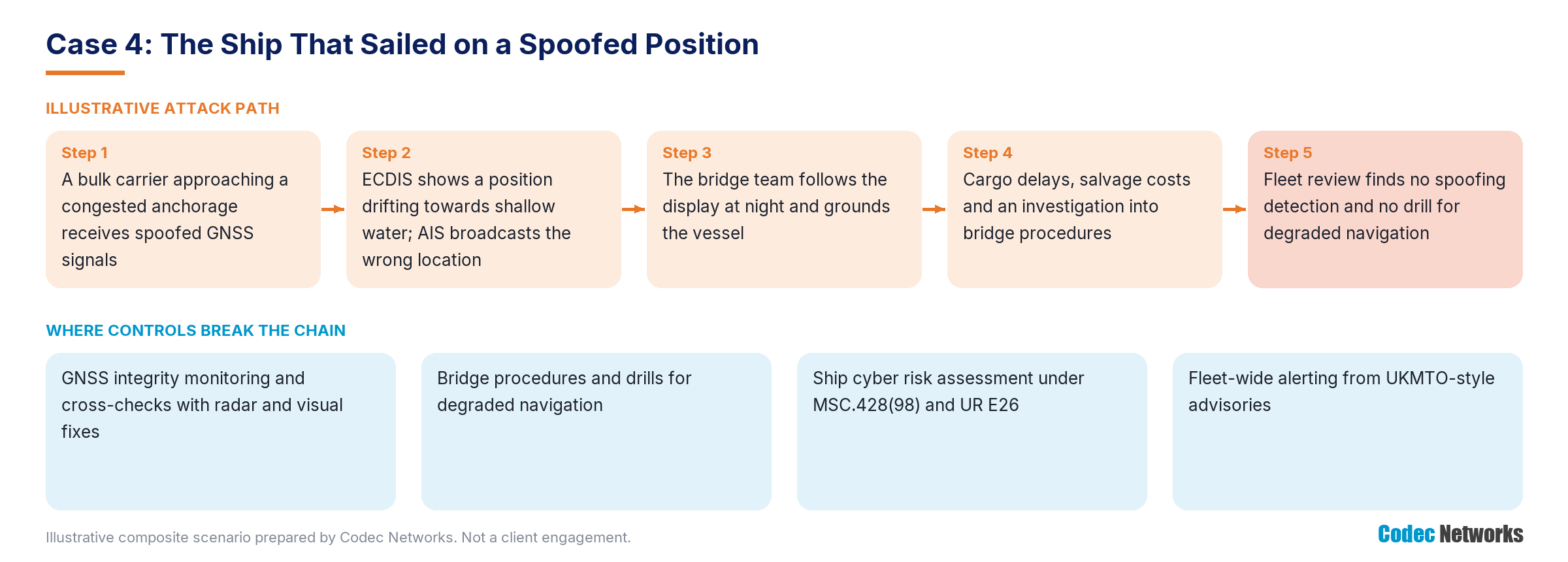
Figure 11: Illustrative attack path for Case Study 4 and the controls that break it.
What went wrong
- No GNSS integrity monitoring or cross-check routine.
- No degraded-navigation procedure or drill.
- SMS cyber content generic and untested.
- Advisories on interference not reaching the bridge.
The impact
Shipco D faced salvage and repair costs, cargo delays, a flag-state investigation and a fleet-wide cyber and navigation programme.
The regulatory lens
- IMO MSC.428(98) and ISM Code: cyber risk in the safety management system examined at audit.
- DG Shipping: flag-state investigation and circular compliance.
- Class and insurers: survey findings and claims scrutiny.
How Codec Networks would help
|
Need |
Codec Networks response |
Bundle |
|
Build the programme |
MSC.428(98) assessments, SMS procedures and UR E26/E27 readiness |
B5 |
|
Review the bridge |
ECDIS, GNSS, AIS and satcom reviews |
B1 |
|
Drill the crews |
Degraded-navigation and cyber drills for bridge teams |
B10 |
|
Key lessons Cross-check every position. Drill for navigation without GNSS. Make the SMS cyber content real. Route interference advisories to the bridge. |
Case Study 5: The Shipyard Design Files on a Foreign Server
The competitor's hull lines matched to the millimetre.
|
At a glance |
|
|
Organisation |
A shipyard (“Yardco E”) building commercial and naval vessels |
|
Threat |
A design subcontractor's VPN credentials stolen by a state-backed group and used to copy hull and system designs from the yard's PLM system over months |
|
Why it is new |
Subcontractor access is the softest path to a shipyard's most valuable data |
|
Codec Networks services |
Data classification and access control, supplier programme, threat hunting (Bundles B3, B9, B7) |
The scenario
Yardco E engaged a design subcontractor with VPN access to its PLM system. The subcontractor's credentials were stolen by a state-backed group.
Over several months the group copied hull, propulsion and system designs for commercial and naval projects, blending in with the subcontractor's normal activity.
The theft surfaced when a foreign competitor bid with a near-identical design. Customer audits, contract penalties and a security rebuild followed.
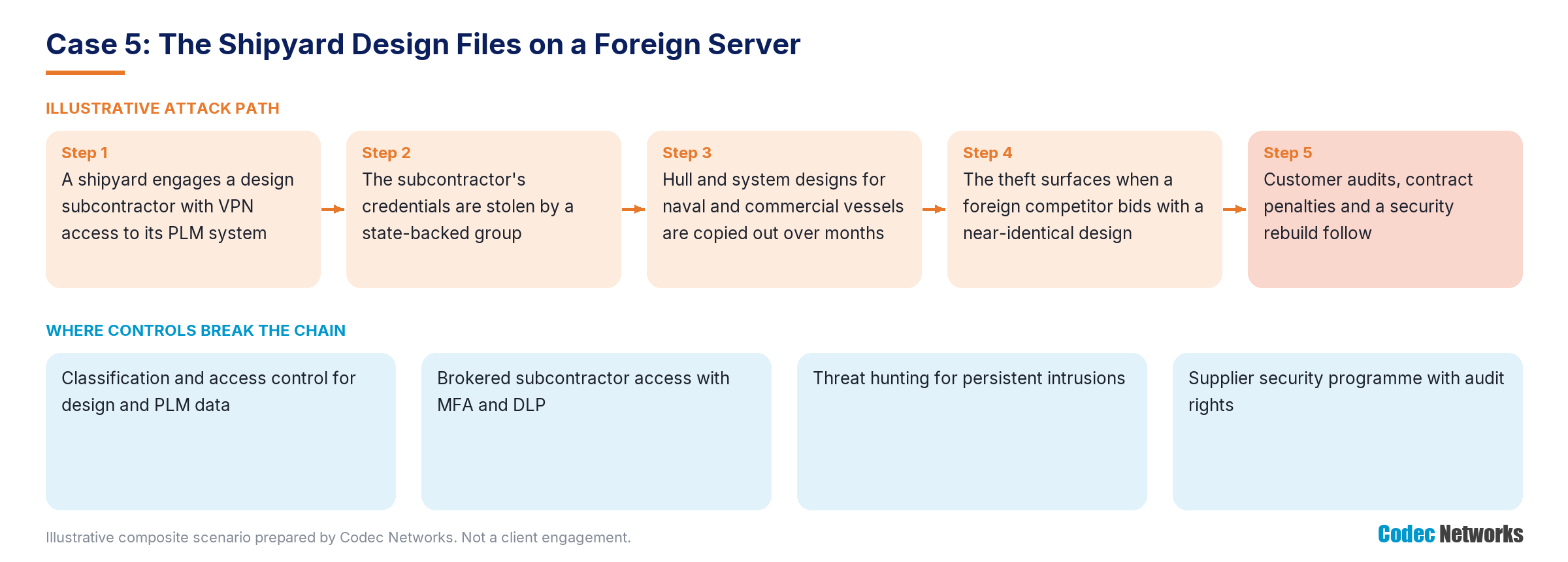
Figure 12: Illustrative attack path for Case Study 5 and the controls that break it.
What went wrong
- Design data unclassified and broadly accessible through the VPN.
- Subcontractor access not brokered, MFA-protected or monitored.
- No DLP or export monitoring on PLM data.
- No threat hunting for persistent intrusions.
The impact
Yardco E lost competitive advantage, faced customer penalties and export-control scrutiny and rebuilt its data governance and supplier controls.
The regulatory lens
- Customer and defence contracts: confidentiality and security obligations.
- Export controls: handling of controlled technical data.
- CERT-In Directions: incident reported within six hours.
How Codec Networks would help
|
Need |
Codec Networks response |
Bundle |
|
Protect the designs |
Data classification, PLM access control, DLP and brokered access |
B3 |
|
Govern subcontractors |
Supplier security programme with assessments and audit rights |
B9 |
|
Hunt the intruder |
Threat hunting and monitoring of PLM and VPN activity |
B7 |
|
Key lessons Classify and restrict design data. Broker and monitor subcontractor access. Watch for bulk exports. Hunt for persistent intrusions. |
Talk to Codec Networks
|
Contact Codec Networks Pvt. Ltd. New Delhi: 507, 5th Floor, New Delhi House, Barakhamba Road, Connaught Place, New Delhi – 110001 Gurugram: 707, 7th Floor, Silverton Tower, Golf Course Extension Road, Sector 50, Gurugram – 122018, Haryana Landline: 011 430 496 96 | 011 437 522 99 Mobile: +91 99716 76124 | +91 88007 88220 | +91 88003 31124 Email: mktg@codecnetworks.com Web: www.codecnetworks.com |