

Resources Categories

INDUSTRY FACT FILE · MEDIA, ENTERTAINMENT & DIGITAL PLATFORMS
Main Products and Services in Media and Digital Platforms
What India's broadcasters, streaming services, publishers, ad-tech firms, studios, gaming companies and platforms deliver, the systems behind each activity, and where those systems create cybersecurity and compliance exposure.
|
In this document 1. How media businesses and platforms earn their money 2. Products and services by business type 3. The production and broadcast layer: studios, post, playout and distribution 4. The platform layer: apps, accounts, advertising and game servers 5. The systems behind the products and services 6. Trends that change the attack surface 7. Mapping operations to Codec Networks engagements |
1. How media businesses and platforms earn their money
|
Revenue stream |
How it works |
Security relevance |
|
Advertising |
Television, digital, video and in-game advertising sold directly and programmatically |
Ad servers, tags and SDKs, audience data, malvertising and ad fraud |
|
Subscriptions |
Pay-TV, OTT, news and gaming subscriptions and bundles with telecom plans |
Subscriber accounts, payments, credential stuffing, account sharing and fraud |
|
Content licensing and syndication |
Film, series, music and sports rights sold to platforms and broadcasters |
Rights contracts, screeners, content delivery to partners, leaks |
|
Theatrical, music and live events |
Box office, streaming royalties, concerts, tours and esports events |
Pre-release protection, ticketing platforms, event networks |
|
In-game purchases and creator monetisation |
Virtual items, passes, tips, creator payouts and brand deals |
Payments, payout systems, account takeover, fraud |
|
Platform and technology services |
Playout, OTT technology, ad tech and data services sold to other media firms |
Multi-tenant SaaS, customer data, SOC 2 and contract obligations |
2. Products and services by business type
|
Business type |
Main products and services |
Key systems |
|
Broadcasters |
Linear channels, news, sport, regional content, ad sales |
Playout and automation, traffic and scheduling, newsroom systems, graphics, ad insertion, contribution links |
|
Distribution platform operators |
DTH and cable packages, set-top boxes, IPTV |
Headends, conditional access, subscriber management, billing, customer apps |
|
OTT streaming services |
Subscription and free streaming, live sport, originals |
Apps for mobile and smart TV, identity, payments, CDNs, DRM, recommendation engines |
|
News publishers |
Digital news, live video, newsletters, podcasts |
Content management systems, video platforms, paywalls, social accounts, ad stacks |
|
Ad-tech firms |
Ad serving, programmatic exchanges, measurement, audience data |
Ad servers, bidders, data platforms, publisher tags and SDKs |
|
Studios and labels |
Films, series, music catalogues, post-production and VFX |
Asset management, edit and VFX pipelines, render farms, screener platforms, royalty systems |
|
Gaming, esports and creator platforms |
Games, tournaments, live streams, creator tools and payouts |
Game servers and back ends, matchmaking, anti-cheat, payments, moderation and creator dashboards |
3. The production and broadcast layer: studios, post, playout and distribution
Behind every channel and release sits a production and broadcast estate. Studios and production houses shoot on location and in studios, move rushes to edit suites and VFX vendors over shared drives and file-transfer tools, render on farms that are often cloud-burst, and send cuts to dubbing, subtitling and marketing partners as screeners. Broadcasters run playout and automation servers, traffic and scheduling systems that decide which programme and advertisement goes out when, newsroom systems, graphics engines and contribution links from the field. Distribution platform operators add headends, conditional access systems that decide who can decrypt which channel, and subscriber management systems that TRAI requires to be audited.
Much of this estate was built for reliability, not security. Broadcast and post-production networks are often flat, connected to corporate IT for convenience, and reached by vendors and freelancers through remote-access tools. Production schedules leave little time for patching, content moves between dozens of companies that each hold a copy, and screeners are shared with links that never expire. The release calendar and the live-event calendar concentrate risk into premiere weeks, finals and election nights, when any leak, outage or hijack is seen by millions within minutes.
4. The platform layer: apps, accounts, advertising and game servers
Above production and broadcast sits a platform layer. OTT services, news publishers and gaming companies run mobile, web and smart-TV apps on cloud back ends with identity, payments, recommendation and analytics services, and stream through CDNs protected by DRM. Social and creator platforms add upload pipelines, moderation, live streaming and payout systems, and from February 2026 must label synthetically generated content and act on lawful takedown orders within three hours. Gaming companies run game servers, matchmaking and anti-cheat, and since May 2026 operate under the Online Gaming Act, which bans online money games and promotes e-sports and social games.
Advertising ties the layers together. Publishers and platforms load ad tags and SDKs from many partners, ad-tech firms move bid requests carrying device and audience signals, and measurement partners track impressions. Every tag and SDK is third-party code running in front of the audience, and every audience segment is personal data under DPDP; where children use a platform, the DPDP Rules require verifiable parental consent and bar tracking and targeted advertising directed at them.
|
Highest-risk moments Live finals and big premieres, the days before a theatrical or streaming release when screeners are with partners, app releases that add new SDKs or login flows, election and breaking-news nights, esports finals, vendor remote access to playout and asset systems, rights and talent payments, and the departure of editors, engineers or freelancers with live access are where media incidents typically begin or escalate. |
5. The systems behind the products and services
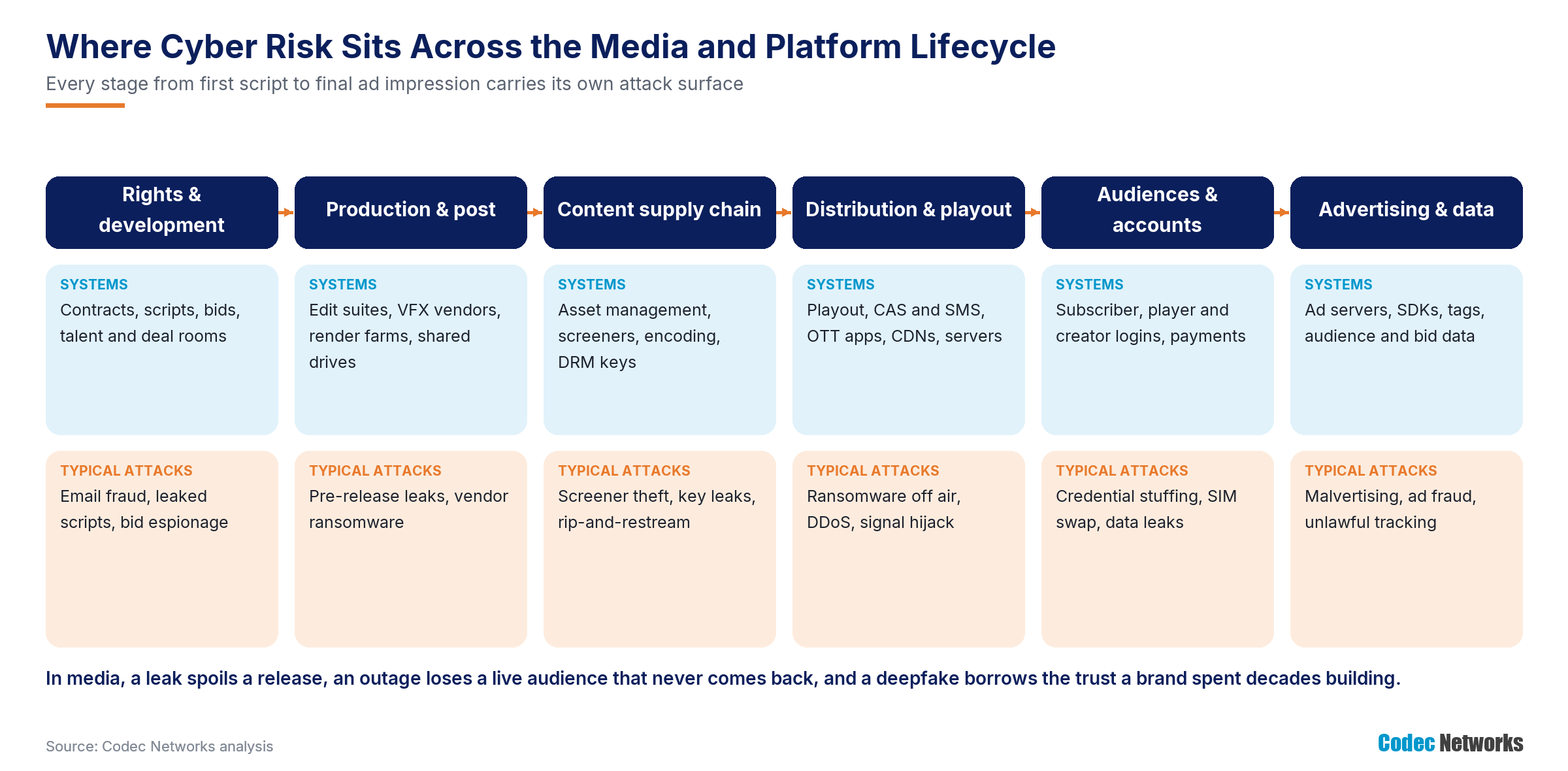
Figure 2: Where cyber risk sits across the media and platform lifecycle.
|
Product / service |
Systems that deliver it |
Key cyber and compliance touchpoints |
|
Rights and development |
Email, deal rooms, contract and royalty systems |
Business email compromise, script and bid leaks, payment controls |
|
Production and post |
Edit suites, VFX and dubbing vendors, render farms, shared drives |
Vendor access, MFA, segmentation, backup and ransomware readiness |
|
Content supply chain |
Asset management, screener platforms, encoding, DRM and watermarking |
Access control, expiring links, key management, leak tracing |
|
Distribution and playout |
Playout, traffic, CAS and SMS, CDNs, OTT apps, game servers |
Segmentation, TRAI audit readiness, DDoS resilience, app and API testing |
|
Audiences and accounts |
Subscriber, player and creator identity, payments, support tools |
Bot defence, MFA, account recovery, DPDP for viewers and children |
|
Advertising and data |
Ad servers, tags, SDKs, audience and measurement platforms |
Tag governance, malvertising controls, consent and data minimisation |
6. Trends that change the attack surface
|
Trend |
What is changing |
Security implication |
|
Streaming at national scale |
Live sport and events reach crores of concurrent viewers |
Login, payment and CDN resilience become board-level risks |
|
Cloud and remote production |
Playout, editing and rendering move to cloud and shared vendors |
Identity, configuration and vendor access decide security |
|
Generative AI and synthetic media |
AI tools for dubbing, effects and content; deepfakes of talent |
Labelling duties, impersonation monitoring, model and data risk |
|
Regulation of online gaming |
Money games banned; e-sports and social games promoted from May 2026 |
Payment, age and data controls; new platform scrutiny |
|
Privacy and children's data |
DPDP consent and children's rules for viewers, players and audiences |
Ad-tech, SDK and profiling practices must be redesigned |
|
Industrialised piracy |
Apps, Telegram channels and restreaming sites monetise stolen content |
Watermarking, monitoring and evidence for fast takedowns |
7. Mapping operations to Codec Networks engagements
|
If the organisation operates… |
Recommended starting engagement |
|
Playout, newsroom or headend systems |
Broadcast network assessment, segmentation, CAS and SMS audit readiness, recovery planning |
|
An OTT, news or gaming app with logins and payments |
Web, mobile, smart-TV and API testing, credential-stuffing and bot-defence assessment |
|
Pre-release content shared with vendors |
Content-security programme, vendor assessments, watermarking and asset-store controls |
|
Ad tags, SDKs or audience-data products |
Tag and SDK governance, DPDP programme, ad-tech API testing |
|
Talent, anchors or creators with public profiles |
Account hardening, brand and deepfake monitoring, awareness for talent teams |
|
Live events, finals and premieres at scale |
Managed SOC with surge cover, DDoS readiness and crisis exercises |
Talk to Codec Networks
|
Contact Codec Networks Pvt. Ltd. New Delhi: 507, 5th Floor, New Delhi House, Barakhamba Road, Connaught Place, New Delhi – 110001 Gurugram: 707, 7th Floor, Silverton Tower, Golf Course Extension Road, Sector 50, Gurugram – 122018, Haryana Landline: 011 430 496 96 | 011 437 522 99 Mobile: +91 99716 76124 | +91 88007 88220 | +91 88003 31124 Email: mktg@codecnetworks.com Web: www.codecnetworks.com |
Note: Descriptions are general and based on public information available as of October 2026. Systems and exposures differ by business and platform.