

Resources Categories
INDUSTRY FACT FILE · MEDICAL DEVICES & MEDTECH
Five New Case Studies in Medical Device Security
Original 2026 case studies, each written as a blog post, showing how current threats play out for medtech companies and how Codec Networks services break the attack chain.
|
In this document 1. About these case studies 2. Case Study 1: The Monitor That Phoned Home 3. Case Study 2: The Update Server That Shipped Malware 4. Case Study 3: The Debug Port on the Production Board 5. Case Study 4: The Remote Monitoring Cloud With One Key 6. Case Study 5: The Export Submission That Came Back |
About these case studies
These five case studies were written for this document set and have not been published elsewhere. Each is a composite scenario combining weaknesses and control failures widely observed in medical devices with the regulatory expectations that apply as of October 2026—in particular the Medical Devices Rules, CDSCO's software guidance, US FDA section 524B, the EU MDR and CERT-In's Directions.
|
Important disclosure The organisations described are fictional and the scenarios are illustrative. They are not accounts of real incidents, and they are not Codec Networks client engagements or claims of achieved outcomes. Their value lies in showing how connected weaknesses form an attack chain, which controls break it, and which services test those controls. |
|
Case study |
Company type |
Core threat |
Regulatory lens |
Primary bundles |
|
1. The Monitor That Phoned Home |
Patient monitor manufacturer |
Hidden function in a third-party module |
Medical Devices Rules; FDA; EU MDR |
B1, B9, B4 |
|
2. The Update Server That Shipped Malware |
Connected device manufacturer |
Compromised update infrastructure |
FDA 524B; EU MDR; CERT-In |
B2, B3, B8 |
|
3. The Debug Port on the Production Board |
Wearable device start-up |
Debug interface and shared keys |
Medical Devices Rules; DPDP |
B1, B2, B5 |
|
4. The Remote Monitoring Cloud With One Key |
Remote monitoring platform |
Shared API key and broken authorisation |
DPDP; CERT-In |
B2, B3, B6 |
|
5. The Export Submission That Came Back |
Diagnostic equipment manufacturer |
Insufficient cybersecurity evidence |
FDA 524B; EU MDR; CDSCO |
B4, B2, B5 |
Case Study 1: The Monitor That Phoned Home
The manufacturer didn't write the code. Customers still held it responsible.
|
At a glance |
|
|
Organisation |
A patient monitor maker (“OEM A”) using a third-party communications module |
|
Threat |
An undocumented remote connection in a supplier's module |
|
Why it is new |
Third-party components can hide functions the OEM never sees |
|
Codec Networks services |
Firmware analysis, supplier assessment, regulatory evidence (Bundles B1, B9, B4) |
The scenario
OEM A integrated a communications module from a supplier to speed up development.
A hospital customer's security team noticed the monitors attempting connections to an unknown external address.
Analysis found an undocumented remote-access function in the module. OEM A had to inform customers and regulators and plan a field action.
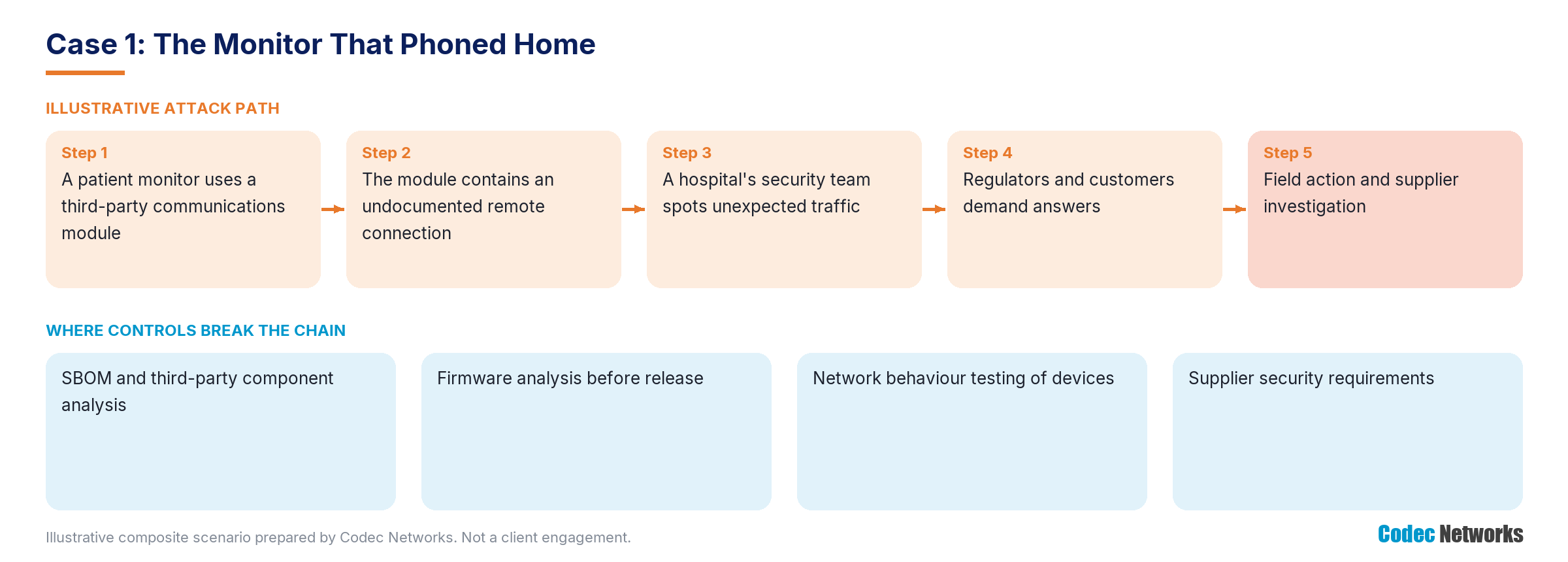
Figure 8: Illustrative attack path for Case Study 1 and the controls that break it.
What went wrong
- No SBOM covering the module's software.
- Firmware was not analysed before release.
- Network behaviour was not tested.
- Supplier contracts lacked security requirements.
The impact
OEM A faced a field action, customer distrust and regulatory scrutiny in several markets.
The regulatory lens
- Medical Devices Rules: manufacturer responsibility for device safety and performance.
- US FDA and EU MDR: cybersecurity and component transparency expectations for marketed devices.
- CERT-In Directions: reporting of related incidents within six hours where applicable.
How Codec Networks would help
|
Need |
Codec Networks response |
Bundle |
|
Analyse firmware |
Firmware and network behaviour analysis |
B1 |
|
Assure suppliers |
Supplier security assessment and requirements |
B9 |
|
Support regulators |
Regulatory communication and evidence |
B4 |
|
Key lessons Know every component (SBOM). Analyse firmware before release. Test what devices connect to. Put security in supplier contracts. |
Case Study 2: The Update Server That Shipped Malware
The devices trusted anything that came from the update server.
|
At a glance |
|
|
Organisation |
A maker of connected home-care devices (“OEM B”) |
|
Threat |
A tampered firmware image uploaded to a poorly protected update server |
|
Why it is new |
Whoever controls updates controls the fleet |
|
Codec Networks services |
Secure update review, infrastructure hardening, incident response (Bundles B2, B3, B8) |
The scenario
OEM B's update server used a weak admin password and had no monitoring.
An attacker uploaded a modified firmware image. Devices accepted it because firmware signatures were not verified.
Field units began malfunctioning. OEM B had to stop updates, investigate and notify regulators and customers.
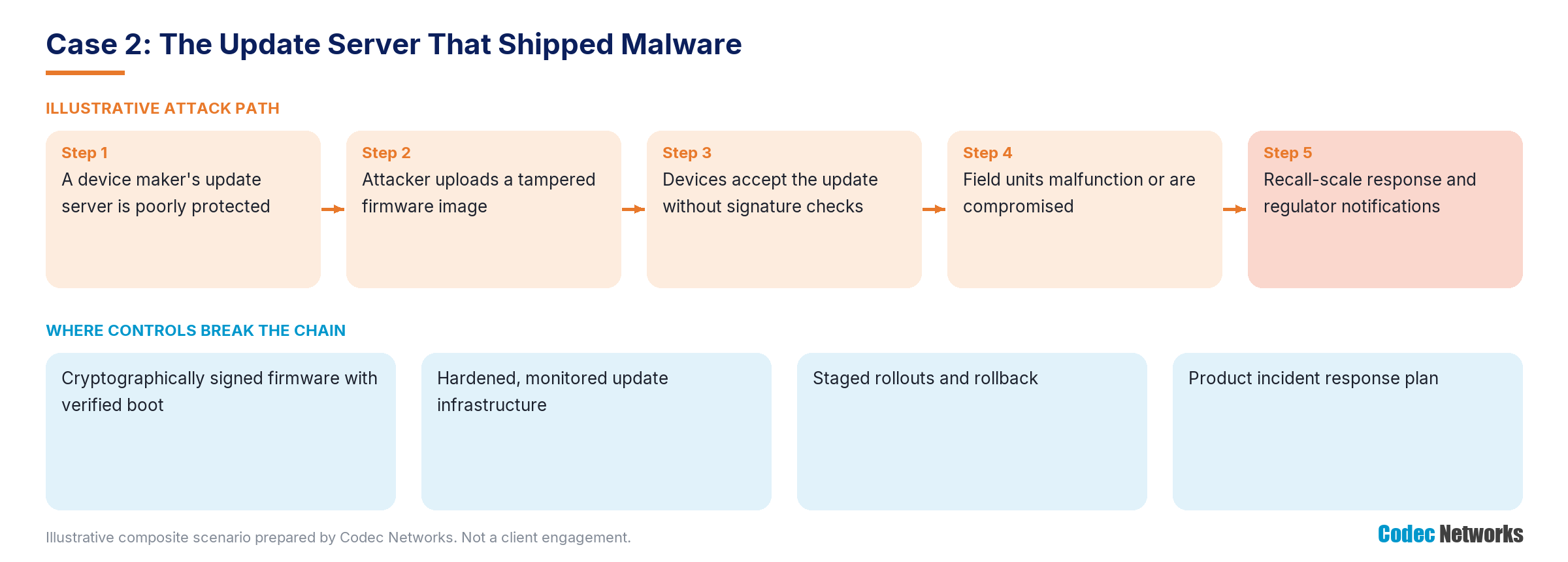
Figure 9: Illustrative attack path for Case Study 2 and the controls that break it.
What went wrong
- Firmware was not signed or verified at boot.
- The update server was weakly protected.
- No staged rollout or rollback.
- No product incident plan.
The impact
OEM B faced a recall-scale response, regulatory notifications and reputational harm.
The regulatory lens
- US FDA 524B: design controls and processes to provide updates and patches.
- EU MDR: IT security within safety requirements.
- CERT-In Directions: incidents reported within six hours.
How Codec Networks would help
|
Need |
Codec Networks response |
Bundle |
|
Secure updates |
Signing, verified boot and update design review |
B2 |
|
Harden servers |
Update infrastructure review |
B3 |
|
Respond |
Product incident response |
B8 |
|
Key lessons Sign firmware and verify at boot. Harden and monitor update servers. Stage rollouts with rollback. Plan for product incidents. |
Case Study 3: The Debug Port on the Production Board
The researcher needed a few wires and an afternoon.
|
At a glance |
|
|
Organisation |
A wearable device start-up (“Start-up C”) |
|
Threat |
An enabled debug port allowing extraction of firmware and a fleet-wide key |
|
Why it is new |
Development shortcuts often survive into production |
|
Codec Networks services |
Hardware testing, identity review, secure lifecycle (Bundles B1, B2, B5) |
The scenario
Start-up C's production boards still had debug interfaces enabled to simplify manufacturing tests.
A security researcher connected to the port, extracted firmware and found a single key used by every device.
With the key, cloned devices could impersonate genuine ones to the cloud. The researcher disclosed the issue.
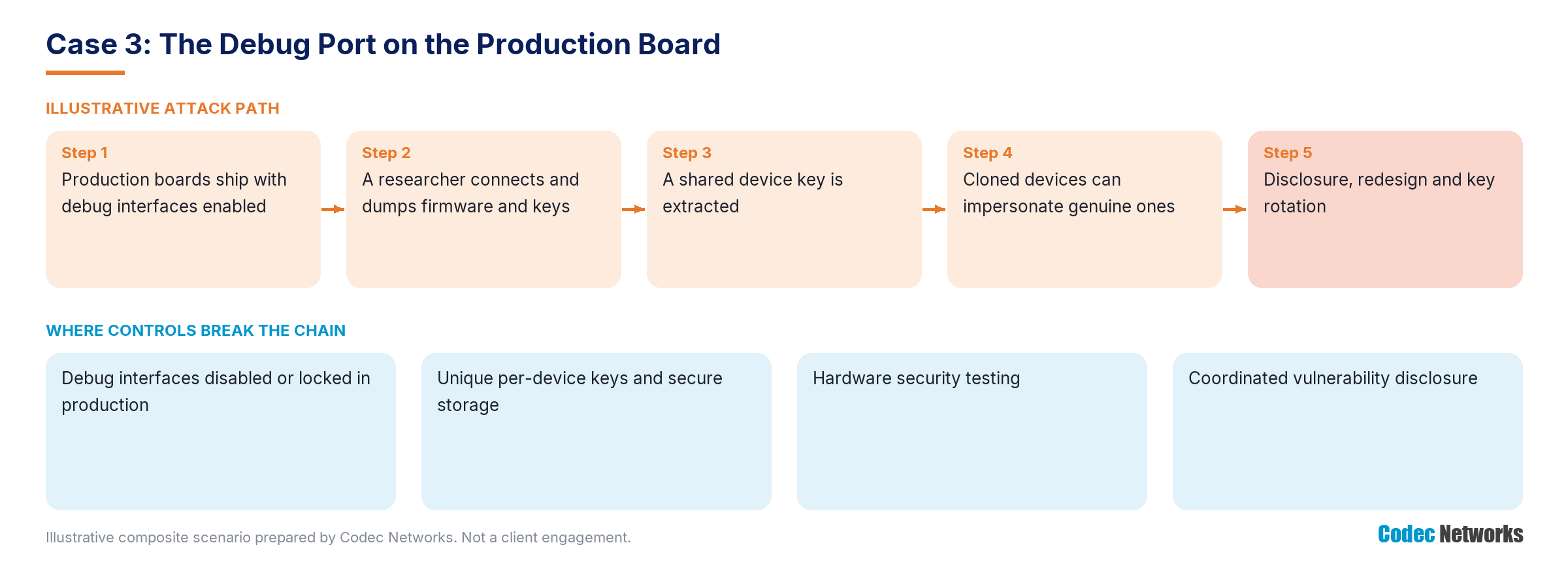
Figure 10: Illustrative attack path for Case Study 3 and the controls that break it.
What went wrong
- Debug interfaces were enabled in production.
- One key was shared across all devices.
- No hardware security testing before launch.
- No disclosure process was in place.
The impact
Start-up C had to redesign provisioning, rotate keys and reassure customers and investors.
The regulatory lens
- Medical Devices Rules: device safety and performance obligations.
- DPDP Act and Rules: safeguards for user data once provisions commence.
- Export markets: design controls and identity expectations.
How Codec Networks would help
|
Need |
Codec Networks response |
Bundle |
|
Test the hardware |
Hardware and debug interface testing |
B1 |
|
Fix identity |
Unique keys and provisioning review |
B2 |
|
Formalise the lifecycle |
Secure lifecycle and disclosure process |
B5 |
|
Key lessons Lock debug ports in production. Give every device a unique key. Test hardware before launch. Set up disclosure early. |
Case Study 4: The Remote Monitoring Cloud With One Key
The key was meant to be secret. It was inside every copy of the app.
|
At a glance |
|
|
Organisation |
A home-monitoring platform (“Platform D”) collecting readings from thousands of patients |
|
Threat |
A shared API key extracted from the companion app and used to query patient readings |
|
Why it is new |
Platforms aggregate patient data at scale |
|
Codec Networks services |
Mobile app and API testing, cloud review, data protection (Bundles B2, B3, B6) |
The scenario
Platform D's devices and app authenticated to the cloud with one shared API key.
An attacker extracted the key from the mobile app and found the API did not check which patient's data was requested.
Readings for many patients were downloaded before the issue was reported.
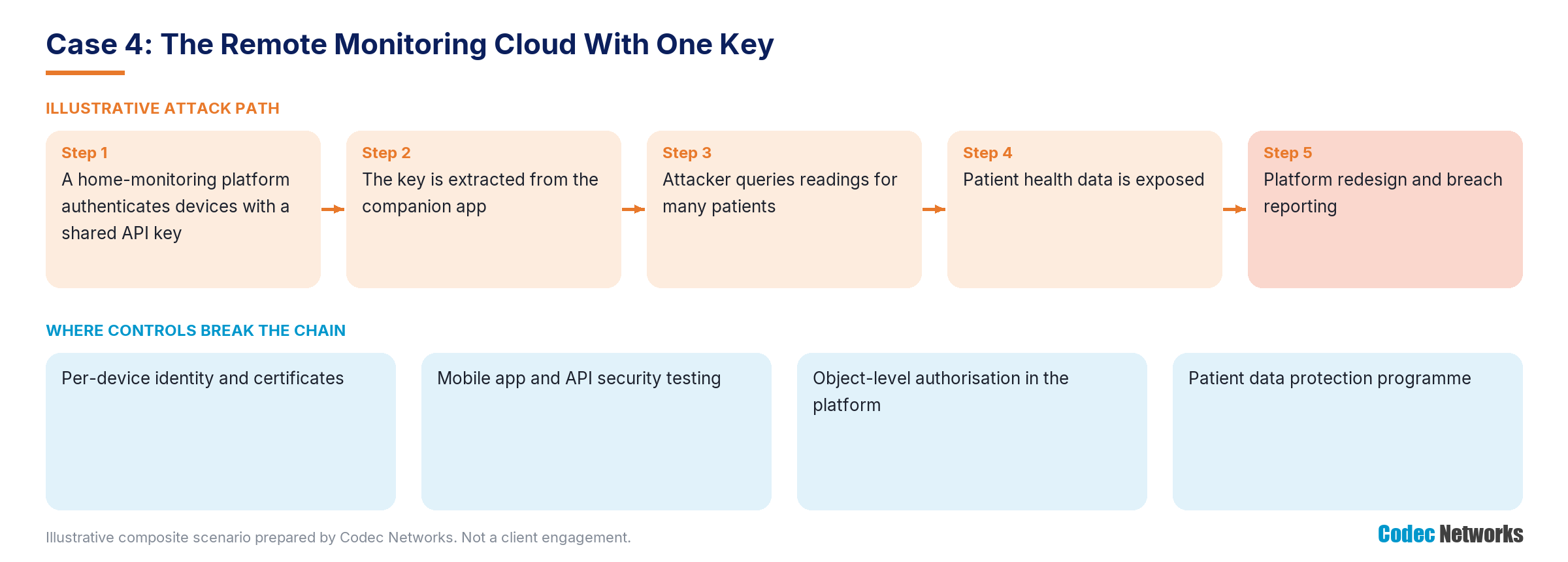
Figure 11: Illustrative attack path for Case Study 4 and the controls that break it.
What went wrong
- A shared API key instead of per-device identity.
- No object-level authorisation.
- Secrets embedded in the app.
- No monitoring of unusual API usage.
The impact
Platform D faced breach reporting, regulatory scrutiny and a platform redesign.
The regulatory lens
- CERT-In Directions: incidents reported within six hours.
- DPDP Act and Rules: safeguards and breach intimation once provisions commence.
- Device regulations: where the platform is part of a regulated device system.
How Codec Networks would help
|
Need |
Codec Networks response |
Bundle |
|
Test the app and API |
Mobile app and API testing |
B2 |
|
Fix the cloud |
Device identity and cloud review |
B3 |
|
Protect patients |
Patient data protection programme |
B6 |
|
Key lessons Use per-device identities. Authorise every request by patient. Keep secrets out of apps. Monitor API usage. |
Case Study 5: The Export Submission That Came Back
The device was ready. The paperwork was not.
|
At a glance |
|
|
Organisation |
An Indian diagnostic equipment maker (“OEM E”) entering the US market |
|
Threat |
A premarket submission lacking a threat model, SBOM and test evidence |
|
Why it is new |
Cybersecurity evidence is now part of market access |
|
Codec Networks services |
Threat modelling, SBOM, secure lifecycle (Bundles B4, B2, B5) |
The scenario
OEM E prepared a US premarket submission for a connected analyser, focusing on clinical performance.
The cybersecurity section had no threat model, no SBOM and limited test evidence.
The submission was not accepted for review, delaying launch by months while OEM E built a product security programme.
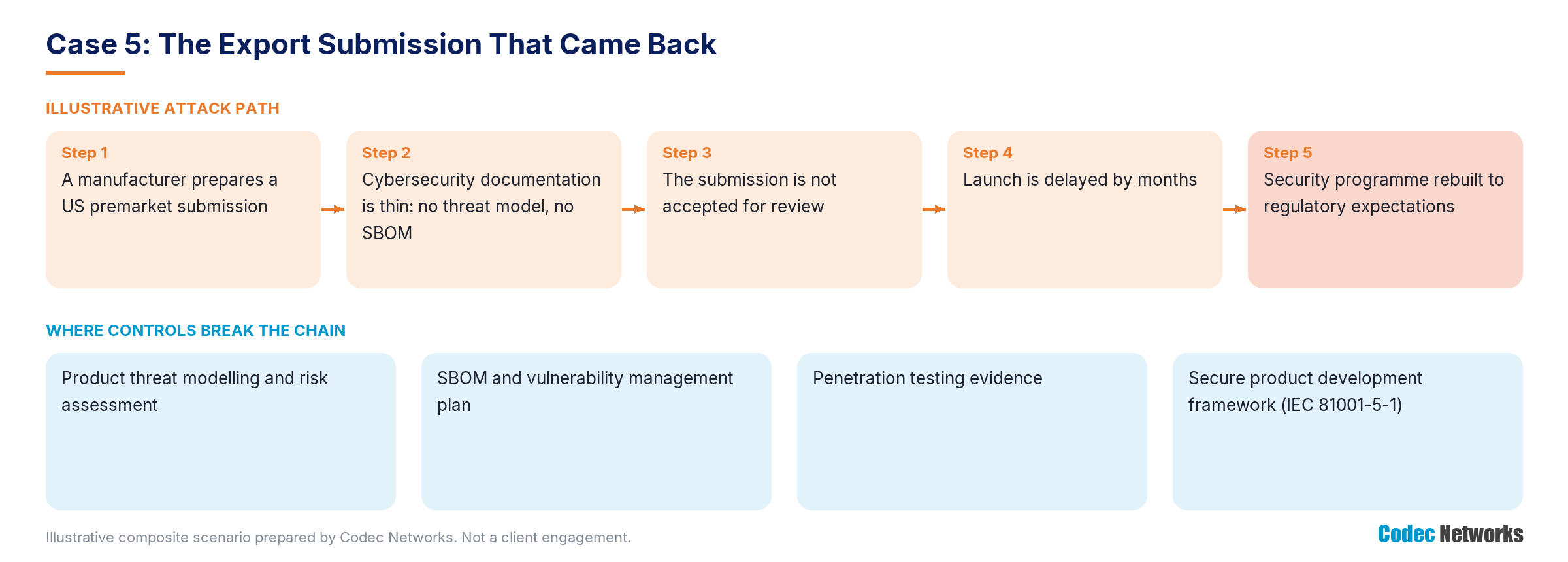
Figure 12: Illustrative attack path for Case Study 5 and the controls that break it.
What went wrong
- No threat model traceable to risk files.
- No SBOM.
- Limited penetration testing evidence.
- No vulnerability management plan.
The impact
OEM E lost months of market access and had to invest urgently in product security.
The regulatory lens
- US FDA 524B: cybersecurity plan, SBOM and design controls required for cyber devices.
- EU MDR: IT security documentation for CE marking.
- CDSCO software guidance: cybersecurity expectations for device software in India.
How Codec Networks would help
|
Need |
Codec Networks response |
Bundle |
|
Model the threats |
Product threat modelling and risk assessment |
B4 |
|
Build the SBOM |
SBOM and testing evidence |
B2 |
|
Formalise the process |
Secure lifecycle aligned to IEC 81001-5-1 |
B5 |
|
Key lessons Start security evidence at design. Maintain an SBOM. Test before submission. Document vulnerability management. |
Talk to Codec Networks
|
Contact Codec Networks Pvt. Ltd. New Delhi: 507, 5th Floor, New Delhi House, Barakhamba Road, Connaught Place, New Delhi – 110001 Gurugram: 707, 7th Floor, Silverton Tower, Golf Course Extension Road, Sector 50, Gurugram – 122018, Haryana Landline: 011 430 496 96 | 011 437 522 99 Mobile: +91 99716 76124 | +91 88007 88220 | +91 88003 31124 Email: mktg@codecnetworks.com Web: www.codecnetworks.com |