

Resources Categories
INDUSTRY FACT FILE · METALS, MINING & CEMENT
Main Products and Services in Metals, Mining and Cement
What India's mining groups, steel and aluminium producers, smelters, foundries and cement makers produce and deliver, the mine, plant, enterprise and dispatch systems behind each activity, and where those systems create cybersecurity and compliance exposure.
|
In this document 1. How metals, mining and cement companies earn their money 2. Products and services by producer type 3. The operations layer: mines, furnaces, kilns and captive power 4. The enterprise layer: ERP, dispatch, e-permits and trading 5. The systems behind the products and services 6. Trends that change the attack surface 7. Mapping operations to Codec Networks engagements |
1. How metals, mining and cement companies earn their money
|
Revenue stream |
How it works |
Security relevance |
|
Mineral and coal sales |
Coal, iron ore, bauxite, limestone and other minerals sold to power, steel and cement producers, through linkages, e-auctions and contracts |
Dispatch and weighbridge integrity; e-permit and royalty data; e-auction platforms |
|
Metal product sales |
Steel, aluminium, zinc, copper and alloys sold to construction, automotive, engineering, packaging and exporters |
Furnace uptime; ERP order-to-cash; commodity pricing and trading data |
|
Cement and building materials |
Cement, clinker and ready-mix concrete sold through dealers, depots and institutional buyers |
Dispatch across many plants and depots; dealer portals and schemes |
|
Exports and CBAM-covered trade |
Steel, aluminium and cement supplied to the EU and other markets |
Embedded-emissions data integrity; buyer security questionnaires |
|
Captive power and by-products |
Captive electricity, slag, fly ash, coke and chemicals sold or used internally |
Power plant control systems; metering and billing |
2. Products and services by producer type
|
Producer type |
Main products and services |
Key systems |
|
Coal and mineral miners |
Coal, iron ore, bauxite, limestone, zinc and critical minerals; exploration and beneficiation |
Fleet management, tele-remote and autonomy systems, mine planning, dispatch, e-permits |
|
Steel producers |
Flat and long products, specialty steel, rails, pipes |
Level 1–2 automation, DCS, MES, coke oven and furnace control, multi-plant ERP |
|
Aluminium and non-ferrous smelters |
Alumina, primary aluminium, zinc, lead, copper, alloys |
Potline and refinery DCS, captive power plant DCS, process historians |
|
Foundries and secondary producers |
Castings, forgings, secondary metal from scrap |
Furnace controls, CNC, small ERP, customer portals, outsourced IT |
|
Cement manufacturers |
Cement, clinker, ready-mix concrete |
Kiln and mill DCS, quality control systems, dispatch, weighbridges, dealer portals |
|
Captive power and logistics units |
Captive electricity, rail and road dispatch, port handling |
Power plant DCS and substations, rail siding and port systems, GPS fleets |
3. The operations layer: mines, furnaces, kilns and captive power
A mine is now a networked operation. Fleet management systems dispatch haul trucks and excavators; drills, crushers and conveyors run on PLCs; drones survey pits; condition-monitoring sensors stream data from machines; and, at the most advanced sites, operators run drills and loaders tele-remotely from surface control rooms, as Hindustan Zinc does at several underground mines. Remote operations centres link these systems across sites over leased lines, microwave or private wireless, often with mine developers and operators (MDOs) and OEMs connected in to support their equipment.
Metal plants and cement works are continuous processes. Blast furnaces, coke ovens, potlines and rotary kilns are controlled by distributed control systems (DCS), PLCs and operator HMIs, with historians and quality systems recording every batch and manufacturing execution systems scheduling the lines. Captive power plants, oxygen plants, water treatment and substations have their own control systems. Much of this estate is 15 to 25 years old, runs unsupported operating systems, uses unauthenticated industrial protocols and cannot be stopped safely for patching—so it is protected by boundaries, monitoring and vendor discipline rather than by updates.
4. The enterprise layer: ERP, dispatch, e-permits and trading
Above operations sits the enterprise layer. ERP plans production, procures raw material and spares, manages inventory and invoices customers; if it stops, furnaces can run but nothing can be dispatched or billed. Dispatch systems, weighbridges, gate passes and state e-permit or e-transit portals control what leaves the site and what royalty is due; e-auction platforms and commodity exchanges set prices; dealer and customer portals carry orders and schemes; and HR and contractor management systems hold data on large contract workforces. Increasingly these systems run in the cloud and connect to railways, ports, transporters and banks.
Compliance data is a third layer with its own integrity requirements. Continuous emissions monitoring feeds regulators, safety records support DGMS obligations, mining plans and returns flow through the Indian Bureau of Mines' Mining Tenement System, and from January 2026 EU buyers need verified embedded-emissions data under CBAM. Manipulated or unavailable compliance data is now a business event as much as a technical one.
|
Highest-risk moments ERP and dispatch outages that stop trucks while kilns and furnaces keep producing, OEM and MDO remote sessions into control networks, vendor laptops connected during shutdowns and turnarounds, shared accounts in remote operations centres, weighbridge and permit edits nobody reviews, and captive power plants reachable from corporate IT are where metals, mining and cement incidents typically begin or escalate. |
5. The systems behind the products and services
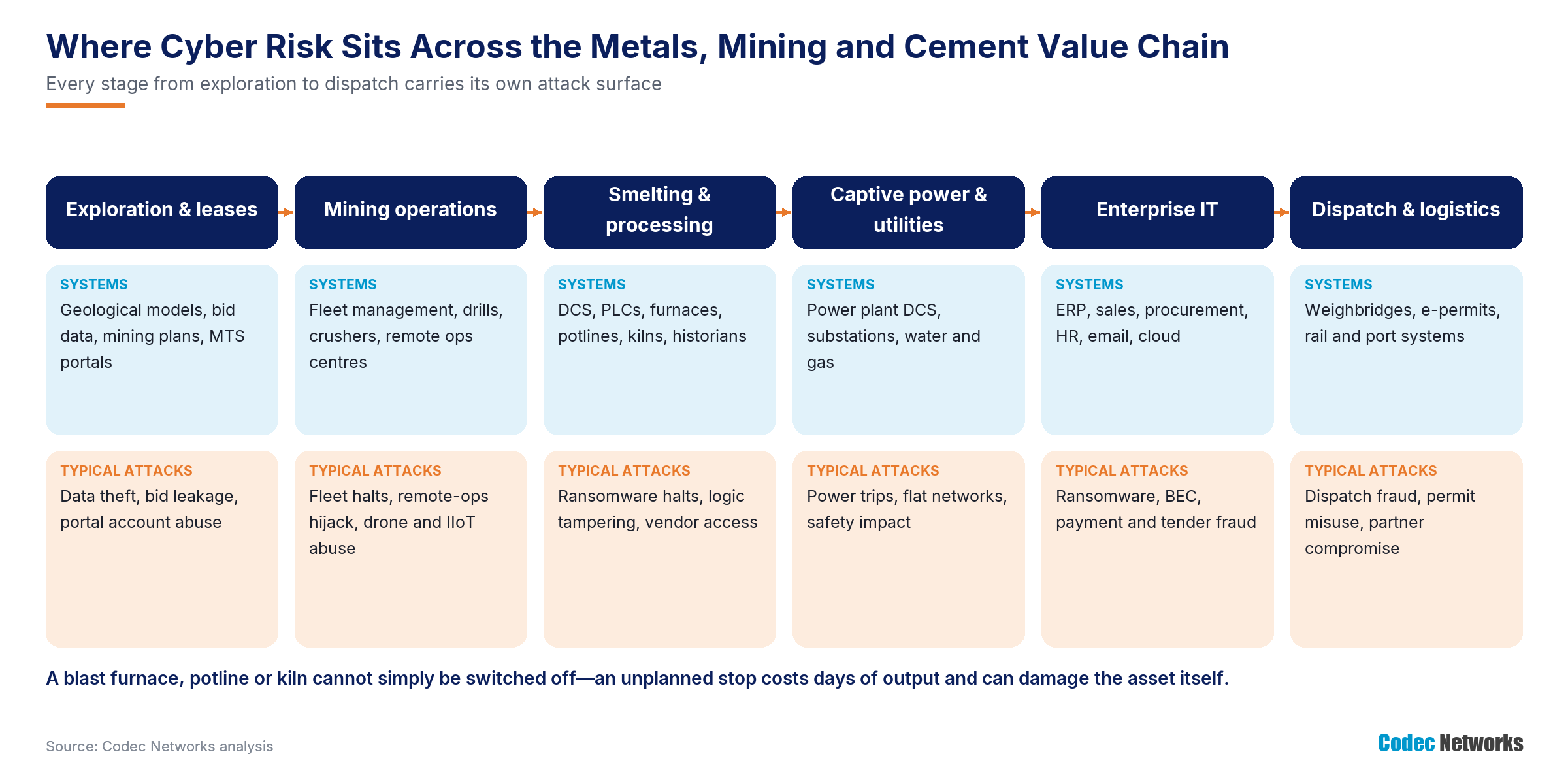
Figure 2: Where cyber risk sits across the metals, mining and cement value chain.
|
Product / service |
Systems that deliver it |
Key cyber and compliance touchpoints |
|
Exploration and leases |
Geological models, bid and auction data, mining plans, MTS portals |
Data classification, portal account controls, DLP |
|
Mining operations |
Fleet management, drills, crushers, drones, tele-remote and remote operations centres |
IEC 62443 assessment, segmentation of site links, brokered access, OT monitoring |
|
Smelting and processing |
DCS, PLCs, HMIs, furnace and kiln control, historians, MES, quality labs |
Zone-and-conduit design, vendor device controls, change control, monitoring |
|
Captive power and utilities |
Power plant DCS, substations, water, gas and oxygen plants |
Utility OT assessment, segmentation from corporate IT, safety system reviews |
|
Enterprise IT |
ERP, procurement, sales, HR, contractor systems, email, cloud |
EDR, backups, identity, SOC, DPDP for personal data |
|
Dispatch and logistics |
Weighbridges, gate systems, e-permits, rail and port integrations, GPS fleets |
Dispatch system testing, integrity logging, analytics, partner integration reviews |
6. Trends that change the attack surface
|
Trend |
What is changing |
Security implication |
|
Remote and autonomous operations |
Tele-remote drilling and loading, autonomous haulage, remote operations centres |
Fleet and remote-ops systems become safety-critical attack surfaces |
|
Commercial mining and MDO model |
Private operators and contractors running mines for owners |
Many more third parties with access to owner systems and data |
|
Digital dispatch and e-governance |
Weighbridge integration, e-permits, e-auctions, MTS single window |
Integrity of dispatch and statutory data; portal account security |
|
Decarbonisation and CBAM |
Emissions monitoring, green steel and cement, EU reporting |
Compliance data integrity and buyer assurance |
|
Cloud ERP and analytics |
Group ERP, data lakes and AI for process optimisation |
Identity, tenant and data pipeline security |
|
Regulatory formalisation |
CERT-In audit guidelines, SEBI disclosure, DPDP, NCIIPC |
Evidence-based assurance replaces informal practice |
7. Mapping operations to Codec Networks engagements
|
If the company operates… |
Recommended starting engagement |
|
Furnaces, kilns, potlines or mills with DCS and PLCs |
IEC 62443-aligned industrial security assessment, segmentation design, OT monitoring |
|
Mines with fleet, tele-remote or remote operations centres |
Remote operations and fleet system assessment, site link and access review |
|
ERP, dispatch, weighbridges and e-permit integrations |
ERP and dispatch security testing, integrity controls, backup and recovery validation |
|
MDOs, EPC contractors, transporters or port links |
Supply chain cyber assessment programme; contract clauses; integration testing |
|
Captive power plants and utilities |
Utility OT assessment and segmentation from corporate IT |
|
Many plants, mines and depots across states |
24x7 IT/OT SOC with site coverage and 6-hour reporting support |
Talk to Codec Networks
|
Contact Codec Networks Pvt. Ltd. New Delhi: 507, 5th Floor, New Delhi House, Barakhamba Road, Connaught Place, New Delhi – 110001 Gurugram: 707, 7th Floor, Silverton Tower, Golf Course Extension Road, Sector 50, Gurugram – 122018, Haryana Landline: 011 430 496 96 | 011 437 522 99 Mobile: +91 99716 76124 | +91 88007 88220 | +91 88003 31124 Email: mktg@codecnetworks.com Web: www.codecnetworks.com |
Note: Descriptions are general and based on public information available as of October 2026. Systems and exposures differ by site and company.