

Resources Categories

INDUSTRY FACT FILE · PHARMACEUTICALS & LIFE SCIENCES
Market Landscape and the Drivers of Cybersecurity Demand in Pharma
The business, technology, regulatory, legal and statutory forces that create cybersecurity, audit and assurance work for pharma and life sciences organisations.
|
In this document 1. Market landscape 2. Business drivers 3. Technology drivers 4. Regulatory drivers: Schedule M, clinical rules, data integrity and CERT-In 5. Legal and statutory drivers 6. How the drivers differ by organisation type 7. What this means for buyers and for Codec Networks |
1. Market landscape
India's pharmaceutical industry ranges from large listed manufacturers with global regulatory approvals to thousands of MSME units, alongside growing biotech, CRO and CDMO segments. Revised Schedule M, export-market inspections and partner audits are raising expectations for computerised systems, while digital manufacturing and cloud quality systems expand the attack surface.
|
Dec 2025 Schedule M MSME deadline |
2019 NDCT Rules notified |
6 hours Incident reporting to CERT-In |
May 2027 Most DPDP obligations take effect |
|
Market segment |
Landscape and buying behaviour |
Cybersecurity opportunity |
|
Large manufacturers |
Global approvals, many sites |
IT/OT programmes, SOC, red teaming, data integrity |
|
MSME manufacturers |
Upgrading to Revised Schedule M |
Gap assessments, OT basics, data integrity reviews |
|
Biotech and research |
High-value IP |
IP protection, threat hunting |
|
CROs and CDMOs |
Sponsor- and client-driven |
Client audits, clinical privacy, segregation |
2. Business drivers
|
Business driver |
Buying trigger |
Relevant services |
|
Supply continuity |
Plant outages delay medicines |
OT resilience and recovery |
|
Export inspections |
Data integrity findings risk market access |
Data integrity reviews |
|
IP protection |
Formulations and processes are valuable |
DLP and insider programmes |
|
Partner audits |
Sponsors and clients audit security |
Audit evidence, ISO 27001 |
|
Reputation |
Incidents attract regulator attention |
Incident readiness |
3. Technology drivers
|
Technology driver |
Exposure created |
Codec Networks opportunity |
|
Plant OT |
Ransomware crossing from IT |
OT segmentation and monitoring |
|
Lab systems |
Audit trail and access gaps |
Computerised system reviews |
|
Clinical platforms |
Participant data leakage |
Application and privacy testing |
|
Research collaboration |
Espionage and exfiltration |
Collaboration security and hunting |
|
Cloud quality systems |
Configuration and vendor risk |
Cloud and vendor reviews |
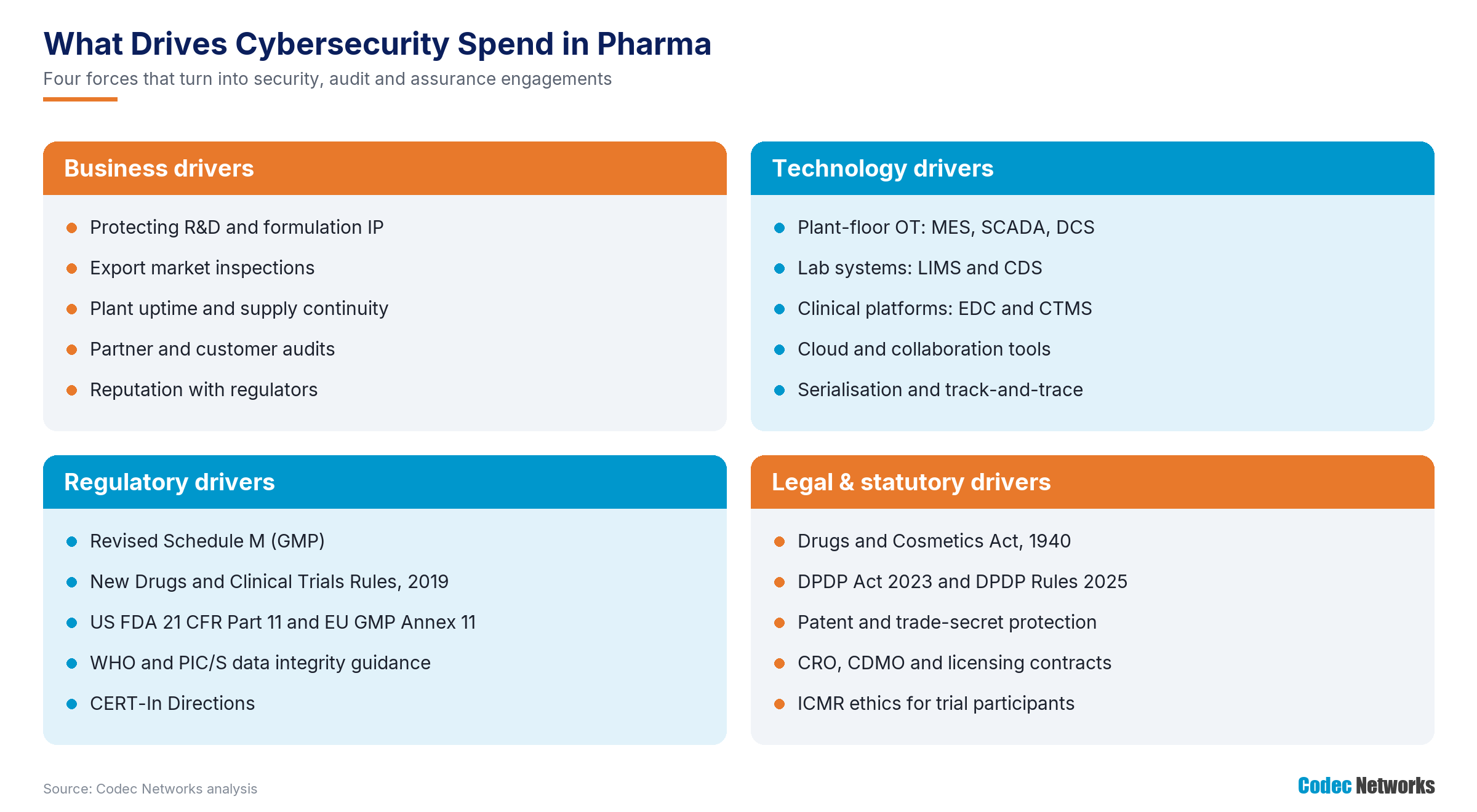
Figure 3: The four groups of drivers behind cybersecurity spending in pharma.
4. Regulatory drivers: Schedule M, clinical rules, data integrity and CERT-In
|
Instrument |
Key requirements |
|
Revised Schedule M |
Modernised GMP including quality systems, risk management and computerised systems; MSME compliance by 31 December 2025 under an extension |
|
New Drugs and Clinical Trials Rules, 2019 |
Clinical trial approval, conduct, records and participant protection |
|
Export-market data integrity |
US FDA 21 CFR Part 11; EU GMP Annex 11; WHO and PIC/S guidance |
|
CERT-In Directions (2022) |
Six-hour incident reporting; 180-day ICT logs in India |
|
DPDP Act 2023 and Rules 2025 |
Participant and employee personal data; most obligations from May 2027 |
|
Confirm against the notifications Schedule M details are summarised; confirm against official CDSCO and MoHFW notifications and each export market's rules. |
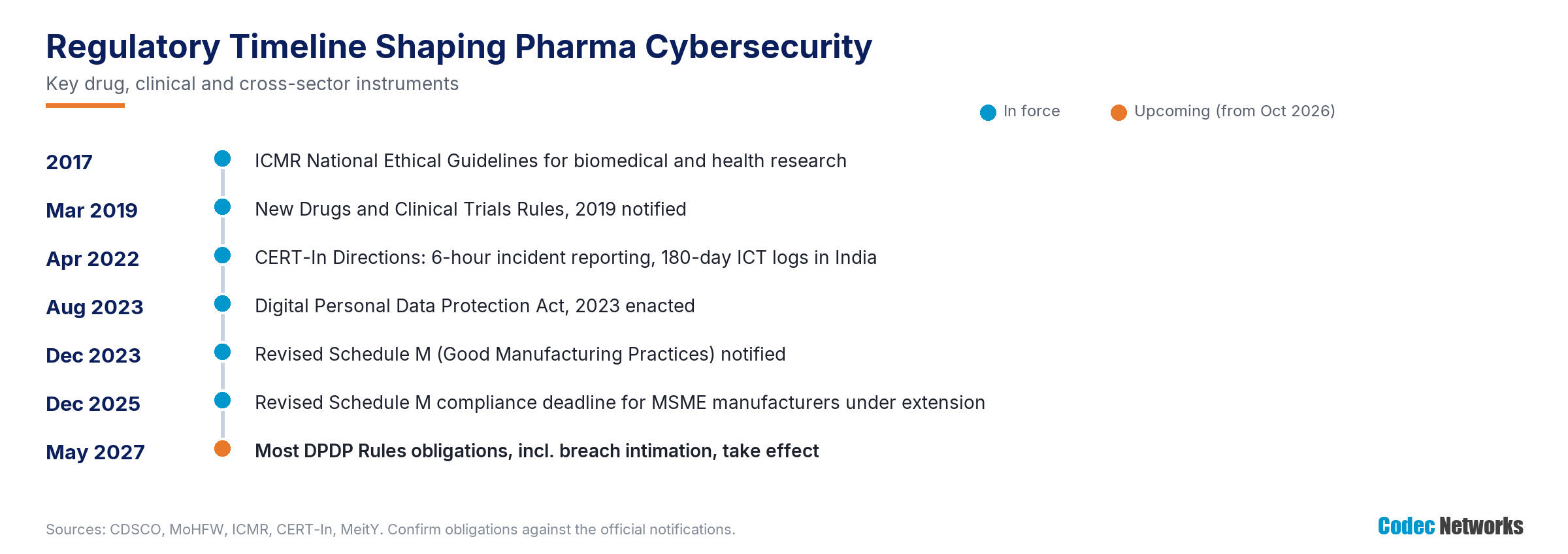
Figure 4: Regulatory timeline shaping pharma cybersecurity, as of October 2026.
5. Legal and statutory drivers
|
Law or obligation |
Relevance |
Demand created |
|
Drugs and Cosmetics Act, 1940 |
Licensing, GMP and quality |
Computerised system and integrity controls |
|
IT Act, 2000 and CERT-In Directions |
Incident reporting and logging |
SOC and logging |
|
DPDP Act, 2023 and Rules, 2025 |
Participant and employee data |
Privacy programmes |
|
Patent law and trade secrets |
Protection of research and processes |
IP protection controls |
|
Contracts |
Sponsor, CRO, CDMO and licensing agreements |
Assurance evidence |
6. How the drivers differ by organisation type
|
Organisation type |
Dominant business drivers |
Dominant technology drivers |
Principal regulatory drivers |
|
Manufacturers |
Supply continuity, exports |
MES, SCADA, LIMS |
Schedule M, Part 11, Annex 11, CERT-In |
|
Biotech |
IP value |
Research platforms, bioprocess |
CDSCO, export GMP, CERT-In |
|
CROs |
Sponsor trust |
EDC, CTMS |
NDCT Rules, ICMR, DPDP |
|
CDMOs |
Client trust |
Multi-client OT and data |
Schedule M, client agreements |
7. What this means for buyers and for Codec Networks
|
Customer buying need |
Recommended offering |
Natural recurring engagement |
|
“Could ransomware stop our plant?” |
OT security assessment and segmentation |
Continuous OT monitoring |
|
“Will our audit trails pass inspection?” |
Data integrity review |
Periodic reviews |
|
“Could research data walk out?” |
IP protection and DLP programme |
UEBA monitoring |
|
“Sponsors want our security evidence.” |
ISO 27001 and audit evidence |
Annual audit support |
|
“Is our trial data protected?” |
Clinical platform and privacy assessment |
Per-study reviews |
Talk to Codec Networks
|
Contact Codec Networks Pvt. Ltd. New Delhi: 507, 5th Floor, New Delhi House, Barakhamba Road, Connaught Place, New Delhi – 110001 Gurugram: 707, 7th Floor, Silverton Tower, Golf Course Extension Road, Sector 50, Gurugram – 122018, Haryana Landline: 011 430 496 96 | 011 437 522 99 Mobile: +91 99716 76124 | +91 88007 88220 | +91 88003 31124 Email: mktg@codecnetworks.com Web: www.codecnetworks.com |
Note: This document is general industry guidance based on public information available as of October 2026. It is not legal or regulatory advice. Schedule M and clinical trial requirements are summarised; confirm obligations against the official CDSCO, MoHFW, ICMR, CERT-In and export-market regulator texts.