

Resources Categories

INDUSTRY FACT FILE · PROFESSIONAL & BUSINESS SERVICES
Main Products and Services in Professional and Business Services
What India's law, accounting, consulting, recruitment, staffing, payroll and shared-services firms deliver, the systems behind each service, and where those systems create cybersecurity and compliance exposure.
|
In this document 1. How professional and business services firms earn their money 2. Products and services by firm type 3. The advisory layer: mandates, documents and confidential advice 4. The operations layer: people, payroll, platforms and outsourced processes 5. The systems behind the products and services 6. Trends that change the attack surface 7. Mapping operations to Codec Networks engagements |
1. How professional and business services firms earn their money
|
Revenue stream |
How it works |
Security relevance |
|
Hourly and fixed-fee advice |
Legal, tax, consulting and advisory work billed by time, milestone or retainer |
Confidential documents, email, client portals, billing and fee payments |
|
Audit and assurance fees |
Statutory, internal, tax and specialist audits under engagement letters |
Working papers, client system access, unpublished results |
|
Transaction and deal services |
M&A, due diligence, valuations, restructuring and capital-market support |
Data rooms, price-sensitive information, payment flows |
|
Placement and search fees |
Fees for permanent hires and executive search, often a share of first-year salary |
Candidate CVs, salary data, client hiring plans |
|
Staffing and payroll margins |
Mark-ups on contract staff and per-employee fees for payroll and HR services |
Salary, bank, PAN, Aadhaar-linked and statutory data for many employers |
|
Outsourced operations contracts |
Multi-year contracts for finance, HR, customer and back-office processes |
Client ERP and payment access, service levels, client audits |
2. Products and services by firm type
|
Firm type |
Main products and services |
Key systems |
|
Law firms |
Transactions, litigation, regulatory advice, arbitration, legal process outsourcing |
Document management, email, e-discovery, practice and matter management, court e-filing, data rooms |
|
CA and audit firms |
Statutory audit, internal audit, tax compliance, forensic accounting, advisory |
Audit software, working-paper repositories, client ERP access, tax portals, file sharing |
|
Tax and corporate services |
Tax filings, company secretarial work, registrar and share transfer services |
Filing software, MCA and tax portals, shareholder registers, investor portals |
|
Consulting firms |
Strategy, deals, risk, operations and technology advice |
Collaboration platforms, analytics workspaces, client data extracts, AI tools |
|
Recruitment and search |
Hiring, executive search, assessments, background verification |
Applicant tracking systems, CRM, job boards, video interviews, verification vendors |
|
Staffing, payroll and HR outsourcing |
Contract staffing, payroll runs, statutory compliance, benefits, HRMS |
Payroll engines, HRMS, employee self-service, banking files, file transfer |
|
Business support and shared services |
Finance and accounting, procure-to-pay, HR operations, contact centres |
Client ERPs, ticketing, payment queues, help desks, call recording |
3. The advisory layer: mandates, documents and confidential advice
The advisory side of the sector runs on documents and conversations. Engagement starts with proposals, conflict checks and know-your-client records; it moves into email threads, document-management systems, shared workspaces and virtual data rooms where client files, drafts and models are exchanged; and it ends with opinions, audit reports, filings and archives that must be kept for years. Partners and senior staff read and approve on mobile devices, juniors work from home, and clients expect files to move instantly through portals and file-transfer links. Each of these is a channel through which confidential information can leave the firm.
Confidentiality has always been the profession's core duty, but the controls were built for paper and offices. Many firms still rely on shared mailboxes, broad access to matter folders, links that never expire and personal devices without management. Departing partners and staff take relationships and sometimes files with them. Price-sensitive deal information and unpublished results attract insider traders and competitors, privileged litigation strategy attracts opponents, and the payment instructions that pass through every transaction attract fraudsters who need only one hijacked mailbox to redirect a client's money.
4. The operations layer: people, payroll, platforms and outsourced processes
The operations side of the sector runs on people data and client systems. Recruitment firms hold CVs, contact details, salary expectations and assessment results for candidates who are not yet anyone's employee; staffing and payroll providers hold salary, bank account, PAN, Aadhaar-linked, provident fund and tax data for lakhs of employees across many employers; and the labour codes in force since 21 November 2025 are changing wage definitions, records and filings at the same time. Payroll files move to banks and employers through file-transfer tools and APIs, and a single compromised platform can expose many clients at once, as the MOVEit incidents of 2023 showed.
Business support and shared-services organisations go further: they log into their clients' ERP, payment and customer systems and run processes on their behalf. That makes their help desks, privileged accounts and staff a direct route into the client. Banks, insurers and listed companies therefore audit them under RBI's IT outsourcing directions, SEBI's frameworks and their own contracts, and increasingly ask for SOC 2 reports, ISO/IEC 27001 certification and evidence of monitoring before renewing a contract.
|
Highest-risk moments Closing days of transactions when payment instructions are exchanged, audit and results seasons, monthly payroll runs and bank-file uploads, onboarding of a new outsourcing client, migrations to new email, document or payroll platforms, help-desk resets of passwords and MFA, lateral hires and partner departures, and the first use of generative AI tools on client material are where professional services incidents typically begin or escalate. |
5. The systems behind the products and services
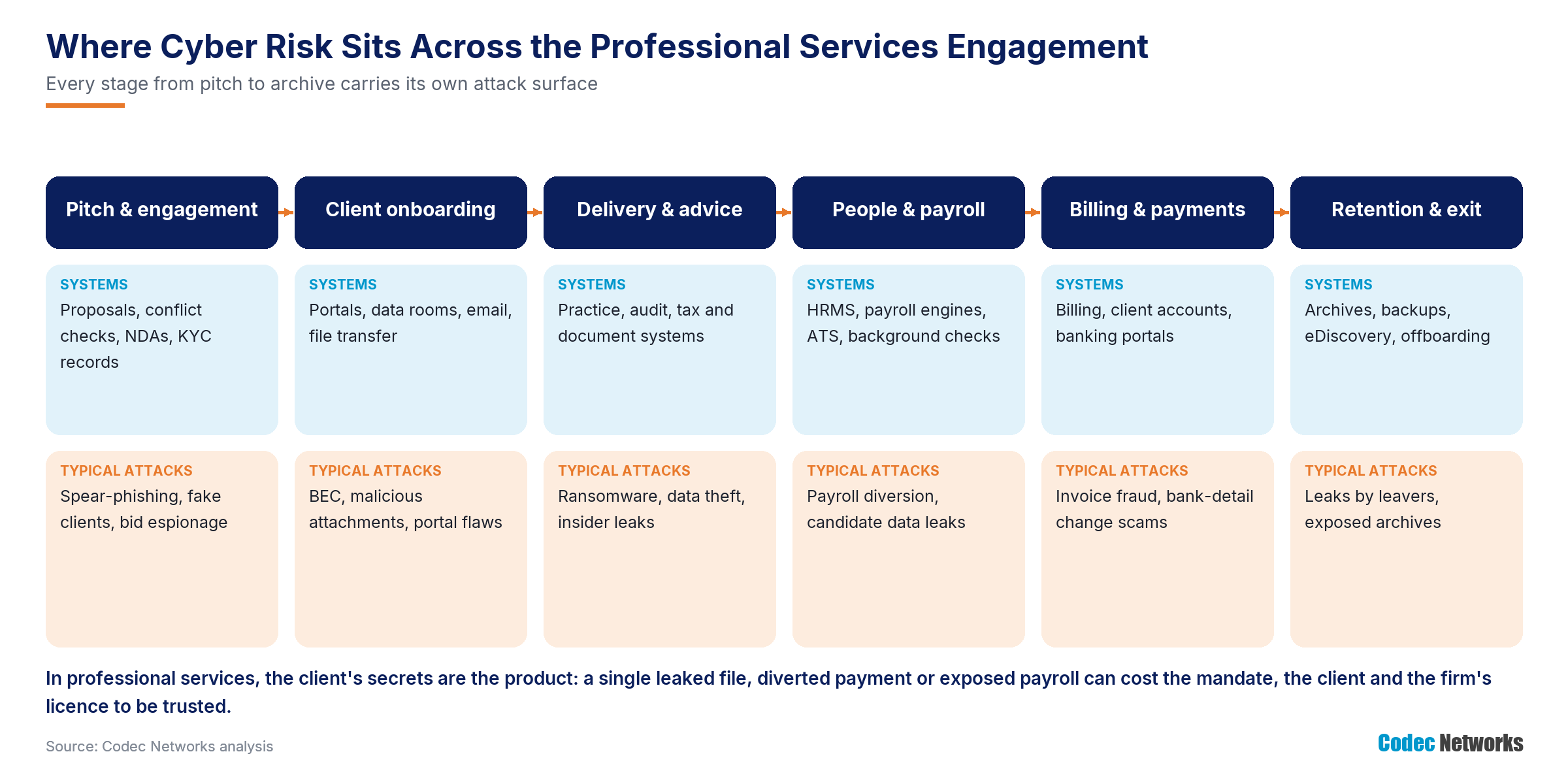
Figure 2: Where cyber risk sits across the professional services engagement.
|
Product / service |
Systems that deliver it |
Key cyber and compliance touchpoints |
|
Pitch and engagement |
Email, CRM, conflict-check and KYC systems, proposal workspaces |
Spear-phishing, fake clients, NDA handling, KYC data protection |
|
Client onboarding |
Client portals, data rooms, file transfer, shared mailboxes |
Portal testing, link expiry, MFA, malicious attachment controls |
|
Delivery and advice |
Document management, audit and tax software, analytics workspaces |
Access control, DLP, segmentation, ransomware readiness |
|
People and payroll |
HRMS, payroll engines, ATS, background verification vendors |
DPDP fiduciary and processor duties, encryption, vendor risk |
|
Billing and payments |
Billing, client accounts, banking portals, payment queues |
BEC controls, call-back verification, dual approval, monitoring |
|
Retention and exit |
Archives, backups, e-discovery, offboarding workflows |
Retention limits, immutable backups, leaver access removal |
6. Trends that change the attack surface
|
Trend |
What is changing |
Security implication |
|
Cloud-first firms |
Email, documents and practice systems move to Microsoft 365, Google Workspace and SaaS |
Identity, tenant configuration and token theft decide security |
|
Client assurance pressure |
Regulated clients demand SOC 2, ISO 27001 and right-to-audit clauses |
Evidence and continuous monitoring become sales requirements |
|
Generative AI in practice |
AI drafting, review and analysis tools used on client material |
Data leakage, model risk and confidentiality questions |
|
Growth of GCCs and shared services |
Global groups expand captive centres in India |
Privileged access to client systems and global attack attention |
|
Labour code compliance |
New wage, social security and records rules from November 2025 |
Payroll platform change, data migration and new data flows |
|
Privacy as a contract term |
DPDP processor duties written into client agreements |
Data maps, safeguards and breach workflows must be demonstrable |
7. Mapping operations to Codec Networks engagements
|
If the organisation operates… |
Recommended starting engagement |
|
Cloud email and document platforms used by partners and staff |
Microsoft 365 or Workspace security review, phishing-resistant MFA, mailbox-rule monitoring |
|
Client portals, data rooms or file-transfer tools |
Portal and API testing, file-transfer hardening, link expiry and access reviews |
|
Payroll, HRMS or applicant-tracking platforms |
Application testing, encryption review, DPDP processor and fiduciary programme |
|
Access to client ERP, payment or customer systems |
Privileged access review, help-desk verification controls, SOC monitoring |
|
Regulated clients asking for SOC 2 or ISO 27001 |
Readiness assessment, control implementation, evidence packs and audits |
|
Payment instructions in email or client funds |
BEC defences, call-back controls, awareness and an IR retainer |
Talk to Codec Networks
|
Contact Codec Networks Pvt. Ltd. New Delhi: 507, 5th Floor, New Delhi House, Barakhamba Road, Connaught Place, New Delhi – 110001 Gurugram: 707, 7th Floor, Silverton Tower, Golf Course Extension Road, Sector 50, Gurugram – 122018, Haryana Landline: 011 430 496 96 | 011 437 522 99 Mobile: +91 99716 76124 | +91 88007 88220 | +91 88003 31124 Email: mktg@codecnetworks.com Web: www.codecnetworks.com |
Note: Descriptions are general and based on public information available as of October 2026. Systems and exposures differ by firm and service line.