

Resources Categories

INDUSTRY FACT FILE · REAL ESTATE, CONSTRUCTION & FACILITIES
Market Landscape and the Drivers of Cybersecurity Demand in Real Estate and Construction
The business, technology, regulatory, legal, statutory and occupier forces that create cybersecurity, audit and assurance work for developers, contractors, property groups, co-working operators and facility managers.
|
In this document 1. Market landscape 2. Business drivers 3. Technology drivers 4. Regulatory drivers: CERT-In, RERA, SEBI, DPDP and the CCTV requirements 5. Legal and statutory drivers 6. How the drivers differ by company type 7. What this means for buyers and for Codec Networks |
1. Market landscape
India's real estate and construction market is large and institutionalising. Knight Frank and CII put the real estate sector at about US$482 billion in 2023 and project US$1.5 trillion by 2034; the National Infrastructure Pipeline targets about ₹111 lakh crore of investment; PMAY-Urban 2.0 adds one crore urban homes; office leasing reached a record of more than 80 million square feet in 2025 with global capability centres taking close to two-fifths of it and flexible workspace operators a record 18.6 million square feet; and five REITs are now listed, with SEBI's 2024 SM REIT framework opening smaller assets to public ownership. Listed developers and contractors, global investors, PSU construction companies and thousands of regional developers, contractors and FM firms make up the market.
Cybersecurity demand follows that institutionalisation. Occupiers and GCCs audit landlords and FM providers before signing; lenders and REIT investors expect disclosed, managed cyber risk; CERT-In expects independent audits that include building OT; DPDP arrives for buyer, tenant and visitor data in 2027; MeitY's CCTV requirements took effect in April 2025; and ransomware and payment fraud have hit developers, contractors and facility companies in India and abroad. Spending is shifting from basic IT security to building system assessments, CCTV and access control testing, portal and app security, payment fraud defence, privacy programmes and monitoring that covers buildings as well as offices.
|
US$482 bn India's real estate sector in 2023 (Knight Frank–CII) |
80+ mn sq ft Record office leasing in 2025, led by GCCs |
5 Listed REITs in India after the 2025 Knowledge Realty Trust listing |
May 2027 Most DPDP obligations take effect |
|
Market segment |
Landscape and buying behaviour |
Cybersecurity opportunity |
|
Listed developers, REITs and institutional owners |
Large portfolios, Boards and audit committees, SEBI disclosure, occupier and investor scrutiny |
Portfolio building security programmes, SOC, Board reporting |
|
EPC and construction companies |
Site-based operations, running-account billing, subcontractor networks, lender covenants |
Payment fraud defence, site ERP security, backup testing |
|
Mid-sized and regional developers |
Launch-driven sales, outsourced IT, broker channels, RERA compliance |
ERP and CRM security, DPDP programme, baseline assessment |
|
Co-working and flexible workspace operators |
Shared networks, enterprise clients, rapid site expansion |
Segmentation, access control and app testing, client assurance |
|
Facility management companies |
Multi-site platforms, client SLAs, large workforces |
Platform and VMS assessment, vendor assurance evidence, SOC |
|
Proptech and smart building platforms |
Cloud platforms, IoT, APIs serving many buildings |
Application, API and IoT testing, cloud posture, customer assurance |
2. Business drivers
|
Business driver |
Buying trigger |
Relevant services |
|
Tenant and buyer trust |
A visible building failure or data breach damages leasing and sales |
Building system and portal assessments, DPDP programme |
|
Project cash flow and escrow |
Payment diversion and ERP outages stall billing, collections and RERA escrow |
Payment controls, BEC simulation, backup testing |
|
Winning corporate and GCC occupiers |
Occupiers require security evidence for buildings and FM services |
ISO 27001, questionnaire readiness, independent audits |
|
Investor, lender and insurer confidence |
REIT investors, lenders and insurers ask for disclosed, managed cyber risk |
Board advisory, control validation, audit programmes |
|
Portfolio scale |
One platform credential or API flaw can expose dozens of buildings |
Platform assessments, identity controls, SOC |
|
Board accountability and disclosure |
Listed companies disclose incidents; Boards own risk management |
Board reporting, incident records, exercises |
|
Fraud and financial loss |
BEC targets contractor bills, broker commissions and buyer payments |
Payment controls, monitoring, awareness |
3. Technology drivers
|
Technology driver |
Exposure created |
Codec Networks opportunity |
|
BMS, lifts, fire and energy systems |
Unauthenticated protocols, default credentials, decades-old controllers |
Building system assessments, segmentation, OT monitoring |
|
CCTV, VMS and access control |
Cloud platforms and panels exposing feeds and doors across sites |
CCTV and access control testing, MeitY ER evidence |
|
ERP, CRM and booking portals |
Buyer data and collections concentrated in internet-facing systems |
Portal and ERP testing, backup validation, DPDP |
|
Vendor and integrator remote access |
Standing tunnels into building and security systems |
Remote access brokering, vendor assessments |
|
IoT, sensors and smart metering |
Internet-facing gateways bridging buildings to the cloud |
IoT security assessment, DMZ design |
|
Tenant, member and resident apps |
APIs that open doors, book rooms and take payments |
Application, API and mobile testing |
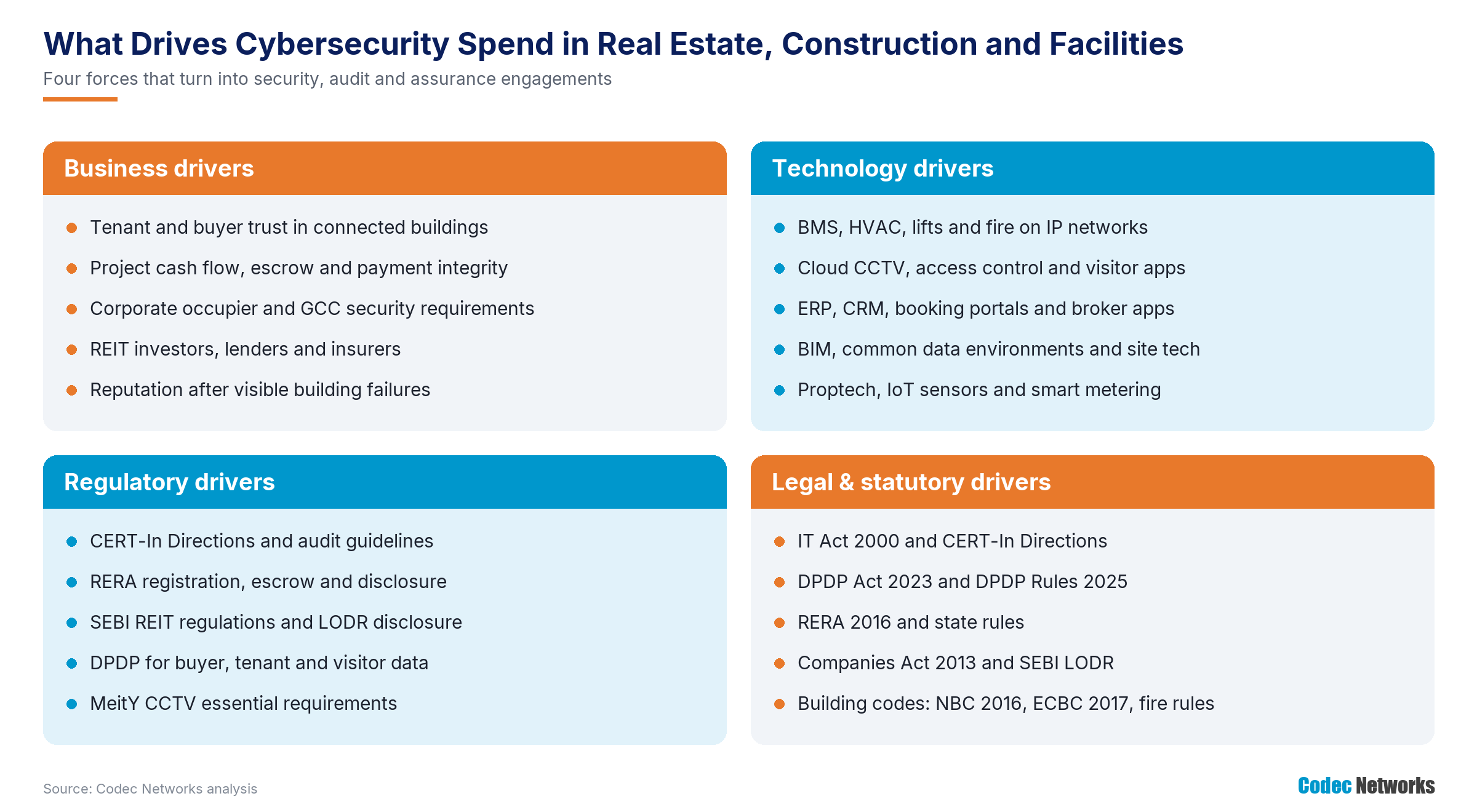
Figure 3: The four groups of drivers behind cybersecurity spending in real estate, construction and facilities.
4. Regulatory drivers: CERT-In, RERA, SEBI, DPDP and the CCTV requirements
|
Instrument |
Key requirements |
|
CERT-In Directions (2022) and audit guidelines (2025) |
Six-hour incident reporting; 180-day ICT logs in India; risk-based independent audits covering IT, OT and applications |
|
RERA 2016 and state rules |
Project registration, escrow, disclosure and timeline duties that depend on accurate project, collection and buyer records |
|
SEBI REIT Regulations (2014; SM REITs 2024) and LODR |
REIT governance and unit-holder reporting; quarterly cyber incident disclosure for listed entities; Board oversight of risk |
|
DPDP Act 2023 and Rules 2025 |
Buyer, tenant, resident, member, visitor and employee data safeguards and breach intimation, including CCTV footage; most obligations from May 2027 |
|
MeitY CCTV essential requirements (April 2025) |
Security requirements and STQC testing for CCTV cameras under the Compulsory Registration Order |
|
Building codes and occupier requirements |
National Building Code 2016, ECBC 2017 and fire rules; occupier, lender and insurer security questionnaires; ISO/IEC 27001 and IEC 62443 |
|
Confirm applicability Obligations depend on listing status, RERA and REIT registrations, the data you hold and what you install. Confirm against the official instruments and your occupier contracts. |
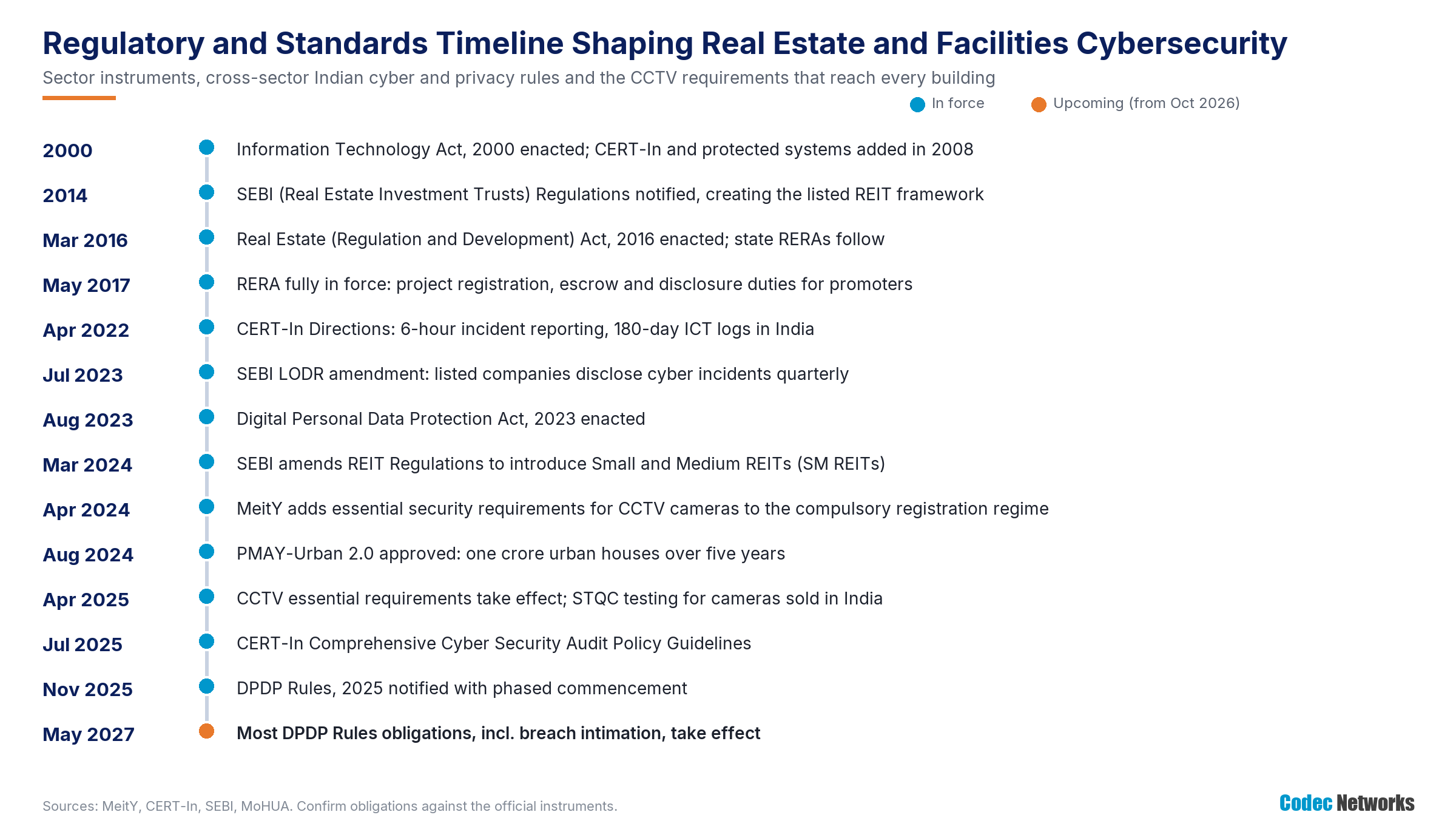
Figure 4: Regulatory and standards timeline shaping real estate and facilities cybersecurity, as of October 2026.
5. Legal and statutory drivers
|
Law or obligation |
Relevance |
Demand created |
|
IT Act, 2000 and CERT-In Directions |
Incident reporting, logging and protected systems |
SOC, logging, audits and incident response |
|
RERA, 2016 and state rules |
Promoter duties, escrow, disclosure, buyer protection |
ERP, CRM and collection integrity; record protection |
|
Companies Act, 2013 and SEBI LODR |
Board responsibility for risk; disclosure for listed entities |
Board reporting, incident records |
|
SEBI REIT Regulations, 2014 |
Governance, valuation and reporting for REITs |
Portfolio assurance, disclosure support |
|
DPDP Act, 2023 and Rules, 2025 |
Buyer, tenant, visitor and employee personal data |
Privacy programmes and breach workflows |
|
MeitY Compulsory Registration Order (CCTV ER) |
Security requirements for cameras sold in India |
Camera and VMS assessment, procurement evidence |
|
Occupier, lender and insurance contracts |
Security clauses, audits, warranties |
Independent testing, certifications, evidence |
6. How the drivers differ by company type
|
Company type |
Dominant business drivers |
Dominant technology drivers |
Principal regulatory drivers |
|
Listed developers and REITs |
Investor confidence, occupier trust, disclosure |
Portfolio BMS, CCTV, tenant apps |
SEBI LODR, REIT rules, CERT-In, DPDP |
|
EPC and construction |
Cash flow, lender covenants, client contracts |
Site ERP, billing, BIM and CDE |
CERT-In, SEBI LODR (listed), contracts |
|
Regional developers |
Launch sales, RERA compliance, brand |
CRM, portals, broker apps |
RERA, DPDP, CERT-In |
|
Co-working operators |
Enterprise clients, member trust |
Shared networks, access control, apps |
CERT-In, DPDP, client contracts |
|
Facility management |
Client SLAs and assurance |
Multi-site platforms, VMS, CAFM |
CERT-In, DPDP, MeitY CCTV ER, contracts |
7. What this means for buyers and for Codec Networks
|
Customer buying need |
Recommended offering |
Natural recurring engagement |
|
“Could someone reach our building systems from outside?” |
Building system and vendor access assessment |
Annual building reviews and access recertification |
|
“Are our cameras and doors secure and compliant?” |
CCTV and access control assessment with MeitY ER evidence |
Per-site reviews and recertification |
|
“Our GCC tenant sent a security questionnaire.” |
Questionnaire readiness and ISO 27001 gap assessment |
Annual recertification support |
|
“Could a fake bank-detail change divert a payment?” |
Payment fraud controls review and BEC simulation |
Quarterly simulations |
|
“If CRM went dark at launch, what then?” |
ERP and CRM resilience review |
Annual resilience testing |
|
“We hold lakhs of buyer and visitor records.” |
DPDP gap assessment and programme |
DPO-as-a-service |
|
“We need 24x7 monitoring that includes buildings.” |
Building SOC |
Continuous monitoring |
Talk to Codec Networks
|
Contact Codec Networks Pvt. Ltd. New Delhi: 507, 5th Floor, New Delhi House, Barakhamba Road, Connaught Place, New Delhi – 110001 Gurugram: 707, 7th Floor, Silverton Tower, Golf Course Extension Road, Sector 50, Gurugram – 122018, Haryana Landline: 011 430 496 96 | 011 437 522 99 Mobile: +91 99716 76124 | +91 88007 88220 | +91 88003 31124 Email: mktg@codecnetworks.com Web: www.codecnetworks.com |
Note: This document is general industry guidance based on public information available as of October 2026. It is not legal, safety or regulatory advice. Obligations differ by company type, listing status, RERA registrations, projects and occupier contracts; confirm them against the official CERT-In, MeitY, SEBI, RERA, DPDP and building-authority instruments and your contracts.