

Resources Categories
INDUSTRY FACT FILE · REAL ESTATE, CONSTRUCTION & FACILITIES
Main Products and Services in Real Estate, Construction and Facilities
What India's developers, contractors, property groups, co-working operators and facility managers sell and deliver, the project, building and enterprise systems behind each activity, and where those systems create cybersecurity and compliance exposure.
|
In this document 1. How property, construction and facilities companies earn their money 2. Products and services by company type 3. The building layer: BMS, lifts, fire, CCTV and access control 4. The enterprise layer: ERP, CRM, portals, apps and project data 5. The systems behind the products and services 6. Trends that change the attack surface 7. Mapping operations to Codec Networks engagements |
1. How property, construction and facilities companies earn their money
|
Revenue stream |
How it works |
Security relevance |
|
Residential sales |
Units sold off-plan and on completion through CRM, portals and brokers; collections into RERA escrow |
Buyer KYC and payment data; booking and receipt integrity; collection fraud |
|
Commercial leasing |
Office, retail and warehouse space leased to corporates, GCCs and retailers |
Occupier security questionnaires; tenant data; building system uptime |
|
Construction contracts |
EPC and item-rate contracts billed on progress; subcontractor and supplier payments |
Payment diversion; site ERP outages; tender and BIM confidentiality |
|
Co-working and managed offices |
Memberships, enterprise suites and services on shared infrastructure |
Member data and networks; access control; enterprise client requirements |
|
Facility management and maintenance |
Integrated FM, security, housekeeping and maintenance under SLAs |
Client systems operated remotely; CCTV and access platforms; workforce data |
|
REIT distributions and asset management |
Rental income distributed to unit holders; asset and property management fees |
Reporting integrity; portfolio-wide building risk; SEBI disclosure |
2. Products and services by company type
|
Company type |
Main products and services |
Key systems |
|
Residential developers |
Apartments, villas, plots, affordable and mid-income housing |
ERP, CRM, booking portals, broker apps, document management, resident apps |
|
Commercial developers and REITs |
Office parks, SEZs, malls, warehouses; leasing and asset management |
Lease management, BMS, CCTV, access control, parking, tenant apps, REIT reporting |
|
EPC and construction companies |
Buildings, infrastructure, industrial and metro projects |
Site ERP, progress billing, BIM and CDE, subcontractor portals, site cameras and IoT |
|
Co-working operators |
Hot desks, private offices, enterprise suites, meeting rooms |
Member apps, access control, Wi-Fi, booking and billing platforms |
|
Facility management companies |
FM, security, housekeeping, energy and maintenance services |
CAFM and helpdesk, VMS and cloud CCTV, visitor and patrol apps, workforce systems |
|
Smart building and proptech platforms |
BMS and IoT platforms, tenant experience apps, listing and brokerage portals |
Cloud platforms, APIs, IoT gateways, mobile apps, listing databases |
3. The building layer: BMS, lifts, fire, CCTV and access control
A modern building is run by a building management system (BMS) that controls heating, ventilation and air-conditioning, lighting, pumps and energy through controllers speaking BACnet, Modbus, KNX or proprietary protocols. Lift groups, fire detection and suppression, public address, parking and water systems have their own controllers, increasingly bridged to the BMS and to cloud dashboards. Security runs on IP cameras feeding a video management system (VMS) or a cloud video platform, access control panels and readers, visitor management kiosks and apps, and turnstiles that depend on them.
Much of this estate is installed by integrators at construction stage, handed over with default settings and maintained remotely by OEMs and FM contractors for the life of the building. Controllers run for decades on unpatched firmware, protocols carry no authentication, and the building network often shares switches with corporate IT and tenant services. A breach of a cloud video platform such as the 2021 Verkada incident exposes every camera connected to it; an exposed BMS, as in the Lappeenranta heating outage, affects every occupant at once.
4. The enterprise layer: ERP, CRM, portals, apps and project data
Above the building sits the enterprise layer. Developers run ERP for projects, procurement, billing and collections; CRM and booking portals for leads, bookings, KYC, agreements and receipts; broker and channel-partner apps; and document management systems holding agreements, approvals and RERA filings. Contractors run site ERP, progress billing and subcontractor portals that release large running-account payments, and share BIM models and drawings through common data environments with consultants and clients.
Property groups, REITs and FM companies add lease management, tenant experience apps, computer-aided facility management (CAFM) and helpdesk platforms, energy dashboards and investor reporting. Co-working operators run member apps that open doors, book rooms and bill cards. These platforms hold buyer, tenant, member and visitor personal data in volume, connect to payment gateways and banks, and are increasingly cloud-hosted—so identity, configuration and API security decide whether a single credential exposes one site or a whole portfolio.
|
Highest-risk moments Building handover and commissioning when default credentials and open remote access are left behind, vendor remote sessions into BMS and security systems, launch weekends when CRM and bookings peak, bank-detail changes on running-account bills, shared platform credentials across client sites, and tenant or member devices on flat building networks are where property, construction and facilities incidents typically begin or escalate. |
5. The systems behind the products and services
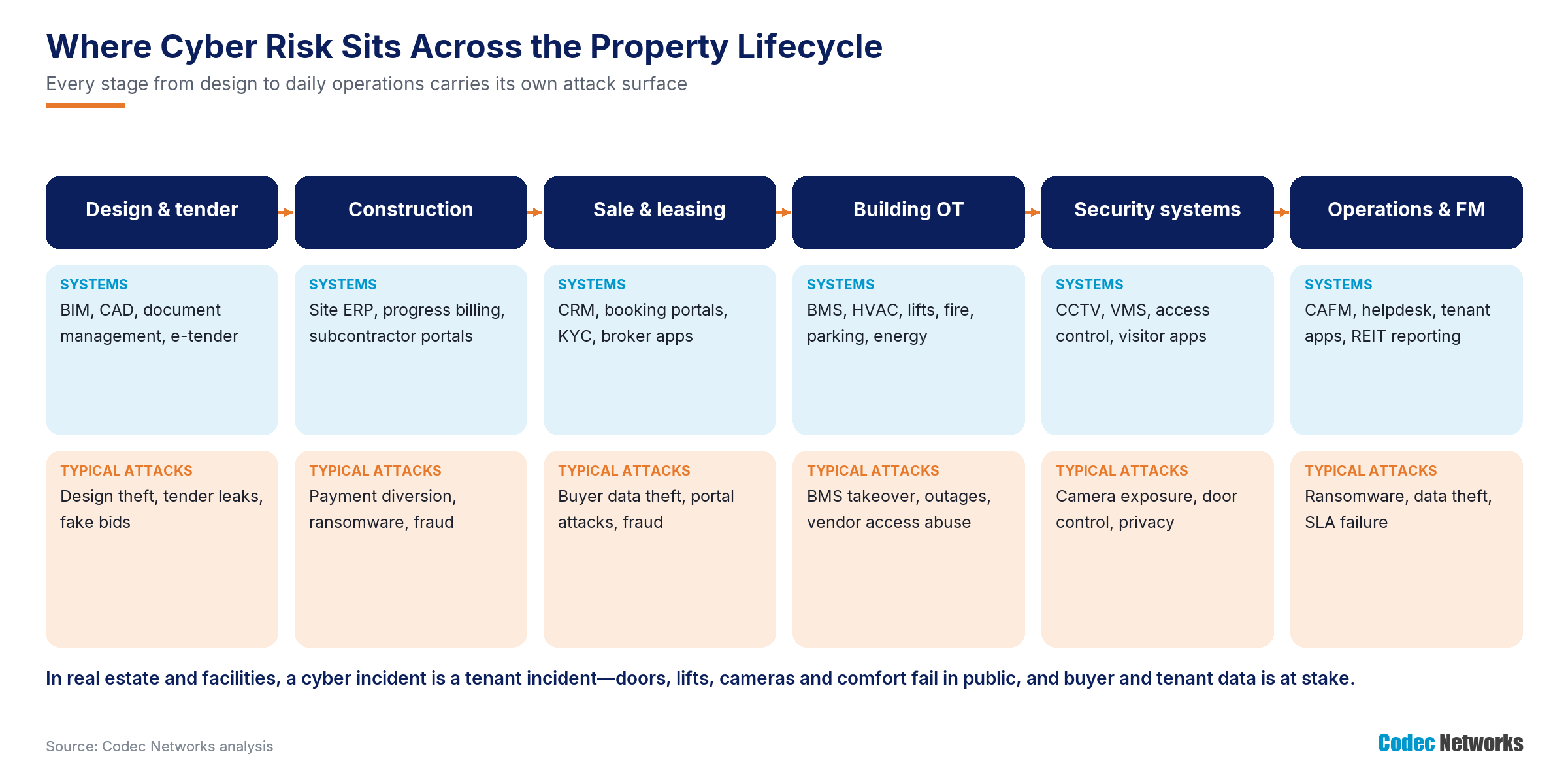
Figure 2: Where cyber risk sits across the property lifecycle.
|
Product / service |
Systems that deliver it |
Key cyber and compliance touchpoints |
|
Design and tender |
BIM, CAD, common data environments, e-tender portals |
Design and tender confidentiality, access reviews, DLP |
|
Construction |
Site ERP, progress billing, subcontractor portals, site cameras |
Payment and master-data controls, portal testing, site connectivity review |
|
Sale and leasing |
CRM, booking portals, broker apps, KYC, lease management |
Portal and app testing, DPDP for buyer and tenant data, collection controls |
|
Building OT |
BMS, HVAC, lifts, fire, parking, energy |
Building system assessment, segmentation, vendor access brokering, OT monitoring |
|
Security systems |
CCTV, VMS, cloud video, access control, visitor management |
CCTV and access control testing, MeitY ER evidence, surveillance privacy |
|
Operations and FM |
CAFM, helpdesk, tenant and member apps, REIT reporting |
Platform and API testing, identity controls, SOC monitoring |
6. Trends that change the attack surface
|
Trend |
What is changing |
Security implication |
|
Smart and green buildings |
BMS, IoT sensors, energy analytics and ECBC-driven automation in new assets |
Far more building-to-cloud connections and vendor access to secure |
|
Cloud CCTV and access control |
Cameras and doors managed through cloud platforms across portfolios |
One credential or API flaw exposes every site; MeitY CCTV requirements apply |
|
Proptech and tenant apps |
Apps for booking, access, payments, visitors and amenities |
Application, API and mobile security become tenant-facing risks |
|
REIT and institutional ownership |
Portfolios owned by listed trusts and global investors |
Portfolio-wide assurance, SEBI disclosure, investor and lender questionnaires |
|
GCC and enterprise occupiers |
Global firms leasing record space with their own security standards |
Landlords and FM companies must evidence building security |
|
Regulatory formalisation |
CERT-In audit guidelines, DPDP, CCTV essential requirements |
Evidence-based assurance replaces informal practice |
7. Mapping operations to Codec Networks engagements
|
If the company operates… |
Recommended starting engagement |
|
Buildings with BMS, lifts, CCTV and access control |
Building system and security system assessment, segmentation design, vendor access brokering |
|
ERP, CRM and booking portals that sell and collect |
ERP and portal security testing, backup and recovery validation, collection controls |
|
Construction sites with running-account billing |
Payment fraud controls, BEC simulation, site ERP and portal review |
|
Cloud video or access platforms across many sites |
Platform and API testing, identity and credential controls, MeitY ER evidence |
|
Co-working or multi-tenant shared networks |
Network segmentation, access control testing, member app and API testing |
|
Buyer, tenant, member or visitor data in volume |
DPDP programme, surveillance privacy review, breach playbooks |
Talk to Codec Networks
|
Contact Codec Networks Pvt. Ltd. New Delhi: 507, 5th Floor, New Delhi House, Barakhamba Road, Connaught Place, New Delhi – 110001 Gurugram: 707, 7th Floor, Silverton Tower, Golf Course Extension Road, Sector 50, Gurugram – 122018, Haryana Landline: 011 430 496 96 | 011 437 522 99 Mobile: +91 99716 76124 | +91 88007 88220 | +91 88003 31124 Email: mktg@codecnetworks.com Web: www.codecnetworks.com |
Note: Descriptions are general and based on public information available as of October 2026. Systems and exposures differ by building, project and company.