

Resources Categories

INDUSTRY FACT FILE · SMART CITIES, WATER & URBAN UTILITIES
Market Landscape and the Drivers of Cybersecurity Demand in Smart Cities and Urban Utilities
The public-safety, business, technology, regulatory, legal and funding forces that create cybersecurity, audit and assurance work for smart city SPVs, municipal bodies, water utilities and urban services operators.
|
In this document 1. Market landscape 2. Business drivers 3. Technology drivers 4. Regulatory drivers: CERT-In, government-entity guidelines, NCIIPC, DPDP and CCTV rules 5. Legal and statutory drivers 6. How the drivers differ by body type 7. What this means for buyers and for Codec Networks |
1. Market landscape
India's urban systems market is large, public and in transition. The Smart Cities Mission delivered more than 8,000 projects worth about ₹1.64 lakh crore across 100 cities, with operational ICCCs in all of them, and reached financial closure in March 2025, leaving cities and SPVs to operate what was built. AMRUT 2.0, launched in October 2021 with an outlay of more than ₹2.7 lakh crore for 2021-22 to 2025-26, targets universal water supply across all statutory towns and sewerage in 500 cities; SBM-Urban 2.0 funds wastewater treatment with ₹1.41 lakh crore over 2021-26; and the National Urban Digital Mission and IUDX are building shared data platforms. More than 4,000 statutory towns, dozens of water boards, state missions, integrators, OEMs and concessionaires make up the buying landscape.
Cybersecurity demand follows four pressures. Safety: Oldsmar and Aliquippa showed that exposed plant systems can be reached and manipulated, and the EPA found about 70 per cent of inspected US systems failing basic standards. Continuity: ransomware has hit Indian smart city servers, a state flood-monitoring system and a 413-town municipal portal. Compliance: CERT-In's Directions, its 2023 government-entity guidelines and its 2025 audit guidelines, NCIIPC notifications, MeitY's CCTV requirements and DPDP all arrive at the city's door. Funding and audit: lenders, state governments and auditors increasingly ask for evidence. Spending is shifting from basic IT security to ICCC and SCADA assessments, vendor access control, surveillance governance, portal security and monitoring that covers plants and streets.
|
8,000+ Projects delivered under the Smart Cities Mission, 95% complete by July 2025 |
₹2.7 lakh cr+ AMRUT 2.0 outlay for urban water security, 2021-26 |
Jun 2023 CERT-In guidelines for government entities issued |
May 2027 Most DPDP obligations take effect |
|
Market segment |
Landscape and buying behaviour |
Cybersecurity opportunity |
|
Metropolitan corporations and large SPVs |
Large ICCCs, multiple plants, formal IT teams, state and lender scrutiny |
Programme-level ICCC and OT security, SOC, audit and Board reporting |
|
Tier-2 and tier-3 smart cities |
Integrator-dependent operations, thin teams, post-mission O&M budgets |
ICCC and SCADA assessments, MSI access controls, managed SOC |
|
Water and sewerage boards |
Many plants and pumping stations, legacy SCADA, contractor O&M |
SCADA programmes, remote access removal, OT monitoring |
|
Smaller urban local bodies |
Shared state platforms, outsourced IT, limited budgets |
Baseline assessments, backups, portal testing, state-level programmes |
|
Concessionaires and operators |
PPP water, lighting, parking, transit and treatment contracts |
IoT and field device assessment, contract compliance evidence |
|
State missions and data platforms |
State data centres, IUDX, cross-city platforms |
Cloud posture, API testing, government-entity gap assessments |
2. Business drivers
|
Business driver |
Buying trigger |
Relevant services |
|
Public safety |
A manipulated plant, signal or camera network endangers residents |
SCADA, ICCC and field device assessments, OT monitoring |
|
Service and revenue continuity |
Portal, billing and ERP outages stop collections and services |
Backups, portal testing, resilience planning |
|
Post-mission ownership |
Cities inherit integrator-built systems and their credentials |
Handover security checks, access recertification |
|
Public trust and media scrutiny |
Visible incidents damage confidence in smart city investment |
Crisis exercises, communication playbooks |
|
Lender and auditor requirements |
Multilateral lenders, CAG and state auditors ask for controls evidence |
Independent audits, evidence packs |
|
Contract and concession compliance |
Security clauses in O&M and PPP agreements |
Third-party assessments, contract mapping |
|
Fraud and collection losses |
Fake payment links and tampered billing |
Payment controls, monitoring, awareness |
3. Technology drivers
|
Technology driver |
Exposure created |
Codec Networks opportunity |
|
SCADA, PLCs and telemetry |
Exposed HMIs, default passwords, unsupported systems |
SCADA assessment, remote access removal, OT monitoring |
|
ICCC, VMS and analytics |
Platforms concentrating city feeds and vendor access |
ICCC assessment, segmentation, MSI access brokering |
|
IoT, meters and streetlights |
Thousands of field gateways with weak credentials |
IoT assessment, isolation, device management |
|
Citizen portals and apps |
Internet-facing systems holding resident data |
Application and payment testing, DPDP |
|
City data platforms and cloud |
APIs and dashboards across departments and cities |
Cloud posture, API testing, data governance |
|
Video analytics and recognition |
ANPR and facial recognition on city cameras |
Surveillance governance and privacy reviews |
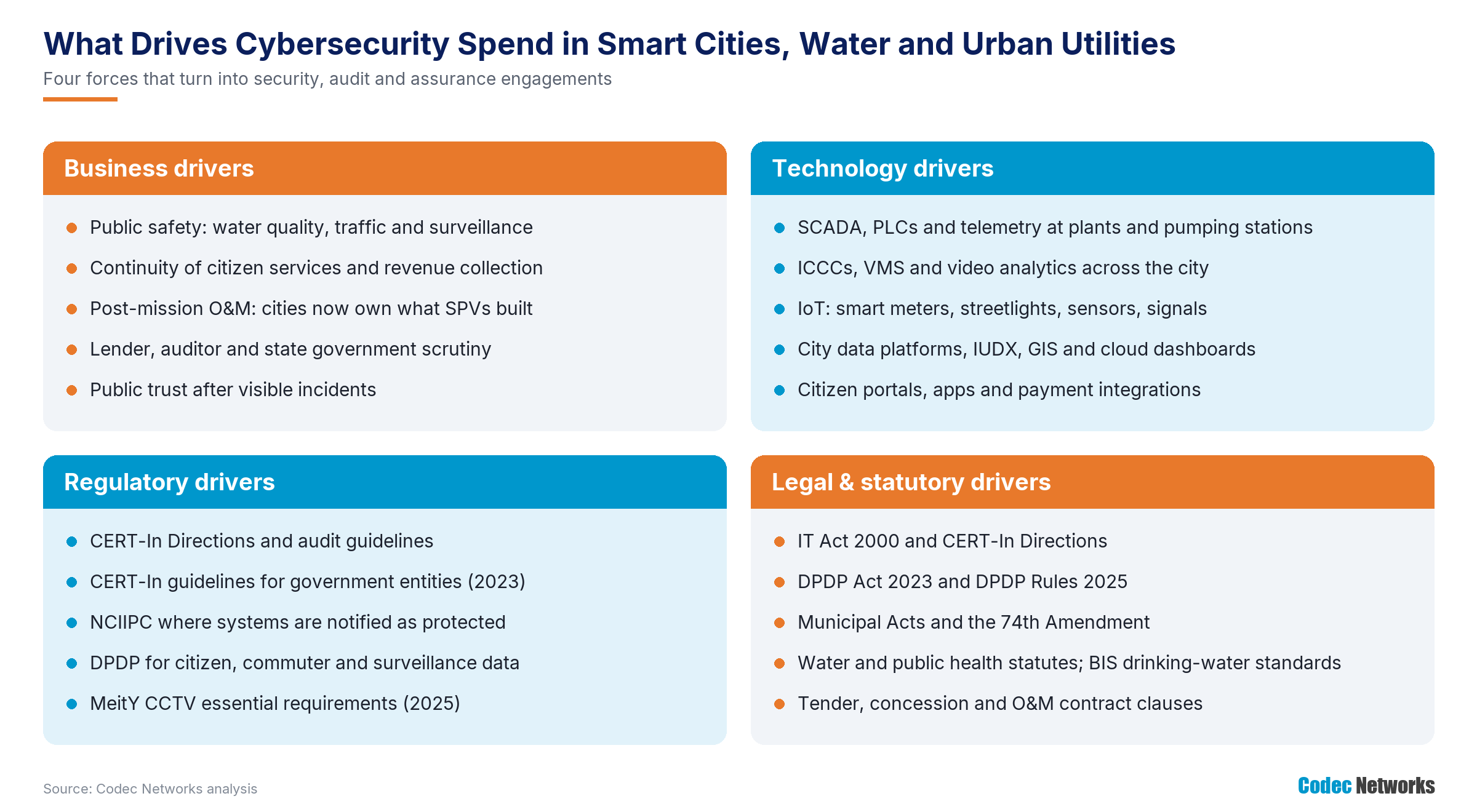
Figure 3: The four groups of drivers behind cybersecurity spending in smart cities, water and urban utilities.
4. Regulatory drivers: CERT-In, government-entity guidelines, NCIIPC, DPDP and CCTV rules
|
Instrument |
Key requirements |
|
CERT-In Directions (2022) and audit guidelines (2025) |
Six-hour incident reporting; 180-day ICT logs; risk-based independent audits covering IT and OT/ICS—applicable to government organisations and bodies corporate |
|
CERT-In guidelines for government entities (June 2023) |
Baseline controls including a designated CISO, asset inventory, access management, third-party, cloud and data security for government bodies and their agencies |
|
NCIIPC (IT Act Section 70A) |
Protection of notified protected systems—city, water or emergency systems may be notified by their owning government |
|
DPDP Act 2023 and Rules 2025 |
Citizen, commuter, employee and surveillance data safeguards and breach intimation from May 2027; exemptions possible for notified state instrumentalities |
|
MeitY CCTV essential requirements (April 2025) |
Security requirements and STQC testing for CCTV cameras under the Compulsory Registration Order |
|
Urban missions, lenders and contracts |
Smart Cities Mission and AMRUT 2.0 conditions, lender requirements, O&M and concession clauses; IEC 62443 and ISO/IEC 27001 as reference standards |
|
Confirm applicability Obligations depend on legal status, state law, scheme conditions, contracts and any NCIIPC notifications. Confirm against the official instruments. |
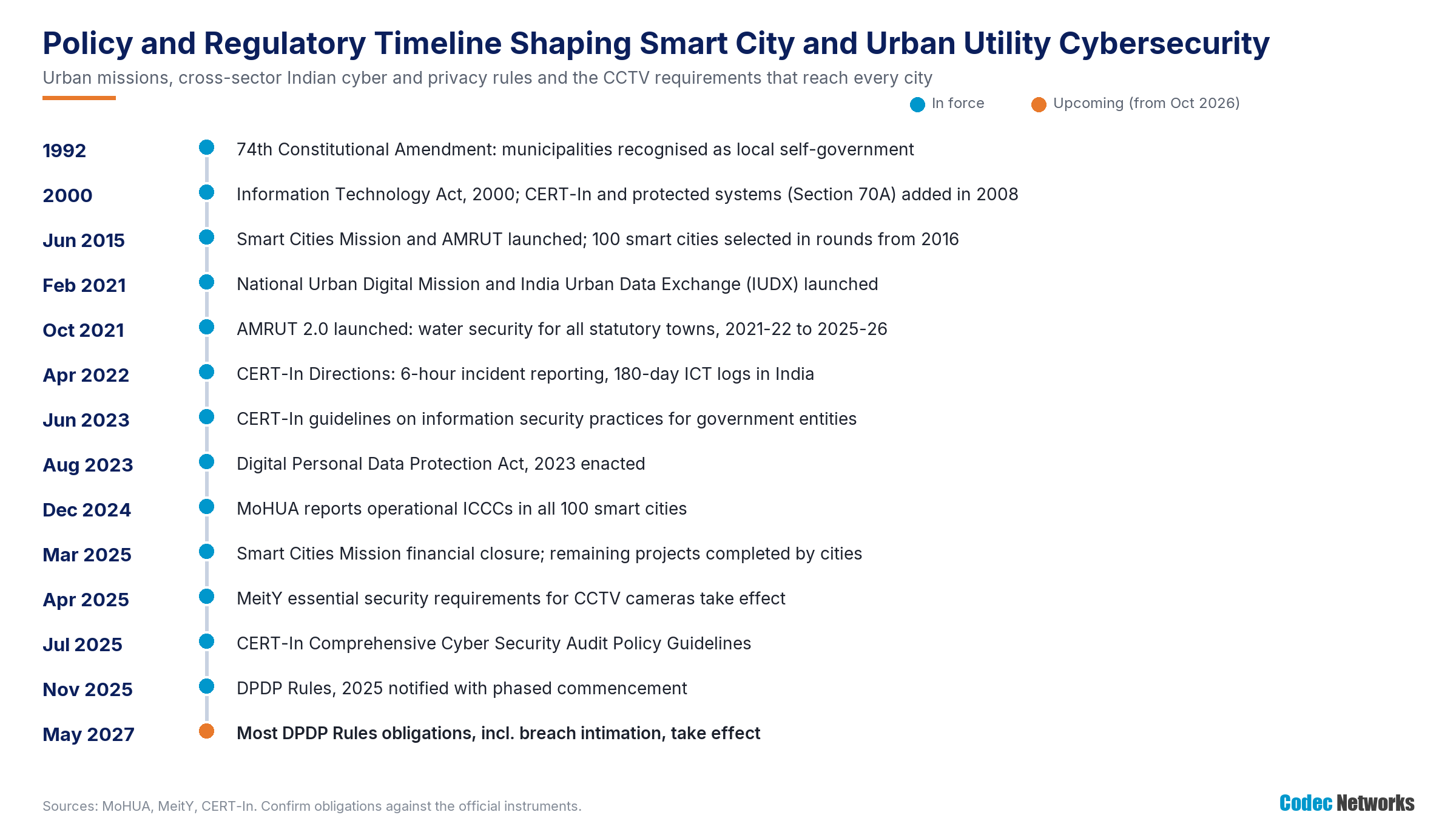
Figure 4: Policy and regulatory timeline shaping smart city and urban utility cybersecurity, as of October 2026.
5. Legal and statutory drivers
|
Law or obligation |
Relevance |
Demand created |
|
IT Act, 2000 and CERT-In Directions |
Incident reporting, logging and protected systems |
SOC, logging, audits and incident response |
|
CERT-In government-entity guidelines, 2023 |
Baseline security controls and CISO designation |
Gap assessments, policy and evidence support |
|
74th Amendment and state municipal Acts |
Powers, duties and accountability of urban local bodies |
Governance and audit alignment |
|
State water supply and sewerage Acts; public health laws |
Safe water supply and sanitation duties |
Plant and telemetry security as a safety control |
|
DPDP Act, 2023 and Rules, 2025 |
Citizen, commuter and surveillance personal data |
Privacy programmes and breach workflows |
|
MeitY Compulsory Registration Order (CCTV ER) |
Security requirements for cameras sold in India |
Camera and VMS assessment, procurement evidence |
|
Concession, O&M and lender agreements |
Security, continuity and audit clauses |
Third-party assessments, evidence packs |
6. How the drivers differ by body type
|
Body type |
Dominant business drivers |
Dominant technology drivers |
Principal regulatory drivers |
|
Smart city SPVs |
Post-mission O&M, public trust |
ICCC, VMS, IoT platforms |
CERT-In, DPDP, MeitY CCTV ER, scheme conditions |
|
Municipal corporations |
Collections, services, audits |
Portals, ERP, payments |
CERT-In government-entity guidelines, DPDP, state Acts |
|
Water and sewerage boards |
Safety, supply continuity |
SCADA, telemetry, smart meters |
CERT-In, NCIIPC where notified, water Acts |
|
Concessionaires |
Contract compliance, revenue |
IoT gateways, AFC, cloud platforms |
Concession clauses, CERT-In, DPDP |
|
State missions and platforms |
Cross-city platforms, hosting |
Data centres, IUDX, APIs |
CERT-In government-entity guidelines, MeitY policies, DPDP |
7. What this means for buyers and for Codec Networks
|
Customer buying need |
Recommended offering |
Natural recurring engagement |
|
“Could someone change a set-point from outside?” |
SCADA and remote access assessment |
Annual OT reviews and access recertification |
|
“Who can log in to our command centre?” |
ICCC assessment and MSI access programme |
Vendor access recertification |
|
“Are our cameras compliant and our footage governed?” |
CCTV assessment and surveillance governance review |
Per-site reviews and annual governance audit |
|
“If the portal went dark in tax season, what then?” |
Portal resilience review and testing |
Annual resilience testing |
|
“The auditor asked for our cyber controls.” |
Government-entity guideline gap assessment and evidence pack |
Annual audits |
|
“We hold data on millions of residents.” |
DPDP gap assessment and programme |
DPO-as-a-service |
|
“We need 24x7 monitoring that includes plants.” |
City SOC |
Continuous monitoring |
Talk to Codec Networks
|
Contact Codec Networks Pvt. Ltd. New Delhi: 507, 5th Floor, New Delhi House, Barakhamba Road, Connaught Place, New Delhi – 110001 Gurugram: 707, 7th Floor, Silverton Tower, Golf Course Extension Road, Sector 50, Gurugram – 122018, Haryana Landline: 011 430 496 96 | 011 437 522 99 Mobile: +91 99716 76124 | +91 88007 88220 | +91 88003 31124 Email: mktg@codecnetworks.com Web: www.codecnetworks.com |
Note: This document is general industry guidance based on public information available as of October 2026. It is not legal, safety or regulatory advice. Obligations differ by legal status (government entity, body corporate, SPV or concessionaire), state law, scheme conditions and contracts; confirm them against the official CERT-In, MeitY, NCIIPC, MoHUA, state and DPDP instruments and your contracts.