

Resources Categories
INDUSTRY FACT FILE · SMART CITIES, WATER & URBAN UTILITIES
Five New Case Studies in City and Water Utility Security
Original 2026 case studies, each written as a blog post, showing how current threats play out in smart city SPVs, municipal bodies, water utilities and urban services operators and how Codec Networks services break the attack chain.
|
In this document 1. About these case studies 2. Case Study 1: The Dosing Screen at Three in the Morning 3. Case Study 2: The Command Centre That Went Dark 4. Case Study 3: The Property Tax Portal Nobody Backed Up 5. Case Study 4: The Footage That Left the Control Room 6. Case Study 5: The Streetlights That Joined a Botnet |
About these case studies
These five case studies were written for this document set and have not been published elsewhere. Each is a composite scenario combining attack techniques and control failures widely observed in cities and utilities with the obligations that apply in India as of October 2026—in particular CERT-In's Directions, government-entity guidelines and audit guidelines, NCIIPC, DPDP and MeitY's CCTV requirements.
|
Important disclosure The organisations described are fictional and the scenarios are illustrative. They are not accounts of real incidents, and they are not Codec Networks client engagements or claims of achieved outcomes. Their value lies in showing how connected weaknesses form an attack chain, which controls break it, and which services test those controls. |
|
Case study |
Organisation type |
Core threat |
Regulatory lens |
Primary bundles |
|
1. The Dosing Screen at Three in the Morning |
City water supply board |
Remote-desktop access used to change chemical dosing |
CERT-In; state water duties; NCIIPC if notified |
B1, B3, B7 |
|
2. The Command Centre That Went Dark |
Smart city SPV |
Ransomware spreading from the integrator into the ICCC |
CERT-In; scheme conditions; DPDP |
B9, B3, B8 |
|
3. The Property Tax Portal Nobody Backed Up |
Municipal corporation |
Ransomware and citizen data theft in collection season |
CERT-In; government-entity guidelines; DPDP |
B2, B3, B7 |
|
4. The Footage That Left the Control Room |
Safe-city surveillance operator |
Contractor export of surveillance and recognition data |
DPDP; MeitY CCTV ER; police and state rules |
B6, B1, B9 |
|
5. The Streetlights That Joined a Botnet |
Urban services concessionaire |
Default-credential IoT gateways hijacked and used to reach pumping telemetry |
CERT-In; concession agreement; environmental consents |
B11, B3, B7 |
Case Study 1: The Dosing Screen at Three in the Morning
The cursor moved on its own. The operator had ninety seconds to notice.
|
At a glance |
|
|
Organisation |
A city water board (“Waterco A”) running three treatment plants and forty pumping stations |
|
Threat |
A shared remote-desktop password used to reach a plant HMI and raise chlorine and alkali set-points |
|
Why it is new |
Indian plants carry the same contractor conveniences that enabled Oldsmar |
|
Codec Networks services |
SCADA assessment, remote access removal and brokering, OT monitoring (Bundles B1, B3, B7) |
The scenario
Waterco A's O&M contractor had installed a remote-desktop tool on the main plant's HMI workstation—still running Windows 7—so engineers could support it from home. The password was shared across the contractor's team and had not changed in four years.
At 3 a.m. an intruder logged in, opened the chemical dosing screen and raised the chlorine and alkali set-points far beyond safe limits. The night operator saw the cursor move, took back control and reset the values within minutes; dosing alarms would have tripped later had he not.
Investigation found no MFA, no session logs, a flat network between the plant and the board's offices and the same remote-desktop tool at eleven pumping stations.
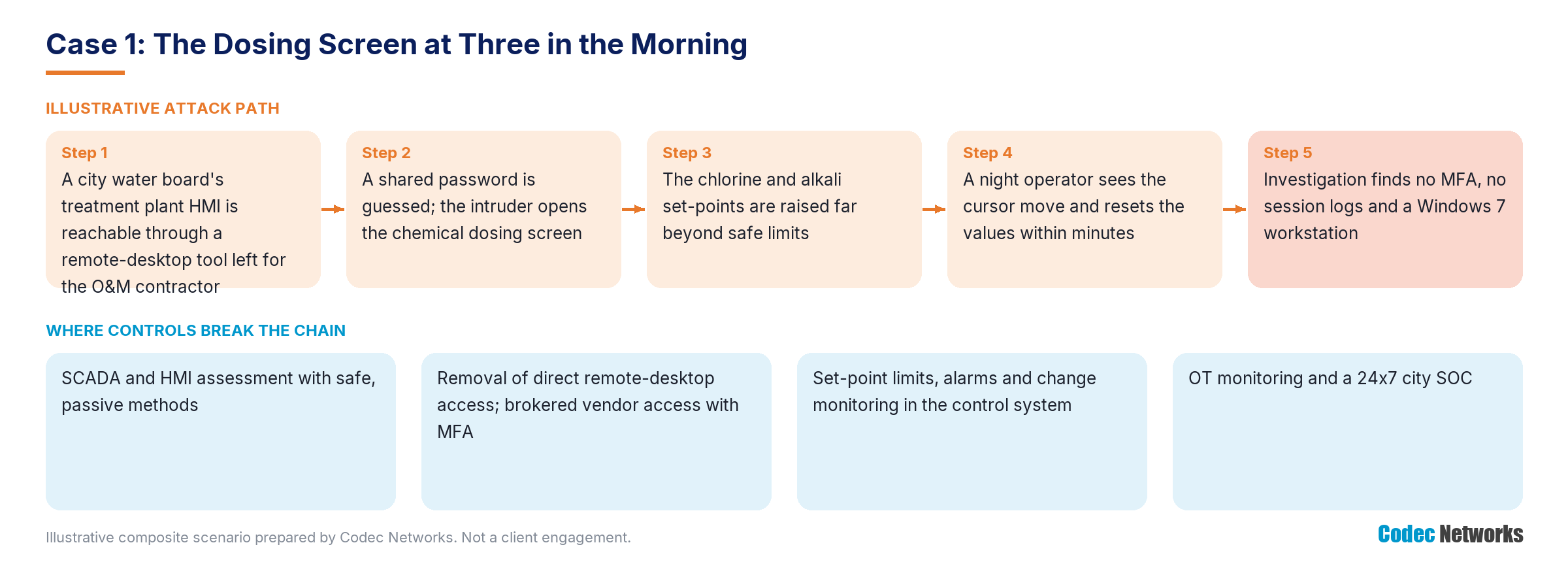
Figure 8: Illustrative attack path for Case Study 1 and the controls that break it.
What went wrong
- Remote-desktop tool exposed to the internet on a plant HMI.
- Shared, unchanged password with no MFA.
- No session logging or OT monitoring.
- No hard limits on critical set-points in the control system.
The impact
Waterco A avoided harm by luck, reported the incident, removed remote access from all plants, faced state government review and funded an independent SCADA assessment.
The regulatory lens
- CERT-In Directions: incident reported within six hours; logs needed for investigation.
- State water supply and public health duties: safe water supply obligations and state review.
- NCIIPC: coordination required if plant systems are notified as protected systems.
How Codec Networks would help
|
Need |
Codec Networks response |
Bundle |
|
Know the exposure |
SCADA and HMI assessment with safe, passive methods across plants and pumping stations |
B1 |
|
Remove and broker |
Remote access removal, brokered contractor access with MFA and recording, plant segmentation |
B3 |
|
Watch the plant |
OT monitoring and city SOC alerting on set-point and session anomalies |
B7 |
|
Key lessons No remote-desktop tools on plant HMIs. Named accounts, MFA and recording for every contractor session. Hard limits and alarms on critical set-points. Monitor plant networks, not just office IT. |
Case Study 2: The Command Centre That Went Dark
Twelve hundred cameras, every signal and the emergency dashboard—blind for five days.
|
At a glance |
|
|
Organisation |
A smart city SPV (“Cityco B”) operating an ICCC under a master system integrator's O&M contract |
|
Threat |
Infostealer malware on an integrator engineer's laptop yielding VPN credentials used to deploy ransomware across ICCC, VMS and traffic platforms |
|
Why it is new |
The integrator's weakness becomes the city's incident |
|
Codec Networks services |
MSI access programme, segmentation and backups, incident response (Bundles B9, B3, B8) |
The scenario
Cityco B's integrator kept a standing VPN into the ICCC for O&M, shared among engineers. One engineer's personal laptop was infected with infostealer malware, and the VPN credentials were sold within days.
Attackers logged in on a Friday night, moved from the ICCC servers to the VMS, adaptive traffic and dashboard platforms—all on one network—and encrypted them, including the backup server.
For five days the city had no camera feeds, signals ran on fixed timings and the emergency dashboard was blank. The SPV discovered it had no offline backups and no record of who had connected to the ICCC in two years.
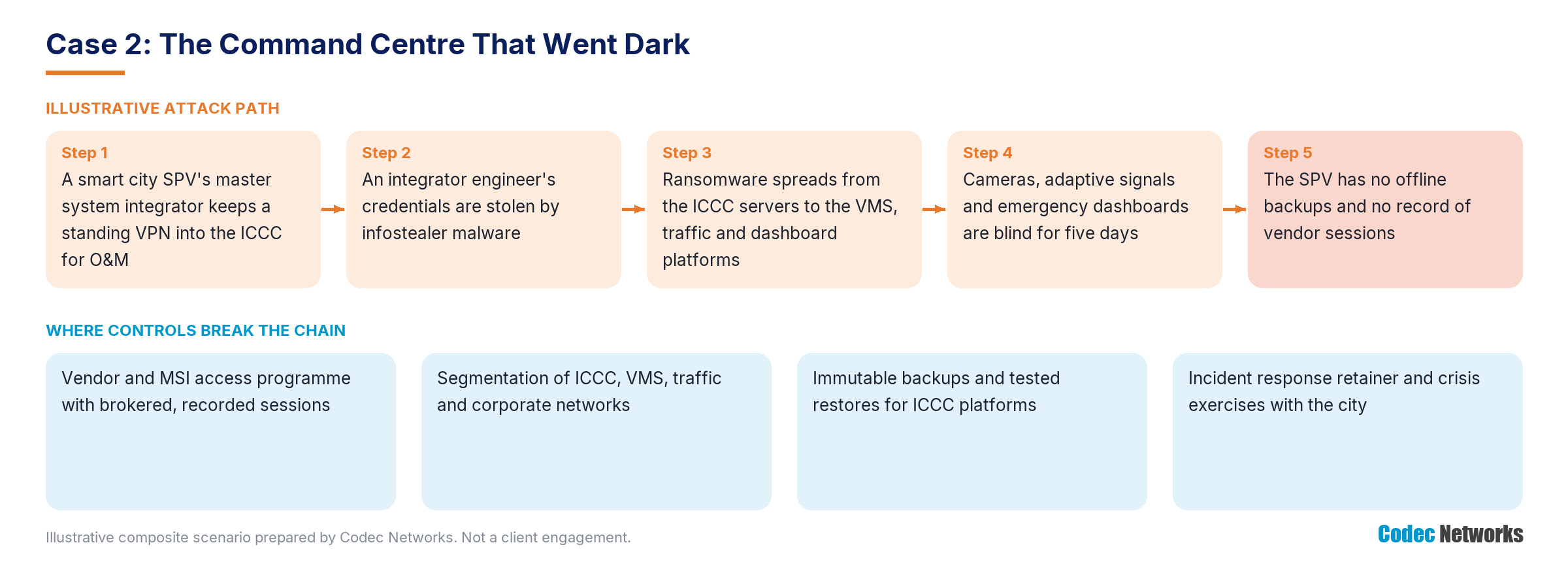
Figure 9: Illustrative attack path for Case Study 2 and the controls that break it.
What went wrong
- Standing shared VPN for the integrator without MFA.
- No segmentation between ICCC, VMS, traffic and office networks.
- Backups online and encrypted with the platforms.
- No vendor session logging or monitoring.
The impact
Cityco B lost five days of city operations, rebuilt platforms at its own cost, reported the incident, faced state review and media scrutiny and renegotiated its O&M contract with security clauses.
The regulatory lens
- CERT-In Directions: incident reported within six hours.
- Scheme and O&M conditions: continuity and security obligations under the mission and contract.
- DPDP: footage and recognition data on the VMS as personal data.
How Codec Networks would help
|
Need |
Codec Networks response |
Bundle |
|
Control the integrator |
MSI and vendor access programme: brokered, named, recorded access; vendor assessment; contract clauses |
B9 |
|
Separate and recover |
ICCC segmentation design, immutable backups and tested restores |
B3 |
|
Respond and learn |
Incident response, forensics, root cause and reporting support |
B8 |
|
Key lessons Broker and record every integrator session. Segment the ICCC from everything else. Keep platform backups offline and test them. Put security into O&M contracts before, not after. |
Case Study 3: The Property Tax Portal Nobody Backed Up
Tax season opened with a ransom note and a queue outside every ward office.
|
At a glance |
|
|
Organisation |
A municipal corporation (“Munico C”) serving three million residents through one e-governance platform |
|
Threat |
Exploitation of an unpatched, internet-facing application server leading to data exfiltration and ransomware across tax, billing and certificate systems |
|
Why it is new |
Municipal portals are exposed by design and hold data on millions |
|
Codec Networks services |
Portal testing and patch governance, backups, SOC (Bundles B2, B3, B7) |
The scenario
Munico C's e-governance platform ran property tax, water billing and birth and death certificates. A critical vulnerability in its application server had been public for five months; nobody owned patching after the vendor's contract lapsed.
Attackers exploited it in the first week of the tax-collection season, exported citizen records—names, addresses, property identifiers and payment details—and encrypted the databases.
Counters fell back to paper; collections dropped by half; residents received fake payment links. Tape backups were three days old and the restore took two weeks.
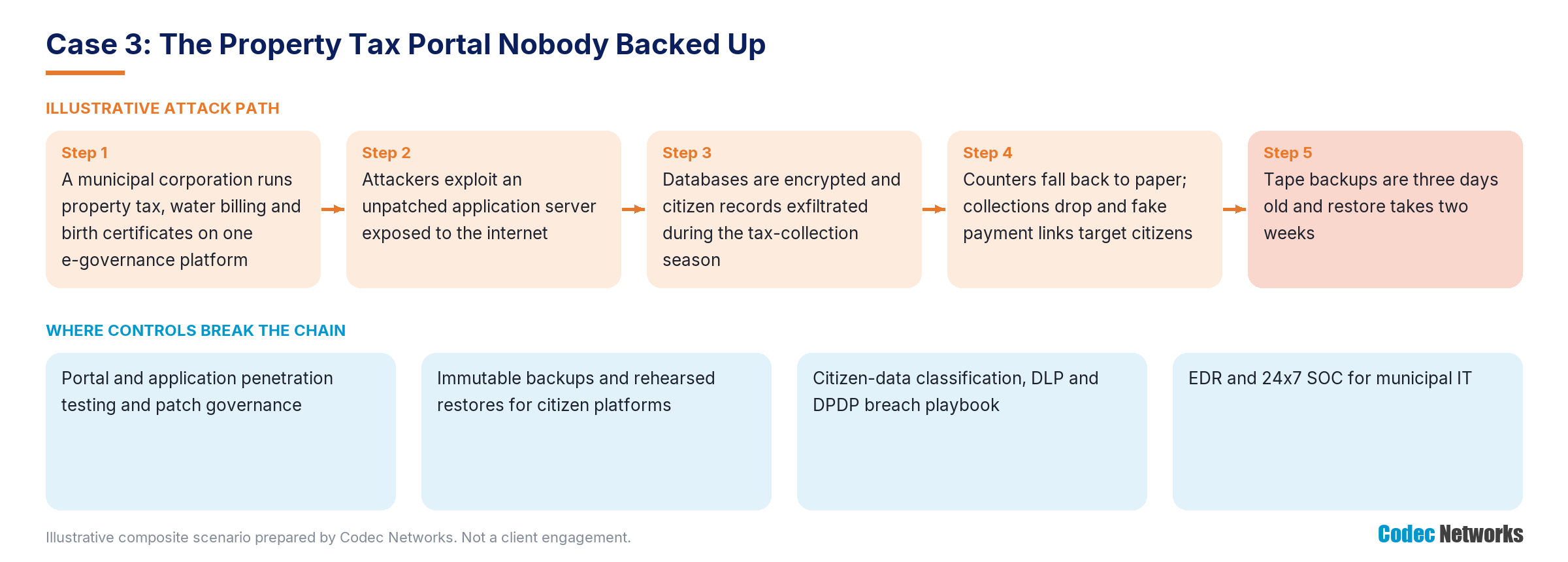
Figure 10: Illustrative attack path for Case Study 3 and the controls that break it.
What went wrong
- Unpatched application server exposed to the internet with no patch ownership.
- Backups on tape every three days, never restore-tested.
- No EDR or monitoring on municipal servers.
- Citizen data unclassified and exportable in bulk.
The impact
Munico C lost two weeks of services and collections, notified residents, faced state audit observations and assembly questions, reported to CERT-In and rebuilt its platform governance.
The regulatory lens
- CERT-In Directions: incident reported within six hours; logs needed for investigation.
- CERT-In government-entity guidelines: baseline controls such as patching, asset inventory and a designated CISO were absent.
- DPDP: citizen personal data exfiltrated; breach intimation duties from May 2027, subject to applicable exemptions.
How Codec Networks would help
|
Need |
Codec Networks response |
Bundle |
|
Test and patch |
Portal, app and API penetration testing with patch governance |
B2 |
|
Recover |
Immutable backups, tested restores and a manual counter playbook |
B3 |
|
Detect early |
EDR and 24x7 SOC for municipal IT |
B7 |
|
Key lessons Own patching even when vendors change. Back up immutably and rehearse restores. Monitor the servers citizens depend on. Classify citizen data and control exports. |
Case Study 4: The Footage That Left the Control Room
Nothing was encrypted and no alarm rang. The city's cameras had simply been working for someone else.
|
At a glance |
|
|
Organisation |
A safe-city operator (“Safeco D”) running 4,000 cameras, ANPR and facial recognition for a city police department |
|
Threat |
A contractor using broad VMS export rights to extract clips and vehicle-recognition logs over months and sell them |
|
Why it is new |
Surveillance data is personal data at scale, and insiders need no exploit |
|
Codec Networks services |
Surveillance governance and DPDP, VMS assessment, contractor assurance (Bundles B6, B1, B9) |
The scenario
Safeco D's VMS gave every integrator and contractor account the same export rights as supervisors. Exports were not logged, and accounts were never reviewed.
A contractor exported camera clips and ANPR logs on request for recovery agents and private investigators for eight months. A journalist traced two stalking cases to the leaked data.
The city could not establish who had exported what, under what authority, or how many people were affected; several cameras had never been tested against MeitY's requirements.
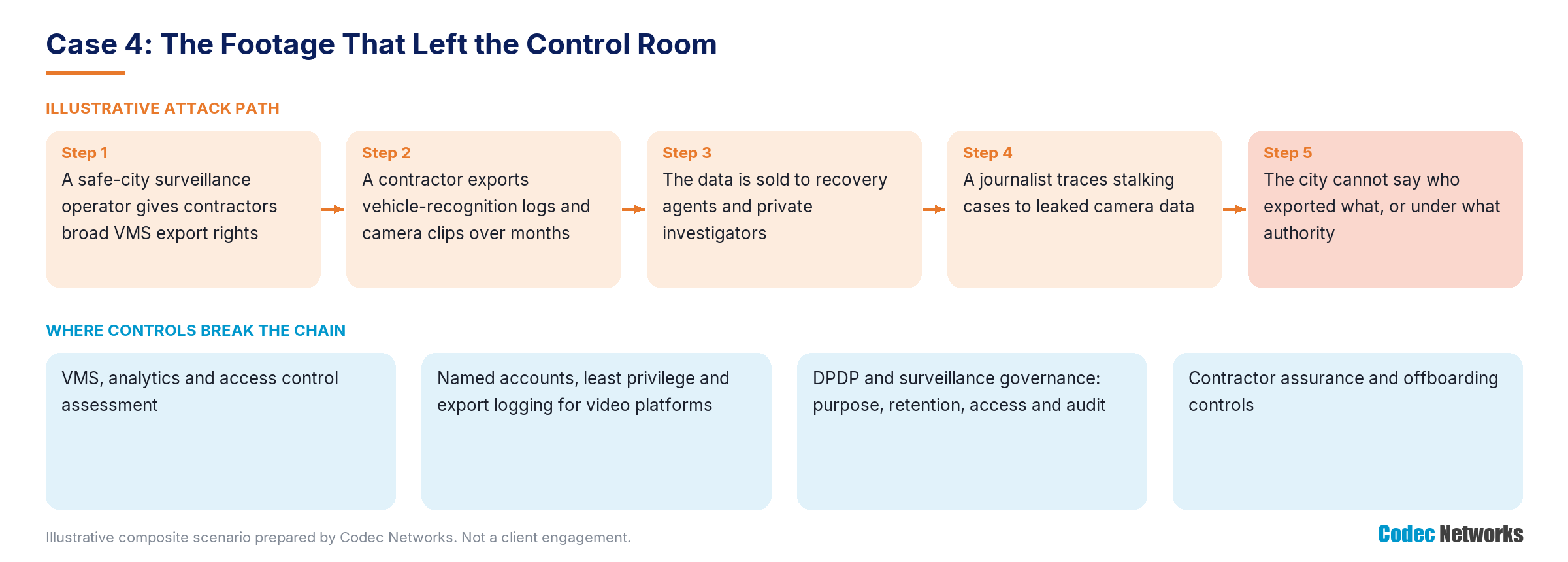
Figure 11: Illustrative attack path for Case Study 4 and the controls that break it.
What went wrong
- Broad export rights for contractors with no least privilege.
- No export logging or review.
- No surveillance governance—purpose, retention, access, audit.
- Contractor accounts never recertified or removed.
The impact
Safeco D faced public and legislative scrutiny, suspended contractor access, funded an independent assessment and rebuilt its surveillance governance with the police department.
The regulatory lens
- DPDP: footage and recognition data identifying individuals is personal data; access, purpose and retention controls apply, subject to any state exemptions.
- MeitY CCTV essential requirements: cameras procured from April 2025 must meet security requirements with STQC testing.
- Police and state rules: lawful access and record-keeping obligations for surveillance systems.
How Codec Networks would help
|
Need |
Codec Networks response |
Bundle |
|
Govern the data |
Surveillance governance review and DPDP programme: purpose, retention, access, export logging |
B6 |
|
Test the platform |
VMS, analytics and access control assessment with MeitY ER evidence |
B1 |
|
Control contractors |
Contractor assurance, least privilege, recertification and offboarding |
B9 |
|
Key lessons Least privilege and named accounts on video platforms. Log and review every export. Write down purpose, retention and authority for surveillance. Recertify and remove contractor access. |
Case Study 5: The Streetlights That Joined a Botnet
The lights still worked. The sewage pumping station did not.
|
At a glance |
|
|
Organisation |
A lighting concessionaire (“Lightco E”) operating 60,000 smart streetlights and, under a second contract, sewage pumping station telemetry |
|
Threat |
Cellular gateways with default credentials enrolled in a botnet and used to pivot into telemetry, suppressing pump alarms |
|
Why it is new |
IoT roll-outs create thousands of exposed doors into city networks |
|
Codec Networks services |
IoT assessment, isolation, device management and monitoring (Bundles B11, B3, B7) |
The scenario
Lightco E deployed streetlight controllers through cellular gateways that kept default administrator credentials and a web interface reachable from the internet. Automated scanners enrolled thousands into a botnet within weeks.
The gateways shared an APN and network with the telemetry Lightco E ran for the city's sewage pumping stations. Attackers used a compromised gateway to reach the telemetry server and suppressed pump status alarms.
A wet well overflowed into a lake for two days before residents complained. The city invoked the concession's penalty clauses and environmental authorities opened an inquiry.
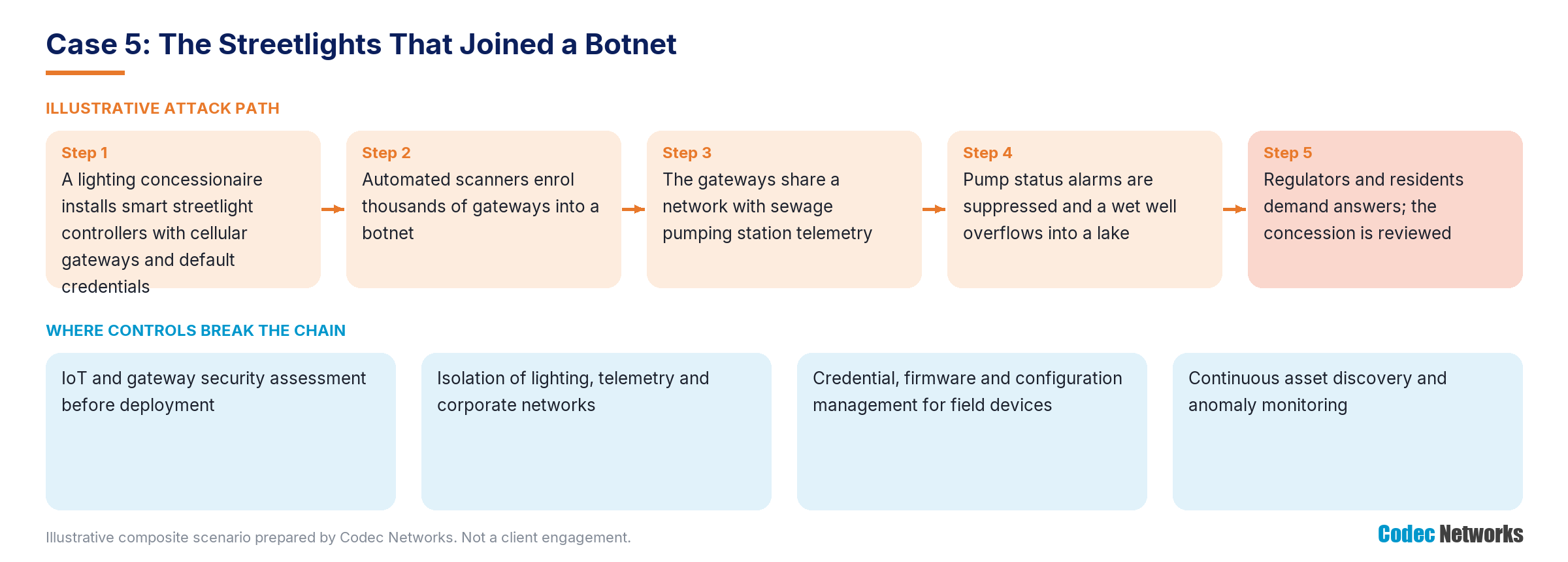
Figure 12: Illustrative attack path for Case Study 5 and the controls that break it.
What went wrong
- Default credentials and internet exposure on field gateways.
- Shared network between lighting and pumping telemetry.
- No device inventory or firmware management.
- No anomaly monitoring of field traffic or alarm suppression.
The impact
Lightco E paid concession penalties, faced an environmental inquiry, reported the incident and re-architected its field networks and device management.
The regulatory lens
- CERT-In Directions: incident reported within six hours.
- Concession agreement: service, security and continuity clauses invoked by the city.
- Environmental consents: inquiry into the overflow by the pollution control board.
How Codec Networks would help
|
Need |
Codec Networks response |
Bundle |
|
Assess before deploying |
IoT and gateway security assessment, device credential and firmware hardening |
B11 |
|
Isolate |
Separate lighting, telemetry and corporate networks with controlled flows |
B3 |
|
Watch the field |
Continuous asset discovery and anomaly monitoring through the city SOC |
B7 |
|
Key lessons Assess every IoT roll-out before go-live. Never share networks between lighting and critical telemetry. Change defaults and manage firmware centrally. Monitor field devices for scanning and alarm suppression. |
Talk to Codec Networks
|
Contact Codec Networks Pvt. Ltd. New Delhi: 507, 5th Floor, New Delhi House, Barakhamba Road, Connaught Place, New Delhi – 110001 Gurugram: 707, 7th Floor, Silverton Tower, Golf Course Extension Road, Sector 50, Gurugram – 122018, Haryana Landline: 011 430 496 96 | 011 437 522 99 Mobile: +91 99716 76124 | +91 88007 88220 | +91 88003 31124 Email: mktg@codecnetworks.com Web: www.codecnetworks.com |