

Resources Categories
INDUSTRY FACT FILE · SMART CITIES, WATER & URBAN UTILITIES
Main Products and Services in Smart Cities, Water and Urban Utilities
What India's smart city SPVs, municipal bodies, water utilities and urban services operators deliver, the plant, field, command centre and citizen systems behind each service, and where those systems create cybersecurity and compliance exposure.
|
In this document 1. How cities and utilities fund and deliver their services 2. Services by body type 3. The operational layer: plants, SCADA, field devices and command centres 4. The citizen and data layer: portals, ERP, payments and city data platforms 5. The systems behind the products and services 6. Trends that change the attack surface 7. Mapping operations to Codec Networks engagements |
1. How cities and utilities fund and deliver their services
|
Revenue stream |
How it works |
Security relevance |
|
Property tax and civic charges |
Assessment, billing and collection through counters, portals and apps |
Citizen data; collection continuity; payment integrations |
|
Water and sewerage charges |
Metered and flat-rate billing, smart metering, connections |
Billing integrity; meter data; plant uptime |
|
Grants and mission funding |
Central and state scheme funds for capital projects and O&M |
Scheme conditions; audit evidence; project data |
|
User charges and concessions |
Parking, transit, lighting, advertising and PPP revenue shares |
Concessionaire systems; user data; revenue reconciliation |
|
Surveillance and safe-city services |
Camera networks, analytics and command centres for police and traffic |
Footage and recognition data; lawful access; uptime |
|
Data and platform services |
City data platforms, IUDX exchanges, dashboards for departments |
API security; data governance; cloud configuration |
2. Services by body type
|
Body type |
Main services |
Key systems |
|
Smart city SPVs |
ICCC operations, smart infrastructure O&M, data platforms |
ICCC software, VMS, analytics, dashboards, IoT platforms, GIS |
|
Municipal corporations |
Tax, licences, certificates, sanitation, grievances |
E-governance portals, municipal ERP, payment gateways, mobile apps |
|
Water supply boards |
Treatment, pumping, distribution, billing |
SCADA, PLCs, HMIs, telemetry, smart meters, billing systems |
|
Wastewater operators |
Sewage and effluent treatment, pumping, reuse |
Plant SCADA, pumping station RTUs, lab systems, compliance reporting |
|
Safe-city and ICCC operators |
Surveillance, traffic enforcement, emergency response |
Cameras, VMS, ANPR, facial recognition, dispatch and dial-112 links |
|
Urban services concessionaires |
Parking, lighting, metering, transit technology |
Streetlight controllers, parking sensors, AFC, cellular gateways, cloud platforms |
3. The operational layer: plants, SCADA, field devices and command centres
A city's water system runs on supervisory control and data acquisition (SCADA) software, programmable logic controllers (PLCs) and human-machine interfaces (HMIs) at treatment plants and pumping stations, with remote terminal units and radios reporting flows, pressures and levels from across the distribution network. Chemical dosing, filtration and pumping are controlled by set-points; alarms and interlocks catch excursions. Sewage treatment plants and pumping stations use the same building blocks, often with fewer staff and older equipment.
On the streets sit cameras, adaptive traffic signals, smart streetlights, parking sensors, environmental sensors and smart meters, connected by fibre, Wi-Fi or cellular gateways. The integrated command and control centre fuses these feeds through video management, analytics, GIS and dashboard platforms, usually built and operated by a master system integrator under an O&M contract. Many plants and field systems still run on unsupported operating systems, default credentials and remote-desktop tools installed for contractor convenience—the conditions behind Oldsmar and Aliquippa.
4. The citizen and data layer: portals, ERP, payments and city data platforms
Above the operational layer sit the systems citizens touch. Municipal e-governance platforms and ERP run property tax, trade licences, birth and death certificates, building permissions and grievances; water boards run billing and connection systems; payment gateways and UPI integrations collect revenue; and mobile apps extend all of this to phones. These systems hold identity, property and payment data for millions of residents and are, by design, exposed to the internet.
City data platforms, the India Urban Data Exchange and state data centres aggregate feeds from departments and devices for analytics, planning and open data. Dashboards and APIs give departments, researchers and start-ups access. Hosting ranges from NIC and state data centres to commercial cloud, so identity, configuration and API security determine whether a single weakness exposes one department or every city on the platform.
|
Highest-risk moments Mission handover when integrators leave and cities inherit systems with default settings, contractor remote-desktop sessions into plant HMIs, O&M renewals that change who holds credentials, tax and billing seasons when portals peak, new IoT and smart-metering roll-outs connected to existing networks, and surveillance data exports by contractors are where city and utility incidents typically begin or escalate. |
5. The systems behind the products and services
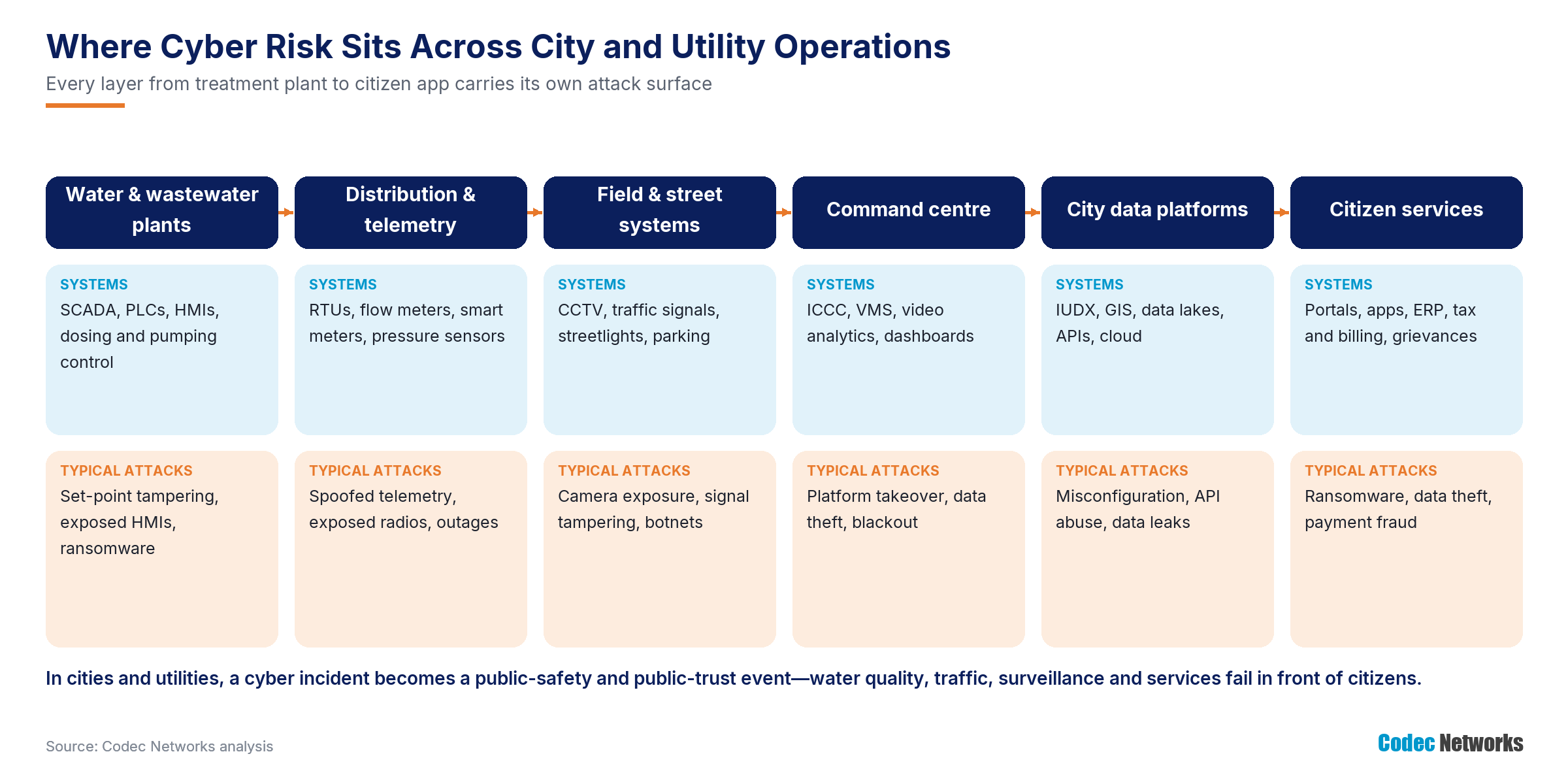
Figure 2: Where cyber risk sits across city and utility operations.
|
Product / service |
Systems that deliver it |
Key cyber and compliance touchpoints |
|
Water and wastewater plants |
SCADA, PLCs, HMIs, dosing and pumping control, historians |
SCADA assessment, remote access removal, set-point limits, OT monitoring |
|
Distribution and telemetry |
RTUs, radios, flow and pressure sensors, smart meters |
Telemetry integrity, device credentials, network isolation |
|
Field and street systems |
Cameras, traffic signals, streetlights, parking, gateways |
IoT and field device assessment, isolation, firmware management |
|
Command centre |
ICCC software, VMS, analytics, dispatch, dashboards |
Platform assessment, segmentation, MSI access brokering, backups |
|
City data platforms |
IUDX, GIS, data lakes, APIs, cloud and state data centres |
Cloud posture, API testing, data governance |
|
Citizen services |
Portals, apps, municipal ERP, billing, payment gateways |
Application testing, backups, payment controls, DPDP |
6. Trends that change the attack surface
|
Trend |
What is changing |
Security implication |
|
Post-mission O&M |
Cities and SPVs take over systems built by integrators under the Smart Cities Mission |
Ownership of credentials, access and patching must transfer with the systems |
|
Water security programmes |
AMRUT 2.0 and smart metering extend SCADA and telemetry to more towns |
More plants and devices connected with thin local teams |
|
Video analytics and recognition |
ANPR, facial recognition and AI analytics on city camera networks |
Surveillance governance, DPDP and lawful-access controls |
|
City data platforms |
IUDX, open data and cross-department dashboards |
API and data governance become city-wide risks |
|
Digital payments and apps |
UPI, gateways and apps for tax, water and services |
Citizen-facing application and payment security |
|
Regulatory formalisation |
CERT-In government-entity guidelines, audit guidelines, DPDP, CCTV requirements |
Evidence-based assurance expected by auditors and lenders |
7. Mapping operations to Codec Networks engagements
|
If the body operates… |
Recommended starting engagement |
|
Water or sewage plants and pumping stations |
SCADA and HMI assessment, remote access removal, set-point and alarm review, OT monitoring |
|
An ICCC, VMS or safe-city camera network |
ICCC and VMS assessment, segmentation, MSI access brokering, surveillance governance |
|
Citizen portals, apps and municipal ERP |
Application and payment testing, backup validation, DPDP programme |
|
Smart streetlights, meters, signals or parking |
IoT and gateway assessment, isolation, device credential and firmware management |
|
City data platforms or state hosting |
Cloud posture, API testing, data governance, government-entity gap assessment |
|
Integrators, O&M contractors and concessionaires |
Third-party risk programme, contract clauses, handover security checks |
Talk to Codec Networks
|
Contact Codec Networks Pvt. Ltd. New Delhi: 507, 5th Floor, New Delhi House, Barakhamba Road, Connaught Place, New Delhi – 110001 Gurugram: 707, 7th Floor, Silverton Tower, Golf Course Extension Road, Sector 50, Gurugram – 122018, Haryana Landline: 011 430 496 96 | 011 437 522 99 Mobile: +91 99716 76124 | +91 88007 88220 | +91 88003 31124 Email: mktg@codecnetworks.com Web: www.codecnetworks.com |
Note: Descriptions are general and based on public information available as of October 2026. Systems and exposures differ by city, utility and contract.