

Resources Categories

INDUSTRY FACT FILE · TELECOMMUNICATIONS & CONNECTIVITY
Main Products and Services in Telecommunications and Connectivity
What telecom and connectivity providers offer, the systems behind each service and where they create cybersecurity and compliance exposure.
|
In this document 1. How telecom providers earn their money 2. Services by player type 3. Network infrastructure 4. Subscriber, enterprise and IT systems 5. The systems behind the products and services 6. Trends that change the attack surface 7. Mapping services to Codec Networks engagements |
1. How telecom providers earn their money
|
Revenue stream |
How it works |
Security relevance |
|
Mobile services |
Prepaid and postpaid voice, data and messaging |
SIM, core and billing security |
|
Broadband |
Fibre and wireless home and business internet |
CPE and access network security |
|
Enterprise services |
MPLS, SD-WAN, leased lines, managed security |
Customer networks depend on provider controls |
|
Wholesale and interconnect |
Carrier, roaming and infrastructure services |
Signalling and interconnect security |
|
Digital services |
Messaging APIs, IoT, cloud and platforms |
API and platform security |
2. Services by player type
|
Player type |
Main services |
Key systems |
|
Mobile operators |
Voice, data, SMS, roaming, eSIM |
RAN, 5G core, IMS, signalling, OSS/BSS |
|
Broadband ISPs |
Fibre, cable, fixed wireless access |
OLTs, routers, CPE, DNS, BRAS |
|
Enterprise connectivity |
MPLS, SD-WAN, internet leased lines, managed security |
Provider edge, orchestration, customer portals |
|
Infrastructure providers |
Towers, fibre, in-building solutions |
Site management, remote monitoring |
|
Network vendors |
Equipment, software and managed services |
Element managers, support tunnels, update channels |
3. Network infrastructure
Networks combine radio access, fibre transport, IP routing, DNS and a core that is increasingly cloud-native for 5G. Network elements are managed remotely by operations teams and vendors through element managers and support connections—making privileged access and configuration integrity central to security.
4. Subscriber, enterprise and IT systems
Subscribers are onboarded through KYC at retail points and digital channels, served by CRM and billing (OSS/BSS) systems, and identified by SIMs that also deliver banking OTPs. Enterprise customers rely on managed SD-WAN and security services run by the provider.
|
Highest-risk moments SIM replacements, vendor support sessions, network configuration changes and OSS/BSS administration are where telecom fraud and cyber attacks do the most damage. |
5. The systems behind the products and services
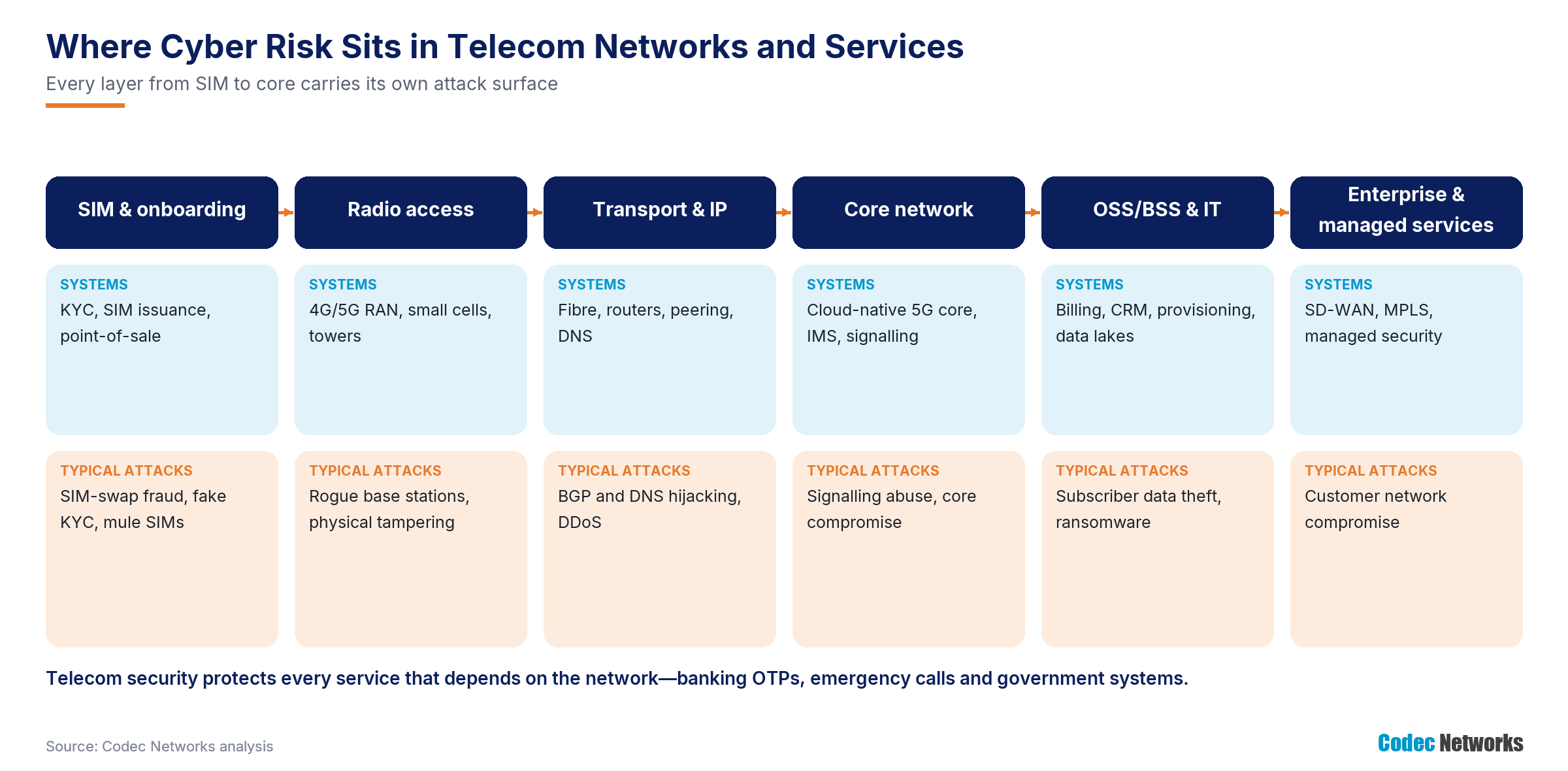
Figure 2: Where cyber risk sits in telecom networks and services.
|
Product / service |
Systems that deliver it |
Key cyber and compliance touchpoints |
|
SIM and onboarding |
KYC systems, retail apps, SIM provisioning |
Identity verification, dealer controls |
|
Radio access |
4G/5G RAN, small cells, sites |
Physical security, configuration integrity |
|
Transport and IP |
Routers, BGP, DNS, peering |
Hardening, RPKI and DNS security, DDoS defences |
|
Core network |
5G core functions, IMS, signalling |
API authorisation, mTLS, Kubernetes security |
|
OSS/BSS |
Billing, CRM, provisioning, data lakes |
VAPT, segmentation, ransomware resilience |
|
Enterprise services |
SD-WAN orchestration, managed firewalls |
Multi-customer isolation, admin access controls |
6. Trends that change the attack surface
|
Trend |
What is changing |
Security implication |
|
5G standalone cores |
Cloud-native network functions |
Kubernetes and API security become network security |
|
Network virtualisation |
NFV and SDN replace appliances |
Software supply-chain and orchestration risks |
|
Private 5G and IoT |
Industrial and campus networks |
OT-grade segmentation required |
|
Open RAN |
Multi-vendor radio components |
More interfaces and integration risk |
|
New security rules |
Telecom Cyber Security Rules, 2024 |
Policy, CTSO and reporting obligations |
7. Mapping services to Codec Networks engagements
|
If the provider operates… |
Recommended starting engagement |
|
A 5G mobile network |
5G core and signalling assessment, SOC |
|
Broadband access |
Router, CPE and DNS security reviews, DDoS testing |
|
Managed enterprise services |
SD-WAN and managed service security review |
|
Large retail and dealer networks |
SIM-swap controls review, dealer access monitoring |
|
Vendor-supported networks |
Vendor access and supply-chain assessment |
Talk to Codec Networks
|
Contact Codec Networks Pvt. Ltd. New Delhi: 507, 5th Floor, New Delhi House, Barakhamba Road, Connaught Place, New Delhi – 110001 Gurugram: 707, 7th Floor, Silverton Tower, Golf Course Extension Road, Sector 50, Gurugram – 122018, Haryana Landline: 011 430 496 96 | 011 437 522 99 Mobile: +91 99716 76124 | +91 88007 88220 | +91 88003 31124 Email: mktg@codecnetworks.com Web: www.codecnetworks.com |
Note: Descriptions are general and based on public information available as of October 2026. Telecom services are authorised under the Telecommunications Act, 2023 and DoT rules.